Small evergreen trees for landscaping in Maize, KS have to survive clay soil, relentless wind, and winters that swing hard between mild and brutal. Grab the wrong species from a big-box nursery display and you'll be pulling out a dead, brown tree in three years. This guide names the varieties that actually hold up here, plus the ones to skip entirely.
This guide reflects what Stellar's landscape crews see on real properties across Sedgwick County, not just catalog descriptions. We've replaced plenty of nationally marketed spruce and fir trees that looked great at planting and declined within a few seasons once Kansas wind and clay soil caught up with them. The species list below leans on what keeps working, not what sells well in April.
Why Small Evergreens Behave Differently in Maize, KS
Picking the right small evergreen tree for landscaping in Maize starts with matching mature size and spread to your available space, then checking sun exposure, soil drainage, and the tree's job (privacy screen, accent planting, or windbreak) against what your yard actually offers.
The USDA Plant Hardiness Zone Map is the standard by which gardeners and growers can determine which perennial plants are most likely to thrive at a location. Under the 2023 update, most of the state falls in zones 6a–6b, with colder pockets of zone 5b along the Nebraska and Colorado borders and expanded areas of zone 7a around Wichita and the southeast. That means Maize now sits right at the edge of zone 7a, warmer than the 6b rating most older plant tags and guides still reference. A tree rated hardy only to zone 7 may limp through a mild winter but won't reliably survive several years in a colder pocket of town.
Clay soils are common across the area and drain slowly, so root rot becomes a real risk for species bred for loose, sandy conditions. Pair that with near-constant wind exposure, and the safest picks are trees suited for tough, exposed sites rather than anything marketed as a universal "zone 6" tree. Check the USDA Plant Hardiness Zone Map before buying anything you're not sure about.
For help matching species to your specific lot, a landscape design consultation can save you from costly replanting down the road.
What Maize's Own Preferred Tree List Recommends
Most guides to this topic never check what the city itself tells residents to plant. Maize does publish one. The preferred trees listed were recommended by industry professionals such as city foresters, local tree boards, county and horticulture extension agents, and commercial arborists , not a national nursery chain trying to move inventory.
The city's preferred tree list includes Incense Cedar among its approved small evergreens, alongside regional staples like Oriental Arborvitae that show up on the broader south-central Kansas version of the same document. If a tree you're considering isn't on a list like this, that's worth a second look before you buy.
Growing Evergreens in Kansas: They Need Water, Even in Winter
Evergreens in Kansas need regular supplemental watering well beyond summer, including dry stretches in fall and winter, because winter winds pull moisture from needles even when the ground is frozen.
Unlike evergreens in wetter climates, Kansas trees don't get a break once deciduous leaves drop. Even one of the best spruce trees for Kansas will need some attention to watering during establishment, during dry winters, and during periods of drought. That advice applies broadly to small evergreen trees here, not just spruce.
A simple seasonal schedule works for most species:
- Spring and summer: water deeply once a week, roughly one inch
- Fall: taper to every two to three weeks
- Winter: water monthly on any stretch without snow cover when temperatures climb above 40°F
Official climate normal data for Wichita covers the 1991–2020 period , and the area's long-term average annual precipitation runs well above 30 inches. That's deceptive, because totals vary hard year to year, which is exactly why a watering schedule beats relying on rainfall alone. Check NOAA's climate normals for Wichita before setting your plan for the season.
If hand-watering a new planting isn't realistic with your schedule, a properly zoned irrigation installation solves the problem for good.
Best Small Evergreen Trees for Maize, KS Landscapes
The species below are the small evergreen trees local nurseries and extension experts consistently recommend for clay soil, wind exposure, and Maize's warming hardiness zone.
| Tree | Mature Height | Sun Needs | Best Use | Water Needs |
|---|---|---|---|---|
| Arborvitae | 10–15 ft | Full sun to part shade | Privacy screen, hedge | Moderate |
| Juniper | Varies widely (groundcover to 15+ ft) | Full sun | Windbreak, accent, screen | Low |
| Compact cedar | 10–20 ft | Full sun | Accent near patio/entry | Moderate |
| Cryptomeria | 10–15 ft (dwarf forms) | Full sun to part shade | Ornamental focal point | Moderate |
| Compact magnolia | 15–25 ft | Full sun | Flowering evergreen accent | Moderate to high |
| Holly | 6–15 ft depending on cultivar | Full sun to part shade | Hedge, berry interest | Moderate |
| Aucuba | 6–10 ft | Shade | Shady corners, north walls | Moderate |
Arborvitae
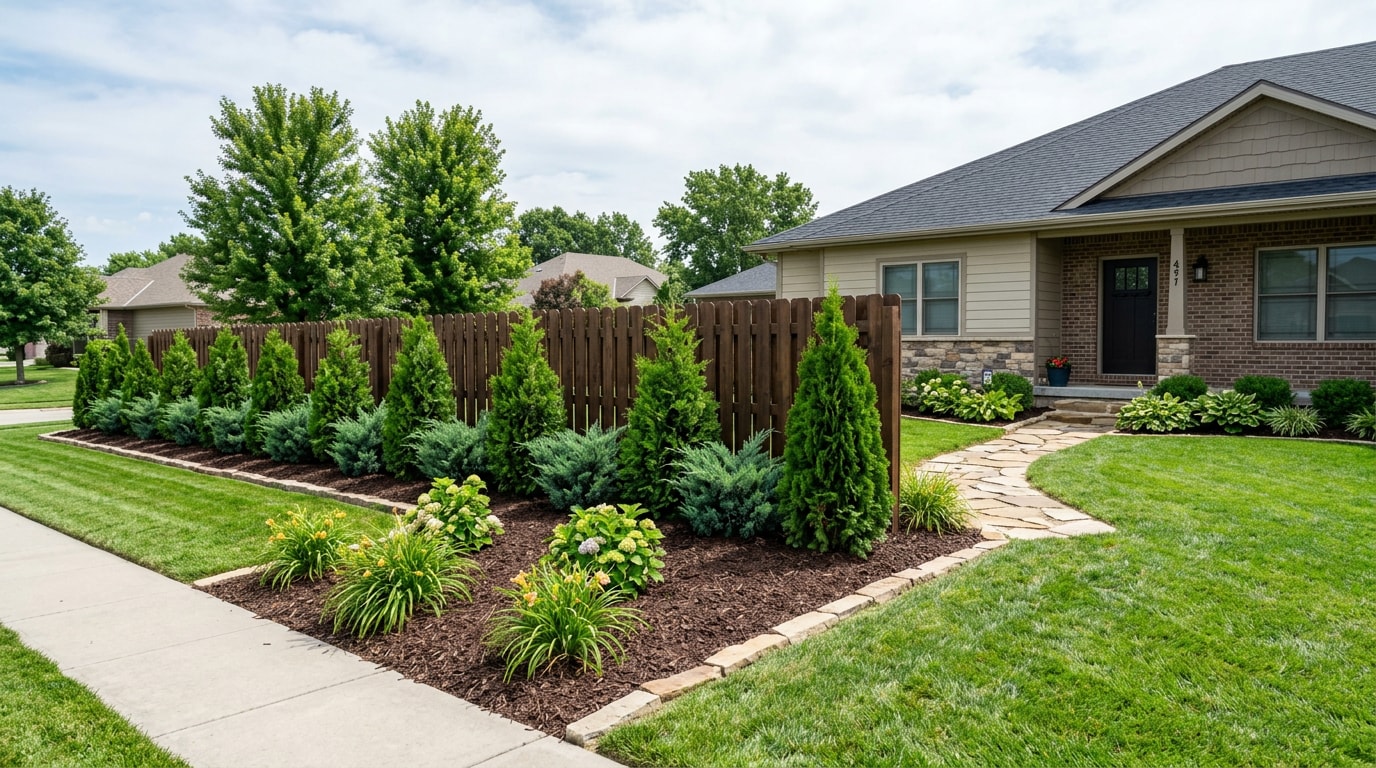
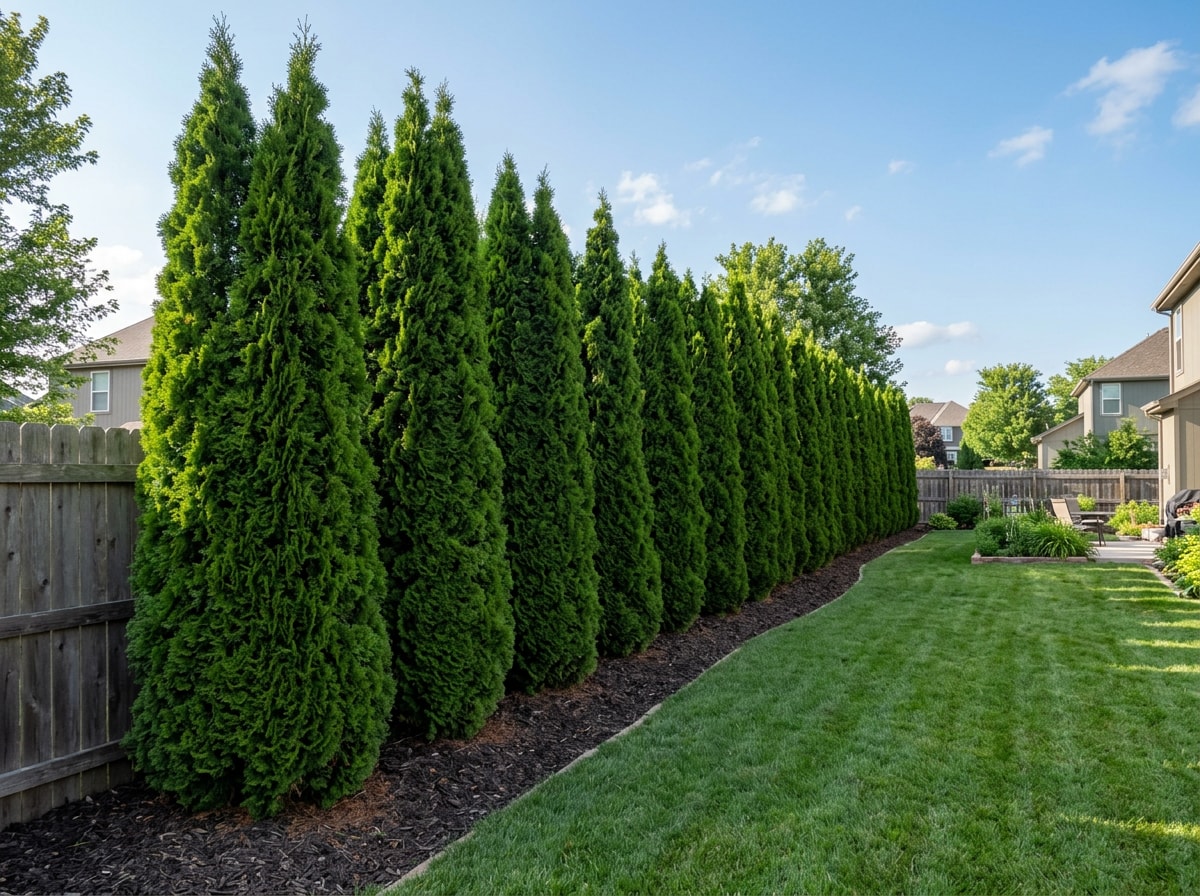
Arborvitae remains one of the most popular small evergreen tree choices for Kansas yards. Most compact cultivars top out between 10 and 15 feet tall with a narrow, columnar shape that fits tight side yards without crowding a fence line.
Its dense, feathery foliage makes it a natural fit for a privacy screen, and rows planted a few feet apart create a solid hedge within a few growing seasons. It tolerates clay soil reasonably well as long as drainage isn't severely poor.
Junipers
Junipers have earned a reputation as one of the most dependable evergreens for Kansas landscaping, largely because they shrug off drought and wind better than almost anything else on this list. That resilience is why they're a go-to recommendation from regional extension experts and show up repeatedly on municipal preferred-tree lists.
They come in an unusually wide range of shapes and sizes, from low spreading groundcover types to upright, pencil-thin columns suited for narrow planting beds. For a low-fuss evergreen that handles Kansas summers and winters without constant attention, juniper is hard to beat.
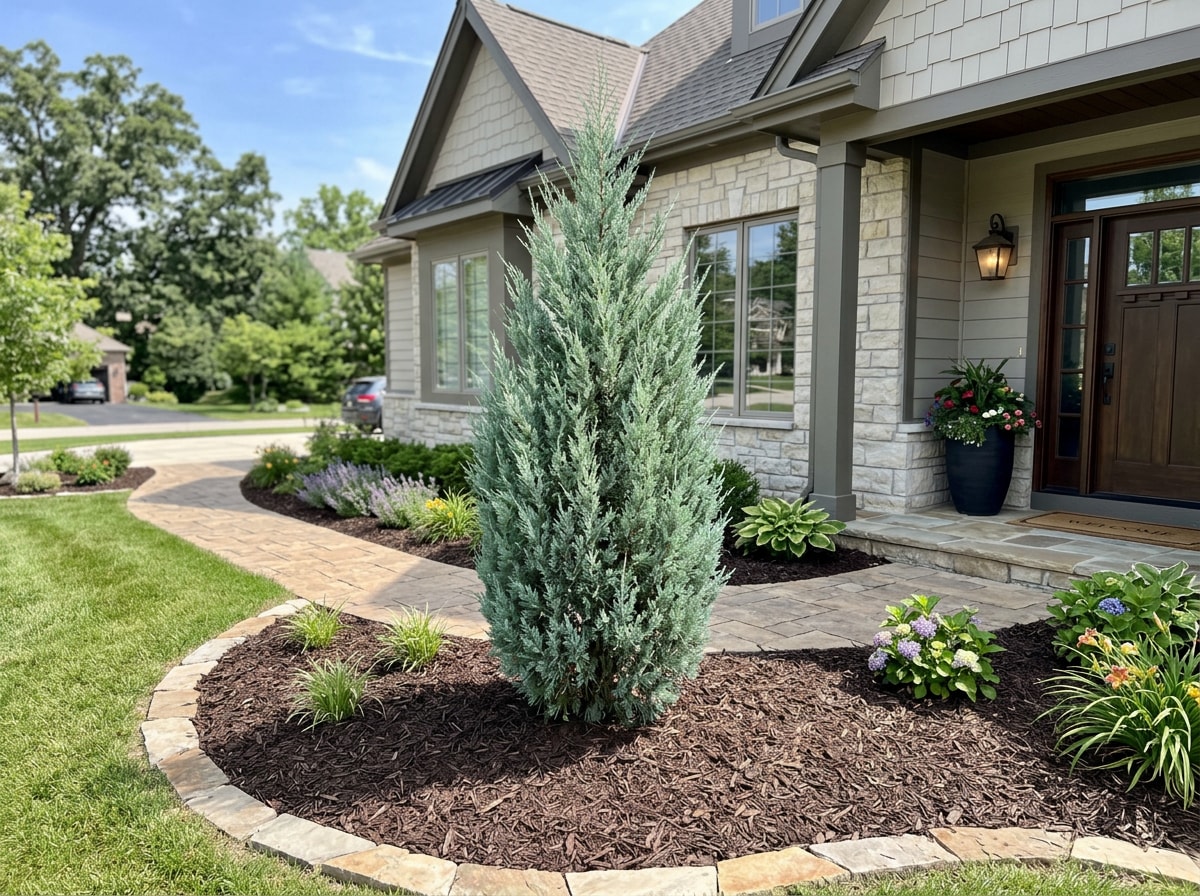
Compact Cedars
Compact cedar cultivars give Kansas homeowners a small evergreen option with a softer, more graceful form than junipers or arborvitae. Dwarf and weeping varieties stay manageable in smaller yards while still delivering year-round structure.
Cedars generally want full sun and well-drained soil, so raised beds or slightly sloped planting sites work better than low spots that collect standing water after storms. They're a solid choice for an accent tree near a patio or entryway.
Cryptomeria
Cryptomeria brings a texture few other evergreens offer, with soft, slightly drooping foliage that reads as ornamental rather than utilitarian. Compact cultivars make a good accent tree rather than a background screening plant, and they hold up reasonably well once established in a sheltered spot.
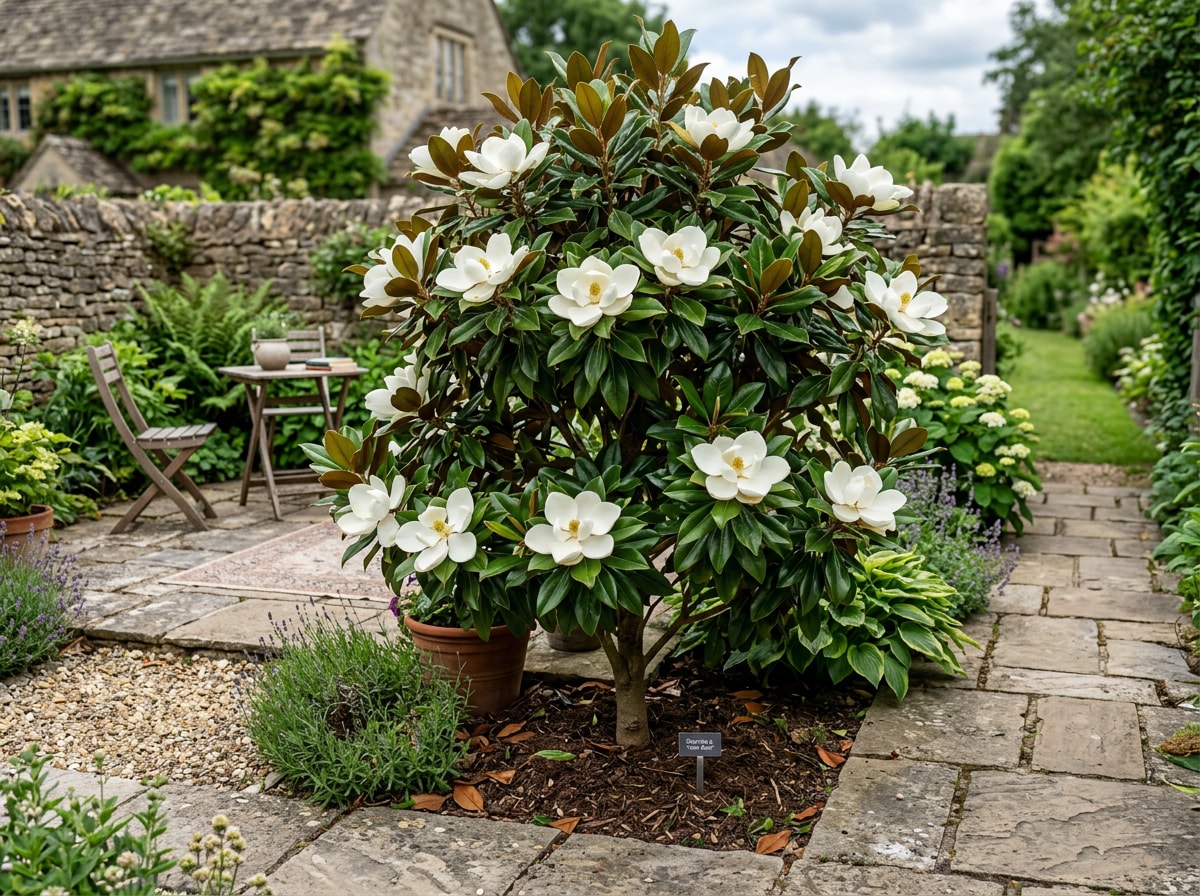
Compact Magnolias
Not every magnolia grows into a towering Southern classic. Compact cultivars bred for smaller yards offer the same glossy, evergreen foliage and fragrant blooms in a footprint that fits a standard suburban lot.
These smaller magnolias still want full sun, consistently moist but well-drained soil, and minimal root disturbance once planted. They're sensitive to transplant stress, so handle the root ball carefully during installation.
Hollies
Holly trees pull double duty as a dense evergreen hedge and a source of winter berry color, provided a male pollinator variety is planted nearby for fruiting female cultivars. They prefer slightly acidic, well-drained soil and tolerate partial shade better than most conifers on this list.
Compact cultivars range from low, rounded shrubs to narrow, upright forms that work well along property lines.
Aucubas
Aucuba is a broadleaf evergreen shrub worth considering for the shadier corners of a Maize yard where sun-loving conifers struggle. Its variegated, glossy foliage adds brightness to low-light spots under mature shade trees or along a north-facing wall.
Evergreens to Skip in Maize, KS
Some evergreens that perform beautifully in other regions struggle badly once planted in south-central Kansas, and knowing which ones to avoid saves years of frustration.
- Several spruce and fir varieties marketed nationally tend to decline here within a few years regardless of initial care, since they're bred for cooler, wetter climates than ours.
- Stressed or densely planted conifers are more prone to fungal tip blight, which causes browning and dieback in humid Kansas summers.
- Species without documented wind tolerance often suffer winter burn, where drying winds strip moisture from foliage faster than frozen roots can replace it, leaving scorched, brown needles by late winter.
Before buying an evergreen outside the species covered above, check it against the K-State Research and Extension conifer guide for Kansas to confirm it's suited for our conditions rather than just hardy on paper somewhere else.
Planting & Installation Tips
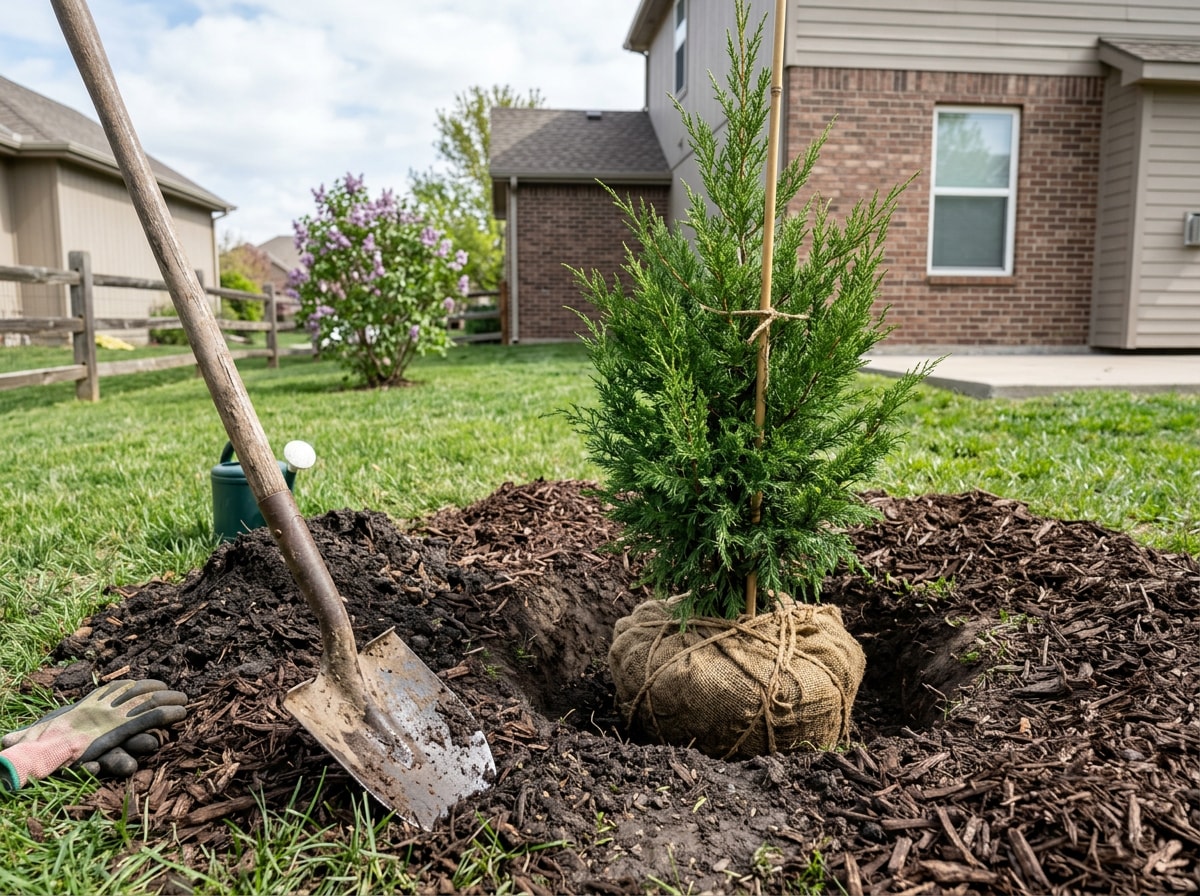
Fall is generally the best planting window for evergreens in Kansas, giving roots time to establish before summer heat arrives. Early spring works too if watering stays consistent through the first growing season. Avoid planting during peak July and August heat whenever possible.
A few basics matter more than anything else:
- Dig the hole wider than the root ball, but no deeper.
- Water thoroughly at planting to eliminate air pockets around the roots.
- Stake only taller, top-heavy trees in exposed, windy spots, and remove stakes after the first year.
- Mulch 2–3 inches deep around the base, keeping mulch off the trunk itself.
Getting the tree in the ground correctly is half the battle. The other half is making sure it fits the rest of your landscape plan, especially if you're adding a privacy screen or windbreak as part of a larger project. A landscape construction crew can handle larger installs, tie-ins to existing beds, and grading so water drains away from new roots instead of pooling around them.
If you're planning a bigger yard refresh alongside new trees, it's worth reading our guide to lawn seeding services in Maize, KS so the turf and the trees go in on the same timeline instead of fighting each other for water.
Conclusion
The best small evergreen trees for landscaping in Maize, KS share a few traits: tolerance for clay soil, resilience against wind, and the ability to handle inconsistent rainfall without constant babying. Junipers, arborvitae, and compact cedar cultivars top the list for reliability, while hollies and magnolias add seasonal interest for yards that want more than just green.
Once your evergreens are established, keeping the rest of the property looking sharp is easier with routine landscape maintenance. If you're in Maize or anywhere nearby, get a free estimate from Stellar's team before you buy a single tree; we'll tell you honestly whether a species belongs in your yard.
Visit Stellar to see our full range of landscaping and lawn services, or check out our Maize, KS service area page for local project photos.
FAQ
What are some evergreen trees that stay small?
Arborvitae, juniper, cryptomeria, and dwarf magnolia cultivars all stay compact enough for smaller yards, typically maturing between 8 and 15 feet depending on the variety. These work well as accents, hedges, or privacy screens without overwhelming a standard residential lot.
What are the best evergreen trees for Kansas?
Junipers are widely considered the most dependable evergreen for Kansas conditions because they tolerate drought, wind, and clay soil better than most alternatives. Arborvitae and compact cedar cultivars also perform reliably across the region's hot summers and exposed winters.
What is a good small tree for landscaping?
A good small tree for landscaping stays within its expected mature size, requires minimal ongoing maintenance, and offers year-round interest through foliage, structure, or seasonal color. It should also tolerate your local soil and climate without extra intervention.
What is the least messy evergreen tree?
Arborvitae and non-fruiting juniper or holly cultivars tend to be the least messy, since they drop minimal debris compared to fruiting or cone-heavy species. Choosing a low-litter variety cuts down on cleanup around patios, walkways, and driveways.
When should I plant evergreen trees in Maize, KS?
Fall is the best window, since cooler temperatures let roots establish before summer heat and wind arrive. Early spring is a workable second choice if you commit to consistent watering through the first growing season.
Do evergreen trees need a lot of water in Kansas clay soil?
Yes, especially in the first two years. Clay soil drains slowly, so overwatering can cause root rot, but Kansas wind and dry winters still pull moisture from foliage, meaning new evergreens need a deliberate watering schedule rather than guesswork.
Can evergreen trees work as a windbreak in a small Maize yard?
Yes. Junipers and arborvitae planted in a staggered row block wind effectively even in a standard residential lot, and their small mature footprint means they won't outgrow a typical side yard or fence line.