Mulching in Park City, KS keeps garden beds moist, weed-free, and finished-looking through Kansas's hot summers and heavy clay soil. A professional visit preps the bed, spreads material to the right depth, and cuts a clean edge in a single trip. Here's what that visit includes, which mulch types hold up best locally, and how often beds actually need a refresh.
Professional Mulching Service in Park City, KS
Mulching is handled as part of lawn care service for Park City homeowners, not as a Wichita-only add-on. Garden beds here deal with the same baking summer sun, gusty wind, and compacted clay that make a properly installed mulch layer worth the investment across the metro.
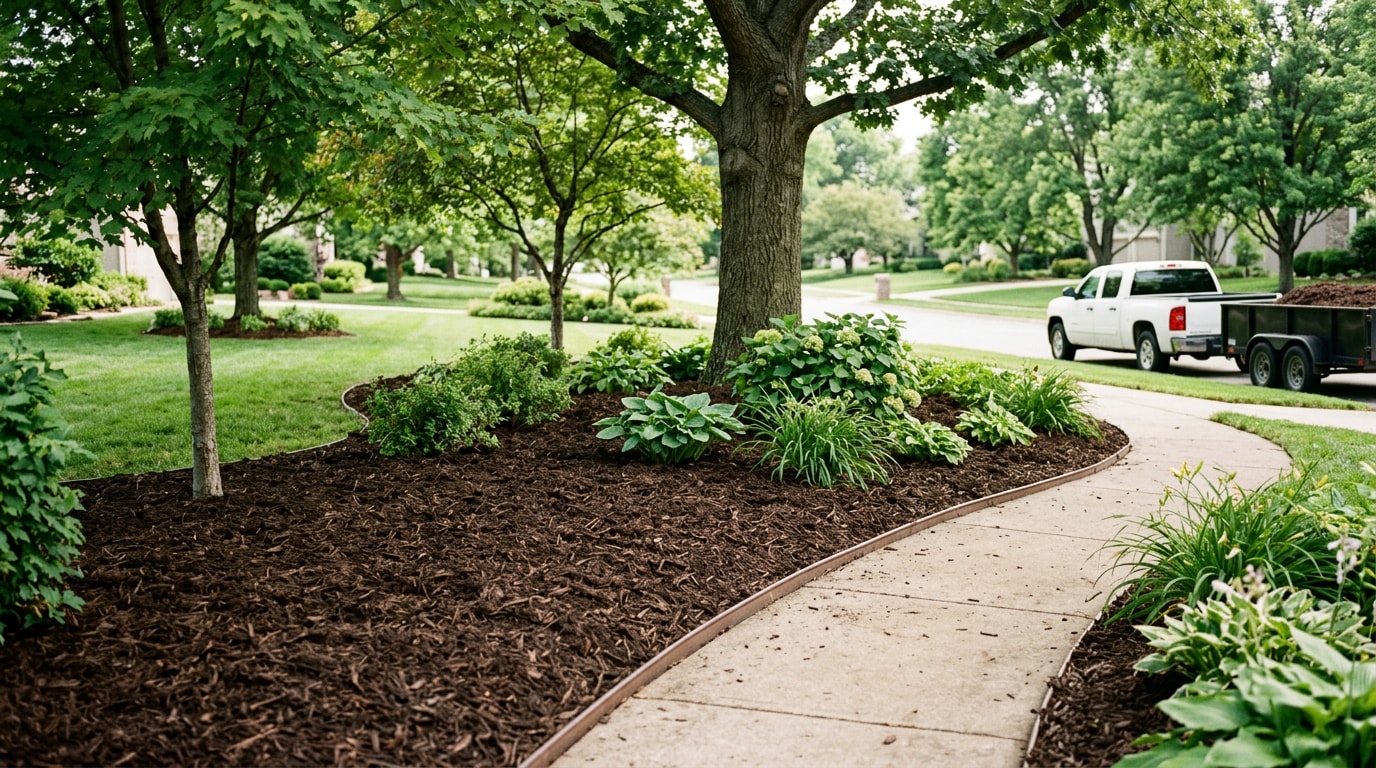
Professional mulch work means more than dumping bags around a tree. It involves clearing old debris, spreading material at a consistent depth, and shaping a clean bed edge so the planting holds moisture and resists weeds. In our experience servicing Sedgwick County yards, the beds that hold up longest are the ones edged correctly the first time, not just topped off every spring.
For many homeowners, hiring it out saves a weekend of hauling bags and guessing at depth. You can get a free estimate for your specific beds before committing to anything.

What's Included in a Mulching Visit
A typical visit follows the same sequence regardless of bed size:
- Bed prep – clearing leaves, old mulch clumps, and debris before anything new goes down
- Mulch placement – spreading material evenly at a consistent depth across the bed
- Edging – cutting or re-cutting a clean line between bed and turf
- Cleanup – blowing off walkways, driveways, and turf so no material is left behind
This work is typically bundled into the broader mulching service and mulch installation offered for Park City and the surrounding communities, so beds get attention alongside the rest of the yard.
Mulch Depth and Material: What Actually Works in Kansas
Mulch depth matters more than most homeowners expect. Piled too deep, mulch holds excess moisture against stems and roots and can invite rot. Piled too thin, it does little to block weeds or hold soil moisture during dry stretches.
Research-based guidance holds that 2 to 4 inches of mulch is sufficient on well-drained soils, with less needed on poorly drained soils.
On shallow-rooted plants and smaller beds, keeping mulch shallow, from one to three inches, is the safer range. Local extension guidance for the Wichita area recommends a similar approach, spreading mulch to a one-inch depth in flower beds where plants are more sensitive to a heavy layer.
One mistake worth avoiding entirely: piling mulch up against trunks and stems in a mound, sometimes called "volcano" mulching. Overmulching landscape trees is common, and this practice is never recommended and should not be utilized. A finished bed keeps mulch pulled back a few inches from any trunk or stem.
Material choice changes how often a bed needs attention:
| Mulch Type | Best For | Trade-Off |
|---|---|---|
| Shredded hardwood | General beds, slopes | Breaks down slowly, holds position well in wind |
| Dyed mulch | Color-focused front beds | Holds rich color early, fades faster by late season than natural hardwood |
| Pine bark nuggets | Foundation plantings | Resists compaction, but lighter nuggets can scatter in strong Kansas gusts |
A quick coverage check: a cubic yard of mulch covers roughly 160 square feet at a 2-inch depth, or about 100 square feet at 3 inches. That math helps when estimating how much a bed actually needs before a crew arrives.

Keeping Beds Looking Finished Year-Round
Mulch is not a one-and-done project. It naturally breaks down over a season, weeds start pushing through thinning spots, and color fades under sun exposure.
For Park City properties, this ties directly into regular bed care. A refresh a season or two after the initial application keeps weed suppression working and restores the finished look the bed had when first installed. Before adding a fresh layer, it's worth checking total depth first. In general, mulch depth should not exceed a total of 3 inches, including the mulch remaining from previous years and the current season's application. If the old layer is already at that limit, a light rake-and-refresh does more good than piling on more material.
Bed maintenance pairs naturally with landscape bed weeding and seasonal cleanup, so mulch keeps doing its job between visits instead of needing attention every few weeks.

Mulching as Part of Full-Service Lawn Care in Park City, KS
Mulching is available in Park City as part of a broader lineup of lawn care services, not as a standalone service limited to Wichita addresses. Park City homeowners get the same coverage as the rest of the metro, including nearby Wichita, KS neighborhoods.
Mulch work pairs naturally with other seasonal needs: spring yard cleanup, fall yard cleanup, and ongoing weed control. It functions as one piece of a larger seasonal program rather than an isolated task. If you're budgeting for a bed refresh alongside other mulch work nearby, the mulch installation cost guide for Bel Aire breaks down what drives pricing up or down.
Visit the homepage to see the full range of services, or check the Park City, KS area page for local coverage details. Ready to get started? Request a free estimate and describe your beds.
FAQ
Is mulching available in Park City, or only in Wichita proper?
Mulching is offered throughout Park City as part of standard lawn care coverage, not as a Wichita-only extra. Crews servicing the metro treat Park City beds the same way they treat beds anywhere else in the service area.
How much mulch does a typical garden bed need?
It depends on bed size and target depth. As a rough guide, one cubic yard of mulch covers about 160 square feet at 2 inches deep, or about 100 square feet at 3 inches deep. A quick measurement of the bed's length and width gets you close enough to request an accurate quote.
Do I need to remove old mulch before adding new?
Not always. If the existing layer is thin and not matted, a fresh layer on top usually works. Total mulch depth, including old material plus new, generally shouldn't exceed 3 inches. If the bed already has a thick or compacted layer, raking it out or removing it first keeps the bed from building up too deep.
What's the best time of year to mulch in Kansas?
Spring, after the soil has warmed, and fall, before the first hard freeze, are the two most common windows. Spring mulching helps beds retain moisture heading into summer heat; fall mulching helps protect roots through winter temperature swings.
Can mulching be combined with other lawn services?
Yes. Mulching is typically bundled with bed weeding, seasonal cleanup, and general lawn maintenance rather than scheduled as a completely separate visit.
{ "hero": { "prompt": "Photoreal trade photo of a freshly mulched landscape garden bed along the foundation of a single-story suburban home, dark brown shredded hardwood mulch spread evenly at a clean edge against green turf, small shrubs and perennials planted in the bed, bright midday sun, no people visible, unbranded plain landscaping truck barely visible in driveway background with no text or logos, no signage, no text or lettering anywhere in the scene", "alt": "Freshly mulched garden bed along a home foundation in Park City, KS" }, "inline": [ { "id": "inline-1", "prompt": "Photoreal close-up trade photo of a well-edged mulched garden bed bordering a brick house foundation, rich brown shredded mulch spread at consistent depth, small ornamental shrubs planted in the bed, clean grass edge cut along the border, natural daylight, no people, no text, no logos, no brand markings anywhere", "alt": "Freshly mulched garden bed along a Park City, KS home foundation" }, { "id": "inline-2", "prompt": "Photoreal close-up photo of gloved hands spreading dark mulch around the base of small flowering plants in a garden bed, mulch texture visible, soil and plant roots partially covered, natural outdoor lighting, no visible face, no text, no logos, no branding of any kind", "alt": "Close-up of hands applying mulch around plants in a garden bed" }, { "id": "inline-3", "prompt": "Photoreal split-style before and after comparison of the same garden bed, left side showing thin patchy faded old mulch with weeds poking through, right side showing the same bed freshly mulched with even dark brown material and a clean edge, daylight, no people, no text, no logos, no watermarks", "alt": "Before and after comparison of a garden bed with fresh mulch applied" } ] }