Rock bed landscaping in Goddard, KS has to survive heavy clay soil, summer heat, and real freeze-thaw swings, not just look good on install day. Material choice and prep work decide whether a bed still looks sharp in year five or needs a full rebuild. Here's what actually holds up on Goddard properties, what it costs, and how to install it correctly the first time.
Rock Bed Landscaping Costs in Goddard, KS
Rock costs more upfront than mulch, mostly because of material weight and delivery. Local pricing still swings based on access to the bed, how much old material has to come out first, and which stone you pick.
| Material | Cost per ton | Installed cost per sq ft |
|---|---|---|
| River rock | $45 – $150 | $2.00 – $4.50 |
| Pea gravel | $35 – $100 | $1.50 – $3.50 |
| Crushed limestone | $30 – $85 | $1.25 – $3.00 |
| Decorative boulders | $100 – $350/ton | Priced individually |
A small to medium bed (100 to 300 square feet) typically installs for $300 to $1,200 total, including edging and fabric. Add delivery fees for bulk orders and expect labor to climb if old mulch or sod needs removing first.
Rock also tends to win the long game on cost. A properly installed bed can last well over a decade with occasional top-offs, while mulch needs yearly replacement. Want an exact number instead of a national average? Get a free estimate based on your actual yard.
Choosing the Right Rock Material for a Goddard Landscape Bed
The right material depends on where the bed sits and what job it needs to do, not just which stone looks best in the driveway.
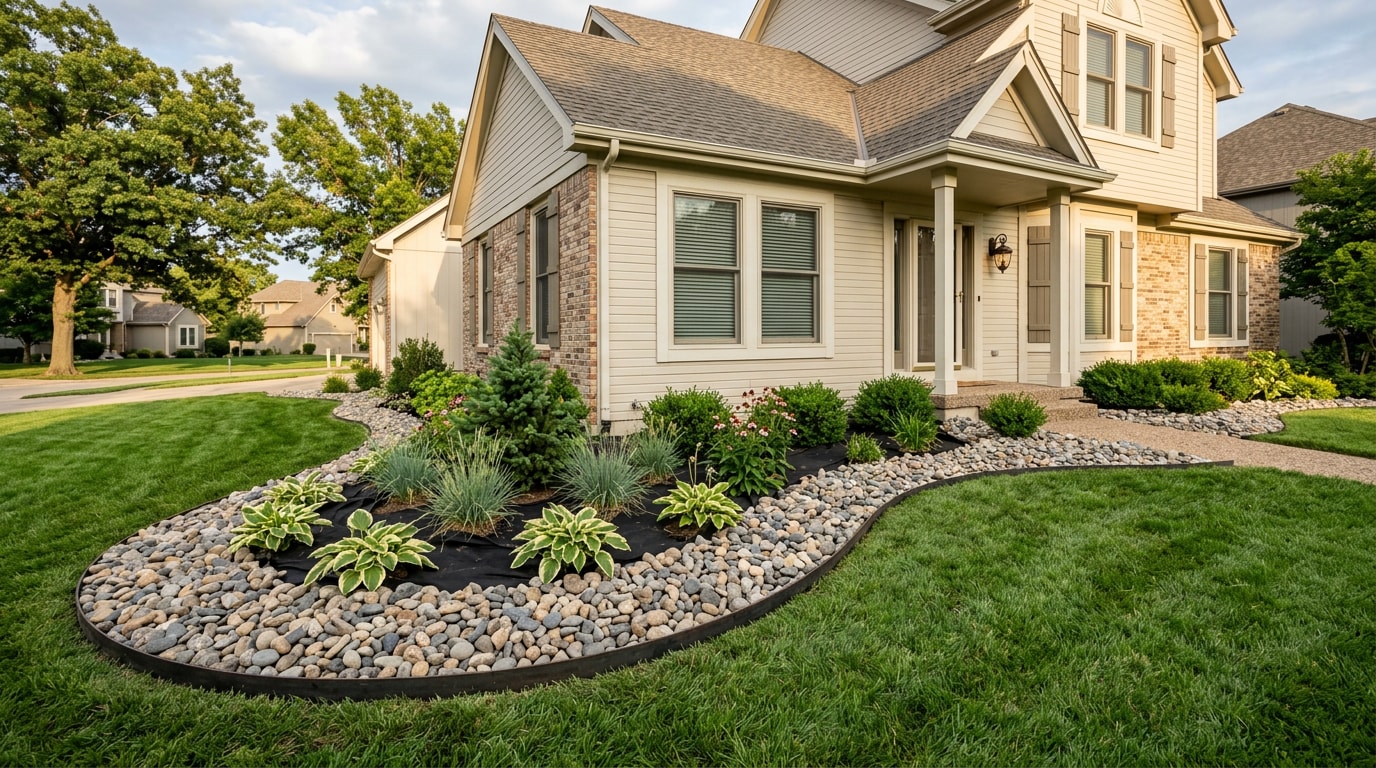
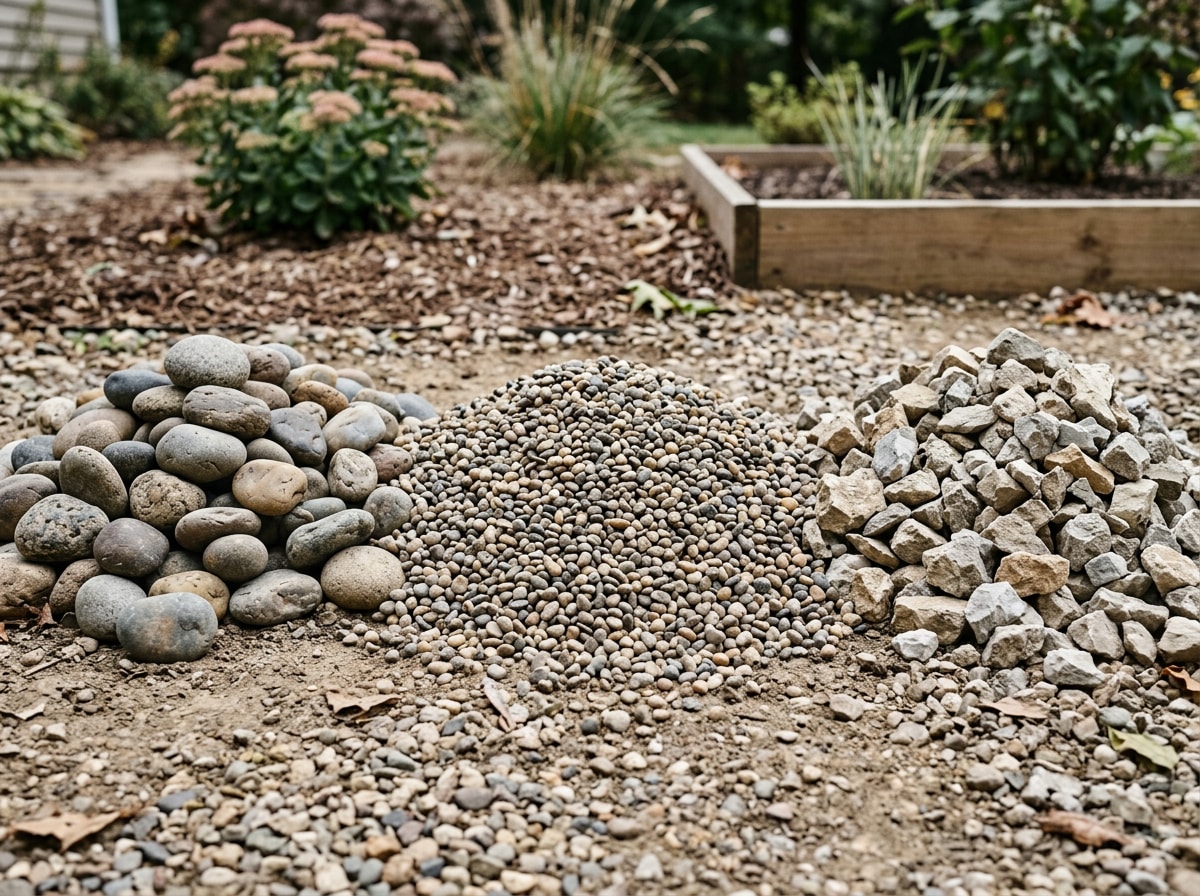
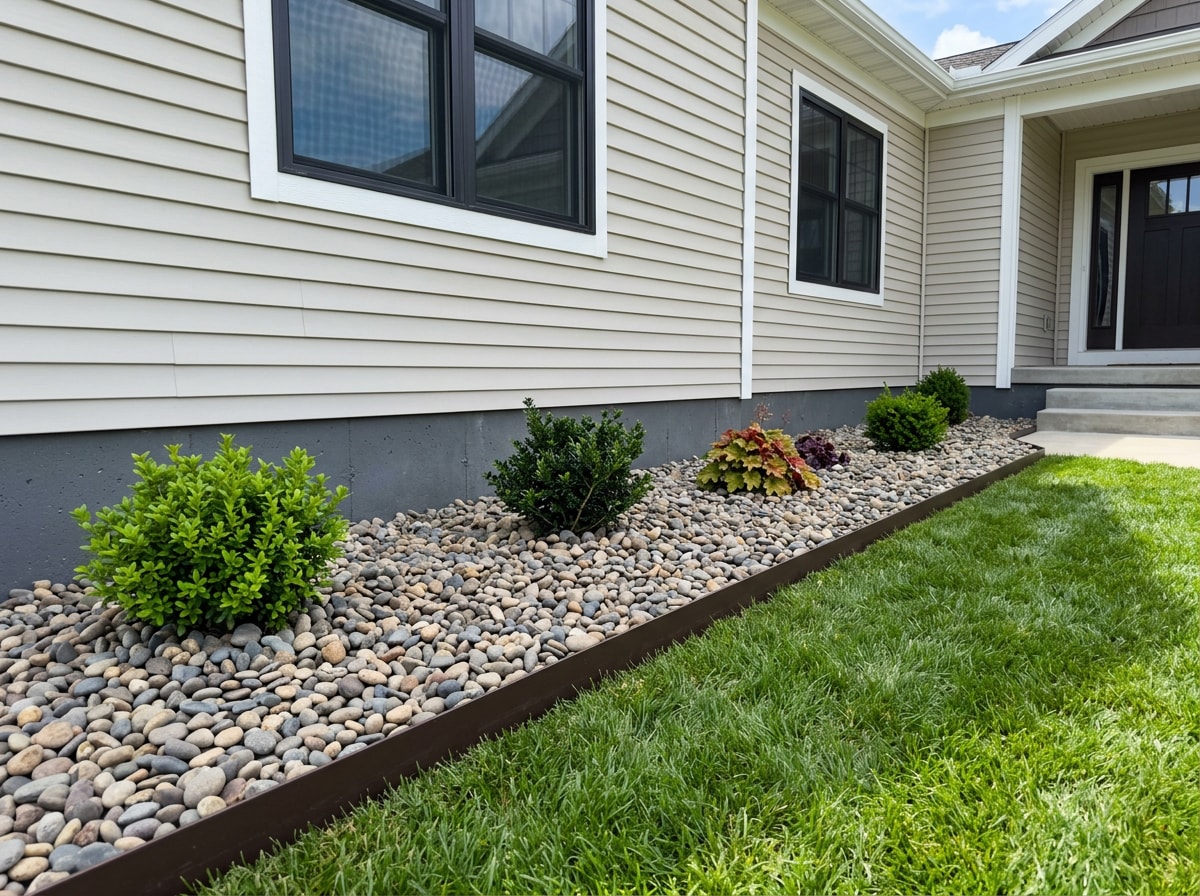
- River rock is smooth and rounded, and it works well for dry creek beds, drainage paths, and accent areas where a natural look matters.
- Pea gravel is small, loose, and budget-friendly for walkways or filler areas, though it migrates without edging to hold it in place.
- Crushed limestone is angular and compacts tighter, which makes it a solid base layer or a durable choice for high-traffic beds.
- Decorative boulders work as focal points rather than full bed coverage.
On jobs across Goddard, beds placed tight against a foundation need different prep than an open front-yard accent bed. Budget, drainage, and location should drive the material pick more than looks alone. Our landscaping services page breaks down current material options if you want to compare before calling anyone.
How Much Rock Do You Need?
Most suppliers sell rock by the ton or cubic yard, not by the bag, so a rough estimate matters before you place an order. The basic math is square footage multiplied by depth, then converted to cubic yards or tons.
As a general rule, one ton of rock covers roughly 80 to 100 square feet at a 2-inch depth, though exact coverage varies by material density. A 10x10 ft bed at 3 inches deep needs about 1 cubic yard of material, which weighs close to 1.3 to 1.5 tons depending on the stone type.
To calculate cubic yards, multiply length by width by depth in feet, then divide by 27. Add 10 to 15 percent to your total for waste and settling so you're not placing a second order mid-project.
Kansas Clay Soil and Weather: Why Local Prep Matters
Goddard sits on dense clay that drains slowly, and the area sees dozens of freeze-thaw cycles each winter. That repeated expansion and contraction pushes rock around and settles stone unevenly if the base isn't prepped correctly.
A common fix homeowners try on their own is mixing sand into the clay to loosen it up. According to Kansas State University's Sedgwick County Research and Extension office, adding sand to a clay soil can be very detrimental and often produces something closer to concrete than looser, better-draining ground. Organic matter and proper grading work far better for drainage than sand ever will.
Rock placed without that grading and without fabric separation tends to sink into clay within a season or two, migrate into the lawn, and let weeds sprout through the gaps. It's a frustrating, avoidable fix once it happens.
Rock vs. Mulch: Which Belongs in Your Landscape Beds
Neither material wins everywhere. The real mistake is picking one material for an entire yard instead of matching it to each bed's actual job.
| Factor | Rock | Mulch |
|---|---|---|
| Upfront cost | Higher | Lower |
| 5-year cost | Lower (rarely replaced) | Higher (annual refresh) |
| Plant health | Neutral to negative | Positive (enriches soil) |
| Drainage | Good, if graded right | Moderate |
| Heat near structures | Higher | Lower |
| Maintenance | Low, occasional weeding | Moderate, yearly top-off |
Rock does nothing for soil quality, while mulch breaks down over time and enriches it, keeping roots cooler as it goes. That makes rock a poor match for beds full of perennials or shrubs that depend on healthy soil underneath them.
Rock also traps more heat than mulch. A south- or west-facing bed against a wall can run noticeably hotter than the same bed in mulch, since stone absorbs solar energy and releases it slowly into the evening. The EPA's research on reducing heat around buildings confirms why dense, heat-absorbing surfaces near structures deserve extra thought before installation, and the same principle applies at the scale of a single landscape bed.
Our landscape bed weeding and mulch installation services cover the beds better suited to organic material, so a yard doesn't have to be all one or the other.
Converting From Mulch to Rock
Remove the old mulch first. Layering rock over decomposing mulch creates an unstable base that settles unevenly as the material underneath keeps breaking down.
Re-grade the bed and lay fresh fabric before any rock goes down. Skipping this step is the single most common reason a mulch-to-rock conversion looks great for a month and sloppy by next spring.
How to Install a Rock Bed, Step by Step
Correct prep, not the rock itself, determines whether a bed still looks sharp in five years.
- Excavate the bed to remove existing sod, old mulch, or debris down to clean soil.
- Install edging, typically steel, to keep rock contained and out of the lawn.
- Lay landscape fabric across the entire bed for weed suppression and separation.
- Spread the rock evenly to the target depth, raking as you go.
- Rinse the surface after delivery. Bulk rock arrives dusty, and a light rinse settles dust and brightens the stone's color.
Fabric matters more here than in lighter soils, since Goddard's clay lets rock sink and migrate without a barrier in place. It's also worth knowing fabric isn't permanent: research from Utah State University Extension notes that fabric weed barriers typically perform for about five years under normal conditions before needing attention. Budgeting for that reality upfront beats being surprised by it later.
For a closer look at sizing larger stone for accent areas, see our guide on large river rocks for landscaping in Goddard, KS. For help with prep and installation on your own property, our hardscape installation and landscape construction teams handle the grading, edging, and fabric work that makes a bed last.
FAQ
How much does rock bed landscaping cost in Goddard, KS?
Most projects run $2.00 to $4.50 per square foot installed, or $300 to $1,200 total for a typical 100 to 300 square foot bed. Larger beds, boulder features, or sites needing old material removed first will run higher.
What's the best rock for Kansas landscaping?
River rock is the most versatile choice for accent beds and drainage areas. Crushed limestone holds up better in high-traffic spots because it compacts tighter, and pea gravel works well for pathways on a tighter budget.
How deep should river rock be?
Pathways and borders typically need 2 inches, decorative beds work well at 2 to 3 inches, and drainage or dry creek applications often call for 3 to 4 inches.
Do you need fabric under river rock?
Yes. Fabric keeps stone from sinking into clay soil, though it isn't permanent weed control and typically needs attention after about five years.
Will weeds grow through river rock?
With proper fabric prep, weed growth stays minimal for years. Without fabric, weeds through rock become a common problem within a season or two.
Can rock fix a drainage problem in my yard?
Rock can help channel surface water, but it isn't a fix for an underlying grading or drainage defect. A real drainage problem needs correcting before rock goes down, not covered by it.
How long does a rock bed last?
A properly installed bed can last 10 to 20 years with minimal upkeep, far outlasting mulch, which needs yearly replacement.
Ready to get it done right the first time? Request a free estimate and we'll walk your Goddard property before you order a single ton of rock. You can also browse recent work on our projects page or start at {{SITE_URL}}/ to see our full range of services.