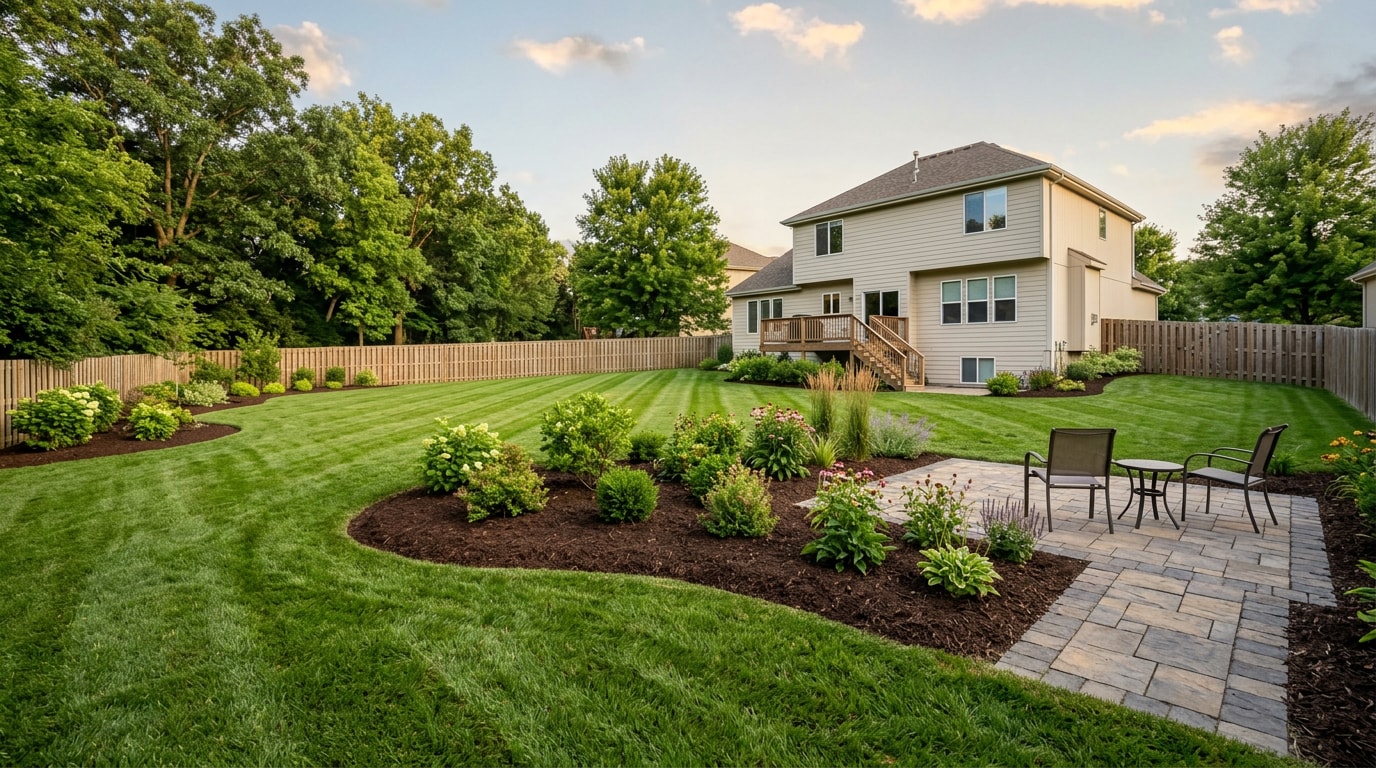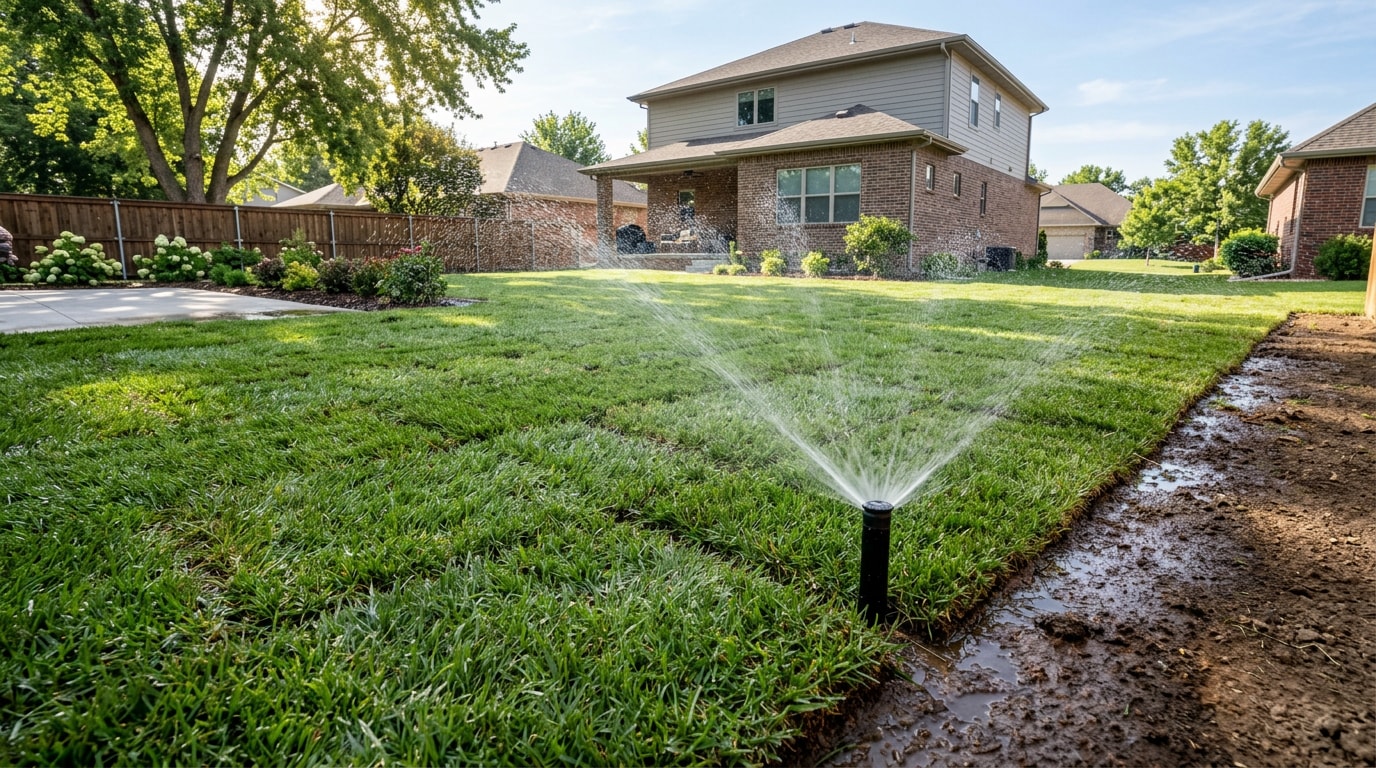
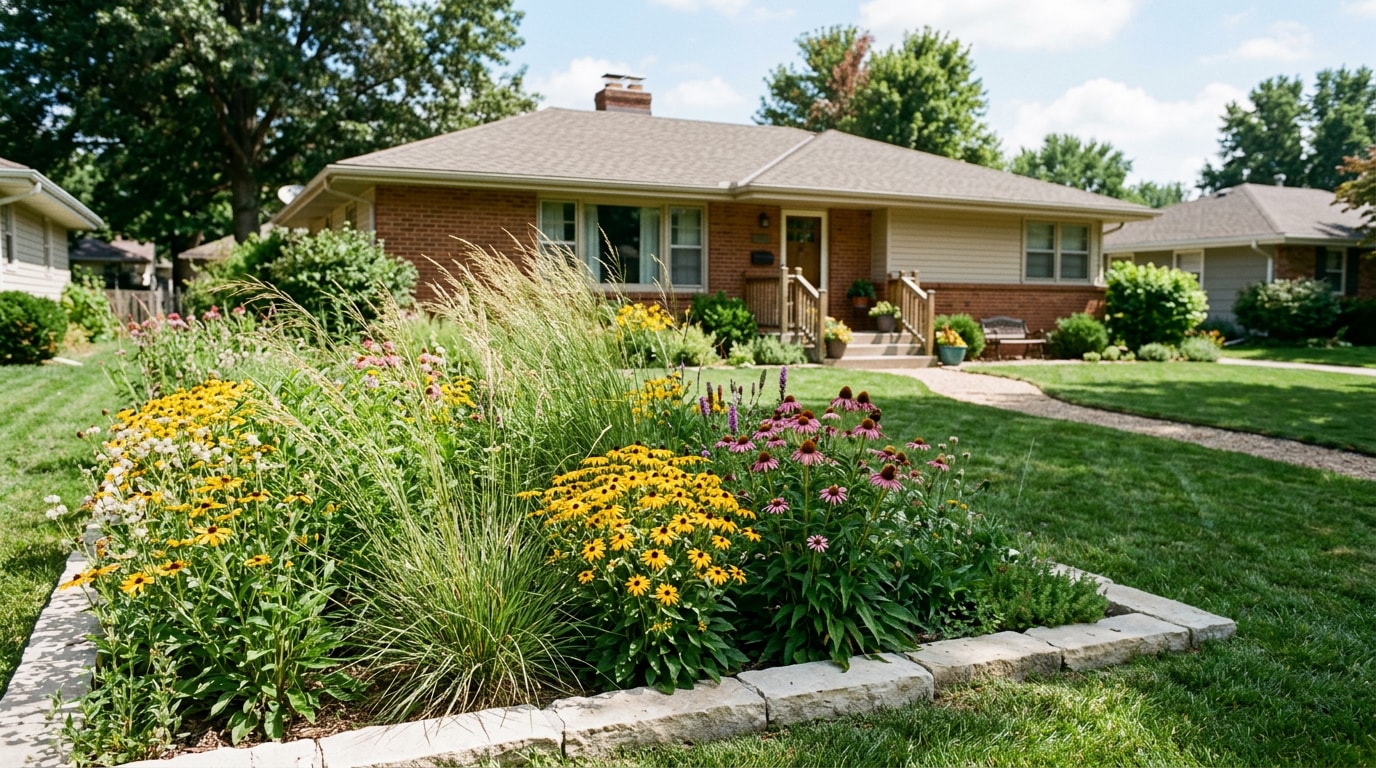
Natural landscaping in Haysville, KS means trading thirsty turf for native grasses, wildflowers, and ground covers built for south-central Kansas weather. More homeowners here are making the switch because it cuts mowing, watering, and chemical use without giving up a yard that looks intentional. Here's what it actually involves, what it costs in upkeep, and how to start without turning a front yard into an overgrown mess.
What Is Natural Landscaping, and Why Haysville Yards Are Switching
Natural landscaping is a design approach built around plants already native to a region instead of imported ornamentals that need constant babying. Rather than forcing a lawn to behave like a golf green, it leans on drought-tolerant grasses, wildflowers, and shrubs that evolved alongside Kansas weather.
Native plants require little maintenance because, when properly placed in a habitat similar to their native one, they need little supplemental water, no fertilizer and no chemical pesticides. That single fact is why a traditional lawn in south-central Kansas costs so much more in time and water than a native planting does once it's established.
The City of Wichita's own sustainability program backs this up locally: the City works with the Kansas State Extension Office to update its landscaping practices and perform outreach on native and drought tolerant plant species that can thrive in the Wichita area. Haysville sits inside that same climate zone, so the same native plant list applies.
Want to see what this looks like on an actual property? Browse our project gallery for completed yard transformations, or get a free estimate to talk through a design for your lot.
The Core Rules of Natural Landscaping
A few rules guide almost every successful native planting:
- Read the site first. Note sun, slope, and soil before buying a single plant.
- Favor natives over ornamentals. Species already thriving regionally beat ones that need constant coaxing.
- Cut synthetic inputs. Compost and mulch replace most fertilizer needs.
- Swap dyed mulch for living ground cover. Clover or low native sedges hold soil better than bare beds.
Our landscape design team can walk a property against these rules before any digging starts.
Natural Landscaping vs. Traditional Lawn Care in Haysville
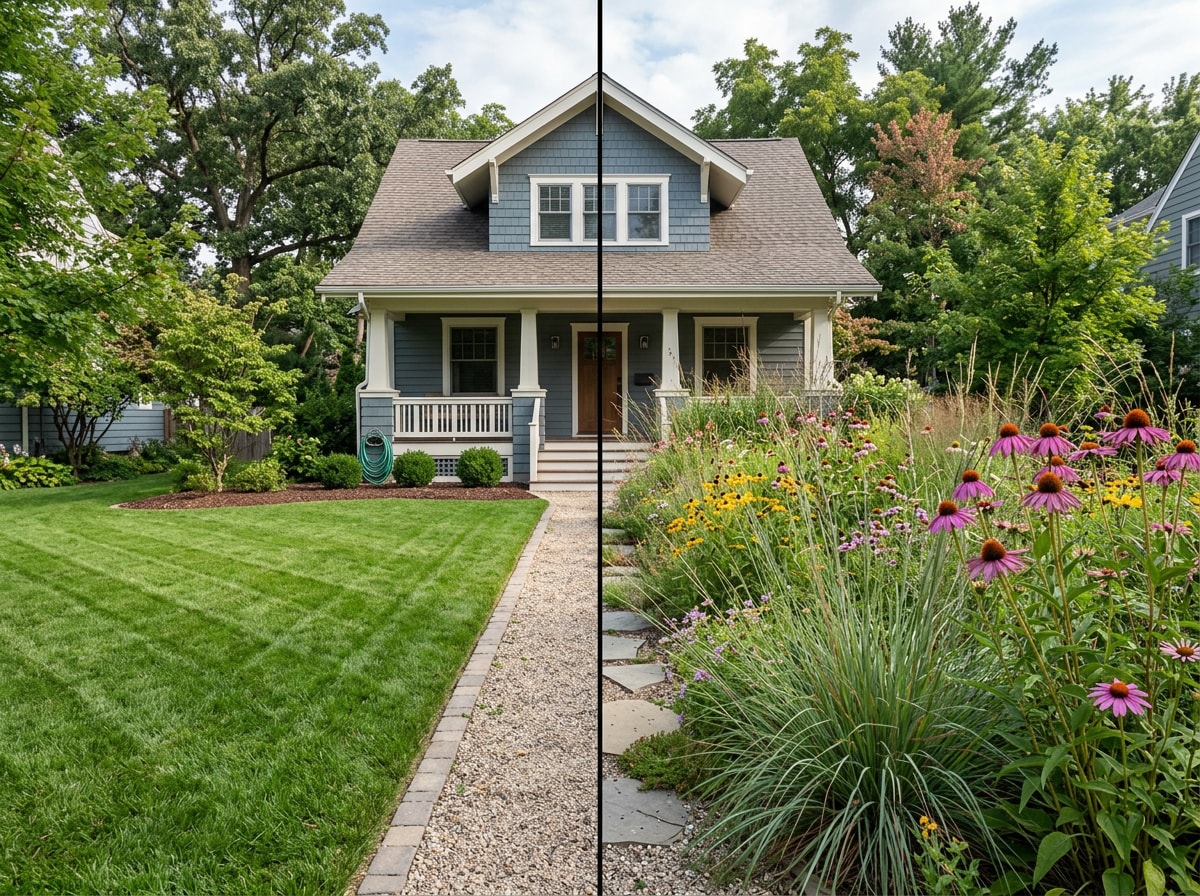
The two approaches differ on five fronts: water use, chemical inputs, maintenance hours, plant choice, and wildlife value.
| Factor | Traditional Turf Lawn | Natural Landscaping |
|---|---|---|
| Weekly water | 1 to 1.5 inches, often supplemental | Little to none once established |
| Chemical inputs | Routine fertilizer and herbicide | Minimal to none |
| Mowing | Weekly during the growing season | One to two cutbacks per year |
| Plant choice | Fescue, bluegrass, imported ornamentals | Little bluestem, coneflower, native sedges |
| Wildlife value | Low | Pollinator and bird habitat |
The City of Wichita notes that a lawn typically needs 1 to 1-1/2 inches of water per week, varying by turf grass type, and often that amount is matched by local rainfall anyway. Native plantings skip most of that supplemental watering entirely because their root systems reach moisture deeper in the soil profile.
Maintenance hours drop for a similar reason. Chemical inputs shrink because natives resist regional pests better than imported ornamentals do. Wildlife impact shifts too, from a mowed lawn that offers little to local species, toward plantings that genuinely feed and shelter birds, bees, and butterflies.
Benefits of Natural Landscaping
The appeal goes past looks. Homeowners who switch consistently report lower maintenance, real cost savings, more biodiversity, and better curb appeal once plantings mature.
Environmental Benefits
Native plantings reduce water use, chemical runoff, and lawn-care emissions. Native plants do not require fertilizers, require fewer pesticides than lawns, require less water than lawns, and do not require mowing. That combination means less equipment running in a yard and less chemical exposure for kids, pets, and neighbors.
Root structure matters too. Native plants improve water quality by reducing stormwater runoff, filtering pollutants and preventing soil erosion through deep root systems. A bed full of native grasses behaves more like a sponge during a sudden Kansas downpour than compacted turf does.
A 2026 Rebate Worth Knowing About
Here's something most natural-landscaping guides for this area skip entirely: Wichita's water utility (which serves Haysville through the regional system) added a new rebate category this year. The City of Wichita allocated $125,000 for the continuation of the Water Conservation Rebate Program, which encourages drought-tolerant landscaping, and new this year is the inclusion of drought-tolerant grasses and shrubs, with customers able to receive up to $100 for newly purchased drought-tolerant trees and shrubs.
There is a limit of five rebated items per water account, of which only one can be for grasses or shrubs, and rebates cannot exceed the purchase price of the item. It's not a massive check, but it offsets real plant cost for anyone converting a bed this year. Applications run through the city's water conservation program.
Does Natural Landscaping Raise Home Value?
Natural landscaping can boost home value by improving curb appeal and signaling lower future maintenance costs to buyers, though the exact dollar impact varies by market, plant maturity, and design quality. Well-designed native plantings read as intentional and cared-for, not neglected. That design intent matters more than the plant list itself.
Our landscape installation crew can keep a native bed looking structured from day one rather than waiting two seasons for it to fill in and start reading as "planned."
Natural Landscaping Ideas for a Haysville Yard
Once the principles make sense, the next question is what this actually looks like in a real yard.
Convert a Section to Prairie
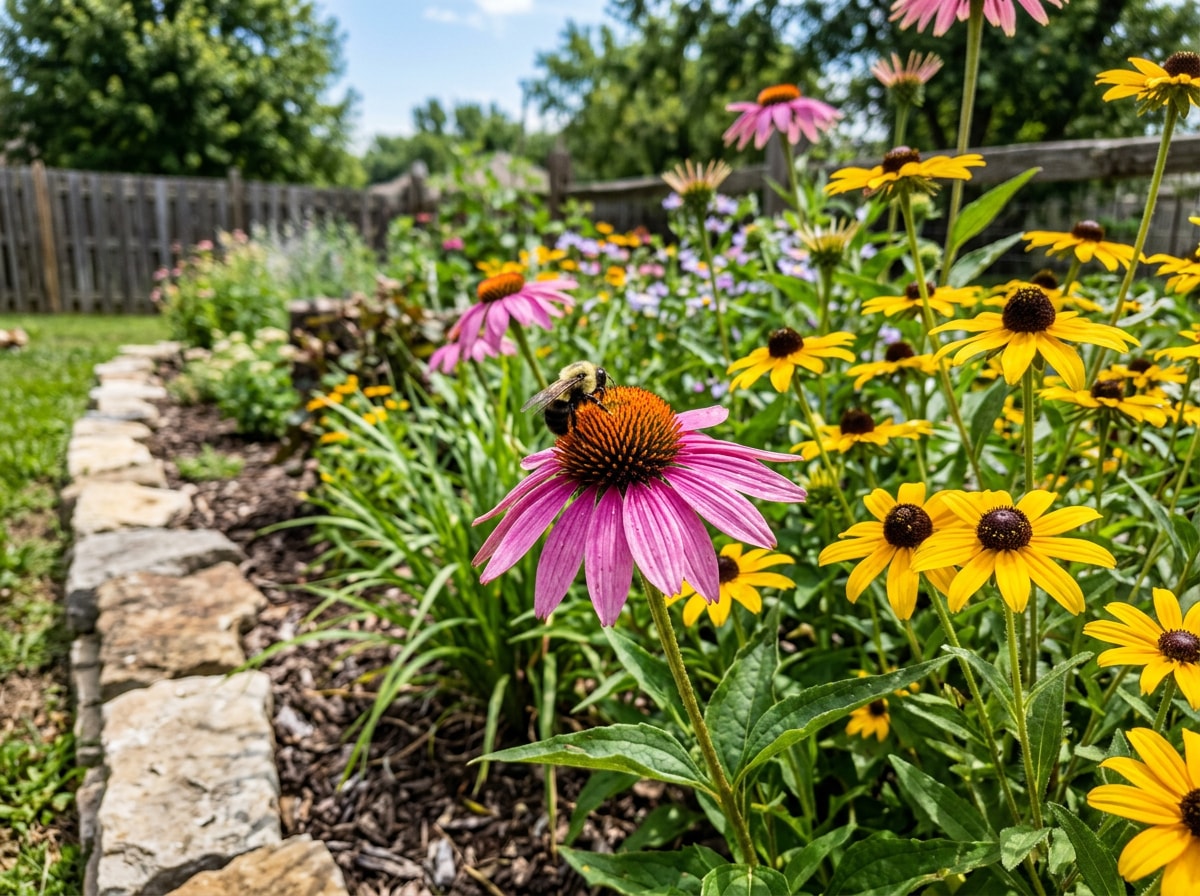
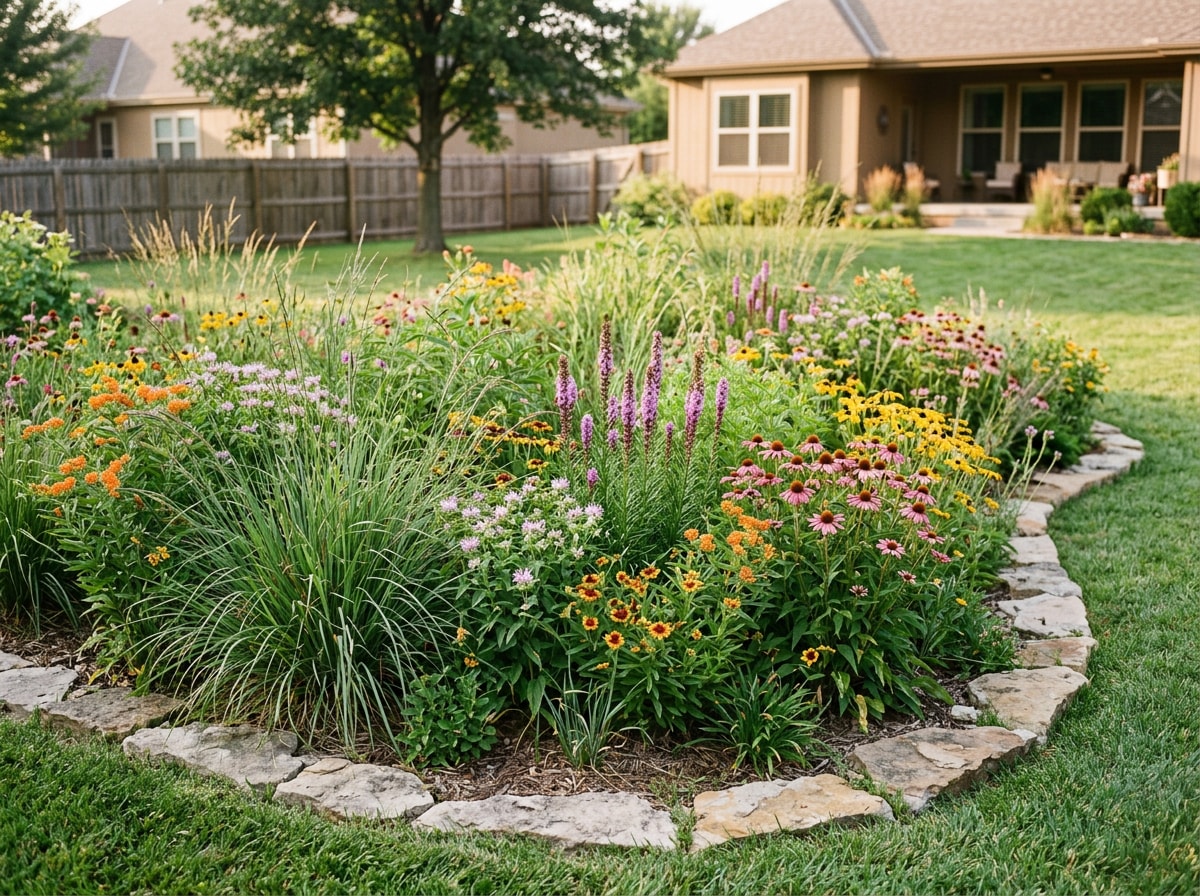
A prairie-style bed replaces part of a turf yard with native grasses and wildflowers suited to the region's tallgrass-prairie ecology. Species like little bluestem, side-oats grama, and black-eyed Susan need little water once established. Starting with one bed, rather than the whole yard, lets a homeowner watch a planting move through its first full season before committing further.
Use Rock and Stone to Mimic Nature
Medium and large rocks, clustered like they settled there naturally, create informal borders that read far more organic than straight paver lines or dyed gravel. This approach pairs well with native plantings because stone fades into the landscape instead of announcing itself. For a deeper look at sourcing and pricing stone for this kind of bed, see our crushed stone landscaping guide for Haysville homeowners.
Hardscape installation services can plan stone placement that holds up through Kansas freeze-thaw cycles instead of shifting every winter.
Mulch the Transition Zones
Fresh beds still need mulch while native plants fill in during year one. Professional mulch installation keeps weeds down and moisture even during that establishment window without resorting to landscape fabric that fights the soil long-term.
Is Natural Landscaping Low-Maintenance?
Natural landscaping is lower-maintenance than a traditional lawn, but it isn't zero-maintenance, especially during the first one to two years while native plants establish deep root systems. After that window, upkeep drops substantially.
Early care looks like this:
- Occasional watering during extended dry spells
- Spot-weeding until plants fill in and shade out competitors
- One seasonal cutback instead of weekly mowing
In our own crews' experience converting Haysville yards, the second growing season is where the difference becomes obvious. Plants that looked sparse in spring of year one fill in fast by year two, and watering calls basically stop. Our landscape maintenance team can handle that establishment-period care if a hands-off start matters more than doing it yourself.
FAQ
Can natural landscaping work for small yards?
Yes. The same principles scale down easily. A single native bed can apply the same ideas as a full prairie conversion, just at a smaller footprint with fewer species.
What does "natural landscaping" mean in plain language?
A yard planted mostly with species native to the area, designed to need less water, less mowing, and fewer chemicals than a conventional lawn.
Does natural landscaping look messy?
Not if it's designed with intent. Defined edges, a clear border between bed and lawn, and intentional plant groupings keep curb appeal high while still supporting local ecology. Letting everything grow unchecked is what actually reads as neglect.
Do pesticides need to be used in natural landscaping?
Not typically. Native plants require little supplemental water, no fertilizer and no chemical pesticides when placed in a habitat similar to their native one. That's what makes pesticide-free care realistic with the right plant choices.
Is there financial help for converting a Haysville yard to native plants in 2026?
Yes, through the regional water utility. Water customers may receive up to $100 for newly purchased drought-tolerant trees and shrubs under the City of Wichita's 2026 rebate program, which covers the Haysville service area.
How do I start if I'm not ready to convert the whole yard?
Start with one bed or a back corner. Watch how it performs through a full season before expanding. Contact us for a free estimate on a starter bed sized to your yard and budget. You can also explore the full range of services on our homepage or check service details for the Haysville, KS area.