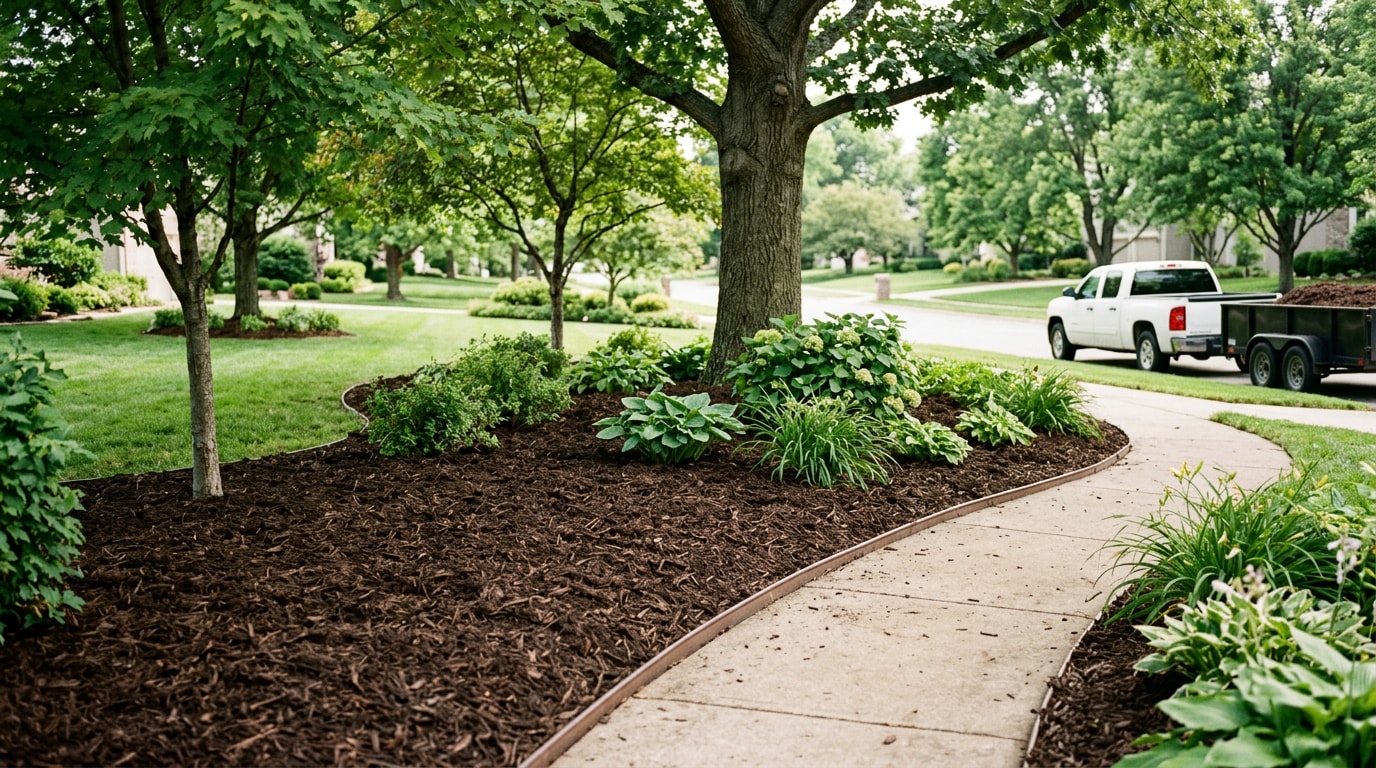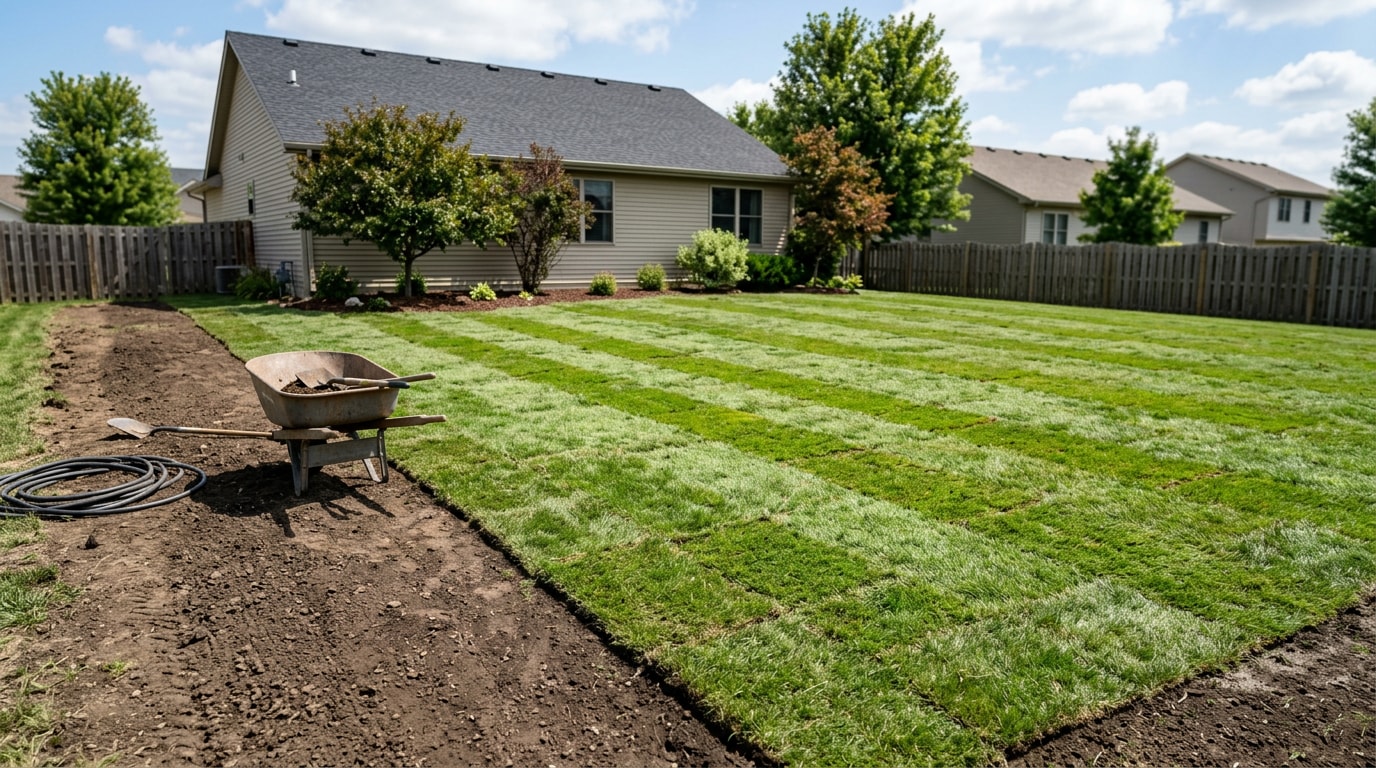
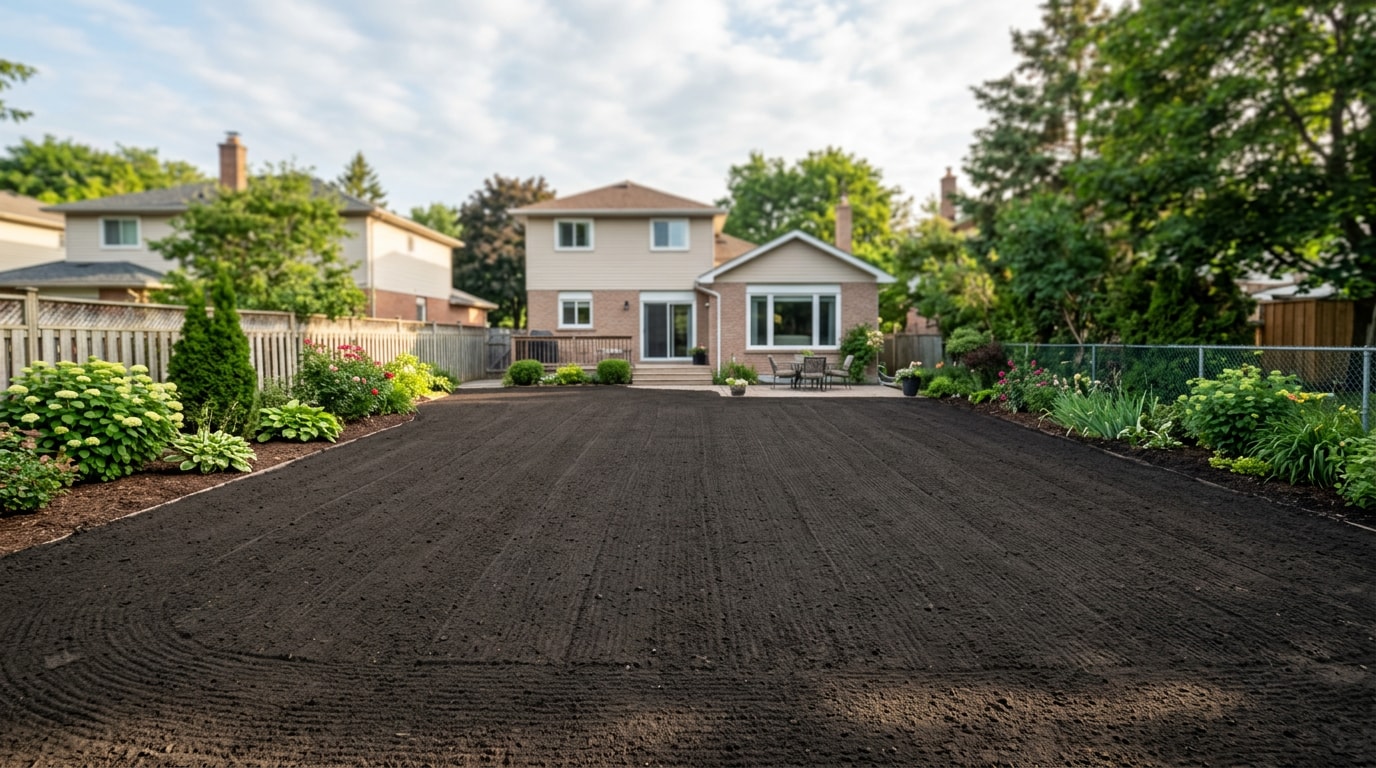
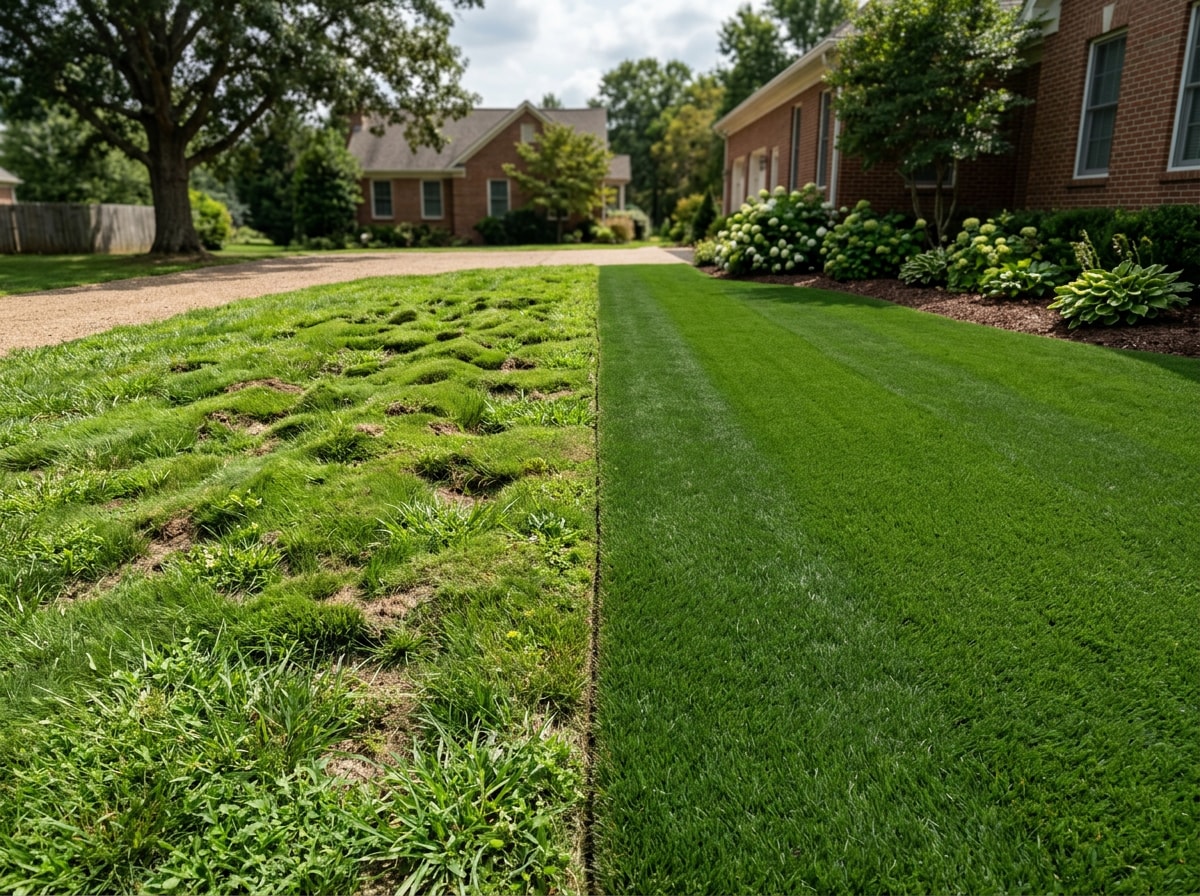
A lawn leveling service in Maize, KS smooths out the dips, ruts, and soggy low spots that heavy clay soil and new-construction grading leave behind. We've walked enough yards in this part of Sedgwick County to know that a "bumpy lawn" complaint is almost always a drainage problem wearing a different hat. Here's what the process actually involves, what it costs to fix, and when a quick topdress isn't enough.
Signs Your Maize Yard Needs Lawn Leveling
Not every uneven spot needs a full crew out there with equipment. A few signs tell you it's time to call instead of ignore it:
- The mower scalps grass in the same spots every time you cut
- Water sits in one area of the yard for more than a day after rain
- You can feel dips or trip hazards walking across the lawn barefoot
- Grass dies off in low areas while the rest of the yard looks fine
- Water pools near the foundation instead of running away from it
That last one matters more than homeowners usually realize. A yard that slopes toward the house instead of away from it is a drainage problem first and a cosmetic one second.
How Our Lawn Leveling Process Works
A professional lawn leveling service includes a site assessment, topdressing with a sand-compost-soil blend, grading to restore proper drainage, and a settling period with follow-up watering. The goal is a smooth surface that sheds water away from structures instead of holding it in low spots.
1. Site assessment. We walk the yard, check soil conditions, and flag every depression before any material goes down. A dip near the foundation gets extra attention, since standing water there tends to turn into a bigger problem later.
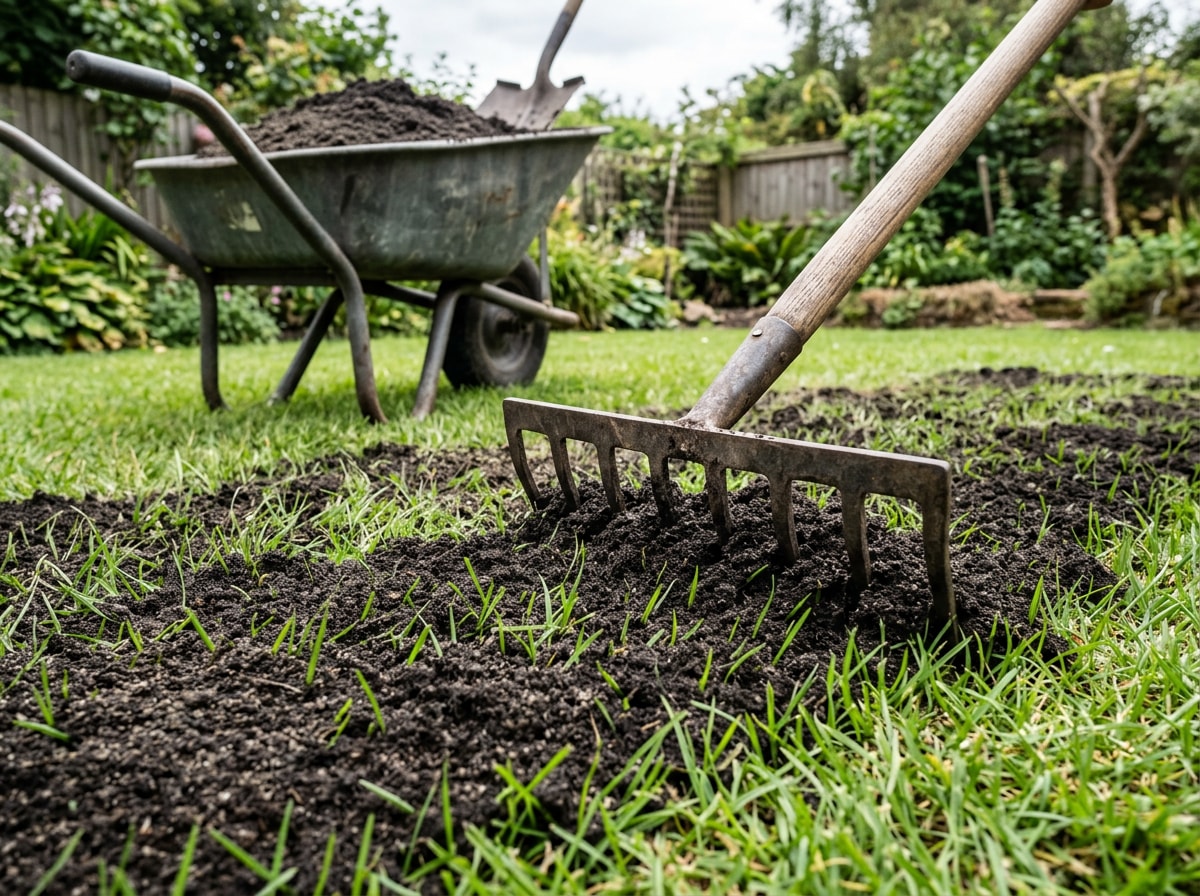
2. Topdressing application. Most leveling jobs use a blend of sand, compost, and topsoil in ratios suited to the existing soil and grass type. The mix goes down in thin layers, usually no more than half an inch at a time, and gets worked into the turf with a rake or drag mat so the grass isn't smothered.
3. Grading and resloping. For yards with bigger drainage problems, this step reshapes the ground so water moves toward a drain, swale, or lower point on the property instead of sitting against the house. Government building-science guidance on residential drainage is consistent on this point: the ground around the house should be graded to slope away from the house , and swales or drains are added where grading alone can't solve it.
4. Settling and watering. After application, the lawn needs light, frequent watering for one to two weeks so the topdressing settles into the existing grass instead of sitting on top of it.
Topdressing vs. Full Regrading: Which One Does Your Yard Need?
Homeowners usually ask this before anything else: is this a quick fix or a bigger project? The answer depends on depth and cause.
| Project Type | Typical Cause | What's Involved |
|---|---|---|
| Topdressing | Minor bumps, shallow dips under an inch, mower scalping | Thin sand-compost-soil layers worked into existing turf |
| Spot regrading | Settled sod seams, localized drainage dips, areas near downspouts | Lifting sod, adding fill, firming soil, relaying turf |
| Full regrading | Slope toward the foundation, new-construction grading left unfinished, standing water after every rain | Reshaping the yard's slope, possible swale or drain installation |
If you're not sure which category your yard falls into, that's exactly what the site walk-through is for. We'd rather tell you honestly that a $200 topdress will fix it than sell you a regrade you don't need.
Why Clay Soil in Sedgwick County Changes the Approach
Clay-heavy soil is the root cause behind most uneven lawns around Maize. It expands when wet and contracts when dry, which creates low spots that collect water after storms and settle unevenly year after year.
This is also why the topdressing mix matters more here than it would in sandier regions. Dumping straight sand onto clay doesn't fix drainage, it can make it worse. University research on turf establishment warns against this exact mistake: tilling sand into clay soils to loosen it up or improve drainage is a mistake, since research shows adding sand actually reduces soil porosity and increases compaction susceptibility until sand makes up roughly 80 percent of the mix by volume . That's why we adjust the blend toward compost and screened topsoil on Maize's clay-heavy lots rather than defaulting to a generic sand mix.
Lawn Leveling Pairs Well With These Services
Leveling rarely solves everything on its own. Most Maize homeowners who call about an uneven yard also need one of these addressed at the same time:
- Bare or thinned grass after leveling disturbs the turf, which is where overseeding comes in
- Large damaged patches that need a fresh, uniform start often call for sod installation
- Broader slope or drainage corrections beyond a single yard fall under landscape construction
Bundling these into one visit is usually cheaper and faster than booking three separate projects. If your lawn care routine already includes regular mowing or fertilization, leveling fits naturally alongside it, our Lawn Care Service page covers the full range of maintenance options. For readers planning a fall renovation, our guide to lawn seeding services in Maize walks through how seeding timing fits around a leveling project.
Ready to get your yard looked at? Get a free estimate and we'll walk the property before recommending anything.
FAQ
Do you provide lawn leveling service in Maize, KS?
Yes. We cover Maize and the surrounding area as part of our broader Sedgwick County service footprint. Visit our Maize, KS service area page for full coverage details.
How much does lawn leveling cost?
It depends on yard size and whether the problem is surface-level topdressing or a full regrade with drainage correction. Simple topdressing on a few low spots costs far less than reshaping a yard's entire slope. The only way to get an accurate number is a walk-through, which is why estimates are free.
Can a lawn be leveled without removing the grass?
In most cases, yes. Shallow dips and bumps get corrected by topdressing directly over the existing turf, applied in thin layers so the grass grows back through the material. Deeper depressions sometimes require lifting the sod, adding fill underneath, and relaying the turf.
How long does it take to see results after lawn leveling?
The surface looks even almost immediately after topdressing, but the lawn needs one to two weeks of light, consistent watering for the material to settle in and the grass to fully recover its color and density.
Does clay soil in the Maize, KS area affect lawn leveling?
Yes. Clay soil is common across this part of Kansas, and it affects how a lawn settles, drains, and holds moisture after leveling. Because clay compacts easily and drains slowly, we adjust the topdressing mix and grading approach to local soil conditions so the leveled areas hold their shape and drain correctly over time.
When should you aerate a lawn in Kansas?
Early fall is the window most turf specialists point to for cool-season lawns in this region. K-State horticulture expert Ward Upham says September is the best time to overseed tall fescue lawns in Kansas , and aeration scheduled around the same window pairs well with leveling and topdressing projects since it relieves compaction right before the grass's biggest growth push of the year.
Visit our homepage to see the full range of lawn and landscape services we provide across Sedgwick County, or reach out directly to schedule a lawn leveling walk-through.