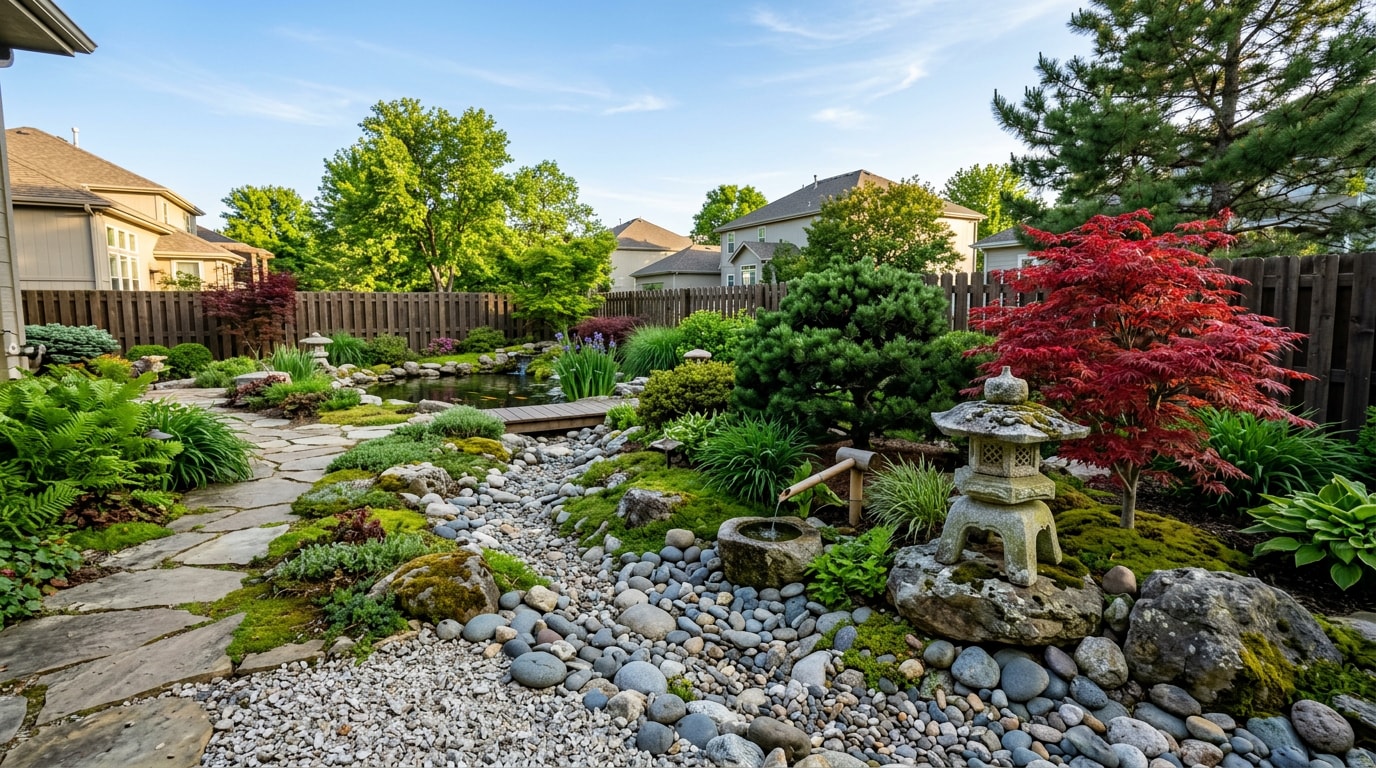
Japanese landscaping in Bel Aire, KS works when the design respects two things most national guides skip: Kansas clay and Kansas wind. Done right, it brings the calm, structured feel of a traditional Japanese garden into a yard that still has to survive a 100-degree July and an ice storm in January. Here's what actually holds up, and what to swap out before you break ground.
What Is Japanese Landscaping?
Japanese landscaping is a philosophy-driven design approach built from natural materials — rocks, gravel, water, plants, and simple stone ornaments — arranged to create a quiet, contemplative space rather than a colorful showpiece. It favors form and structure over bold color, using a limited, muted palette and a minimalist layout.
This is what makes Japanese garden design distinct from typical American foundation planting. It's a place for reflection, not just curb appeal.
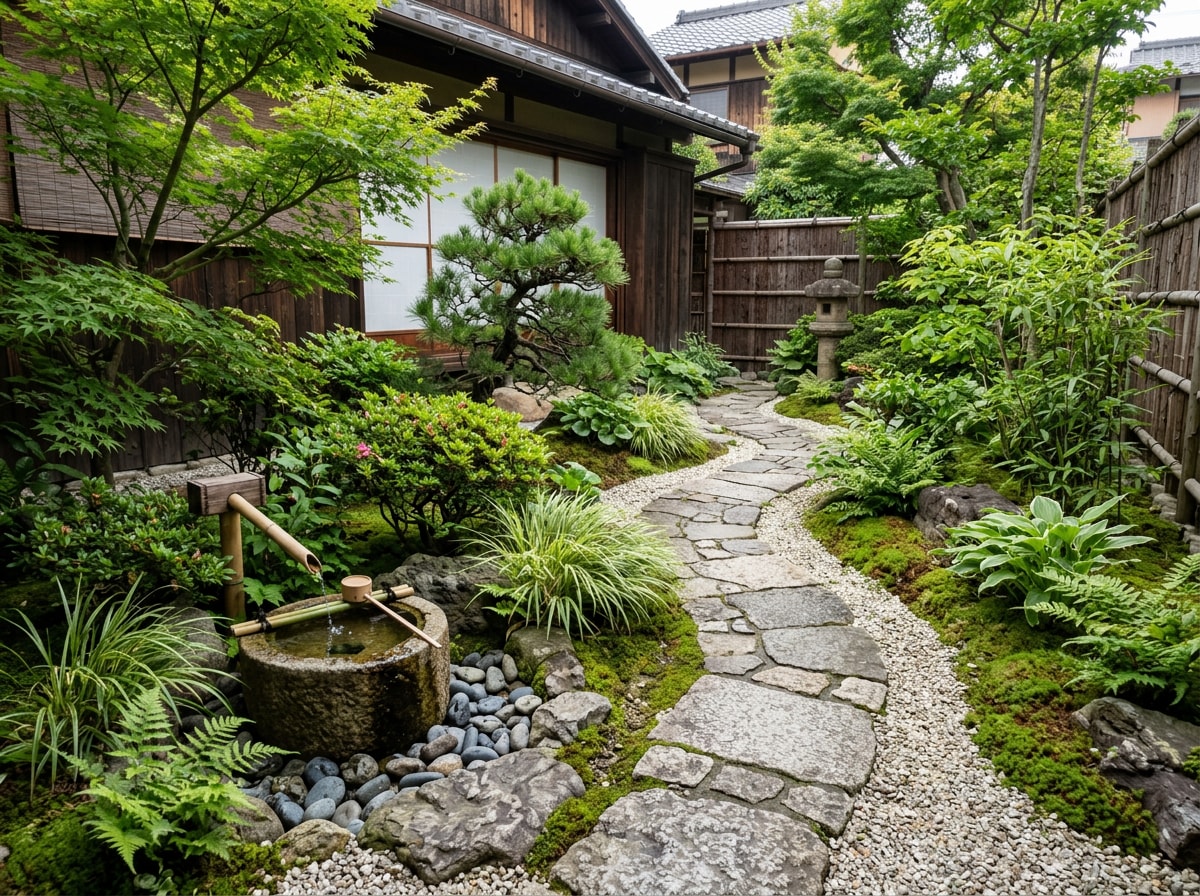
Stone lanterns, gravel paths, and strategically placed rocks create a sense of calm. Water adds a symbolic, meditative layer. Every rock and plant is placed with intention — nothing is left to chance.
Why Japanese Garden Style Works in Bel Aire, KS
Kansas's humid continental climate and clay-loam soil actually support much of the structural planting that anchors traditional Japanese gardens. Heavier regional rainfall helps establish evergreens and layered shrubs, though winter cold here limits which broadleaf evergreens will survive compared to milder climates.
The key is substitution, not imitation. Cold-hardy regional species can stand in for Japanese cousins while preserving the same spatial, contemplative feel. A boxwood or dwarf conifer can do the structural job of a Japanese holly, for example.
Bel Aire's location also matters more than most homeowners realize. The USDA updated its hardiness map in 2023, and in Kansas, most of the state shifted about a half zone warmer, with the range of Zone 7 significantly larger in the southern part of the state . Bel Aire sits in that warmer band, so a plant list built for Kansas City or a coastal garden book won't match what actually survives here. Before finalizing a plant list, check it against local hardiness data instead of a generic national guide — or talk through what's proven in your neighborhood with our team on the Bel Aire service area page.
Essential Elements & Ideas for Japanese Landscaping Design
Once you understand the philosophy, the next step is knowing the physical building blocks. Four elements recur across nearly every Japanese landscaping tradition: rocks, water, plants, and ornaments. Each plays a distinct role, and together they create the balance the style is known for.
Rocks & Stone Elements
Sculptural rocks and boulders serve as focal points and accents throughout a Japanese garden, with naturalistic shapes preferred over anything that looks too manicured or geometric. Stones are also arranged to form dry riverbeds, adding movement to the design without using actual water.
Placement matters as much as selection:
- Carefully chosen rocks anchor the landscape, with their shapes sometimes symbolizing islands, mountains, or animals in miniature.
- Flat gravel or sand areas, when raked in careful patterns, simulate rippling water — a hallmark of the Japanese rock garden tradition.
- This kind of stone and gravel work pairs especially well with Kansas's naturally rocky terrain.
Our hardscape installation crews build these rock arrangements directly into the grading plan, which keeps water moving away from the house instead of pooling around decorative stone.
Water Features
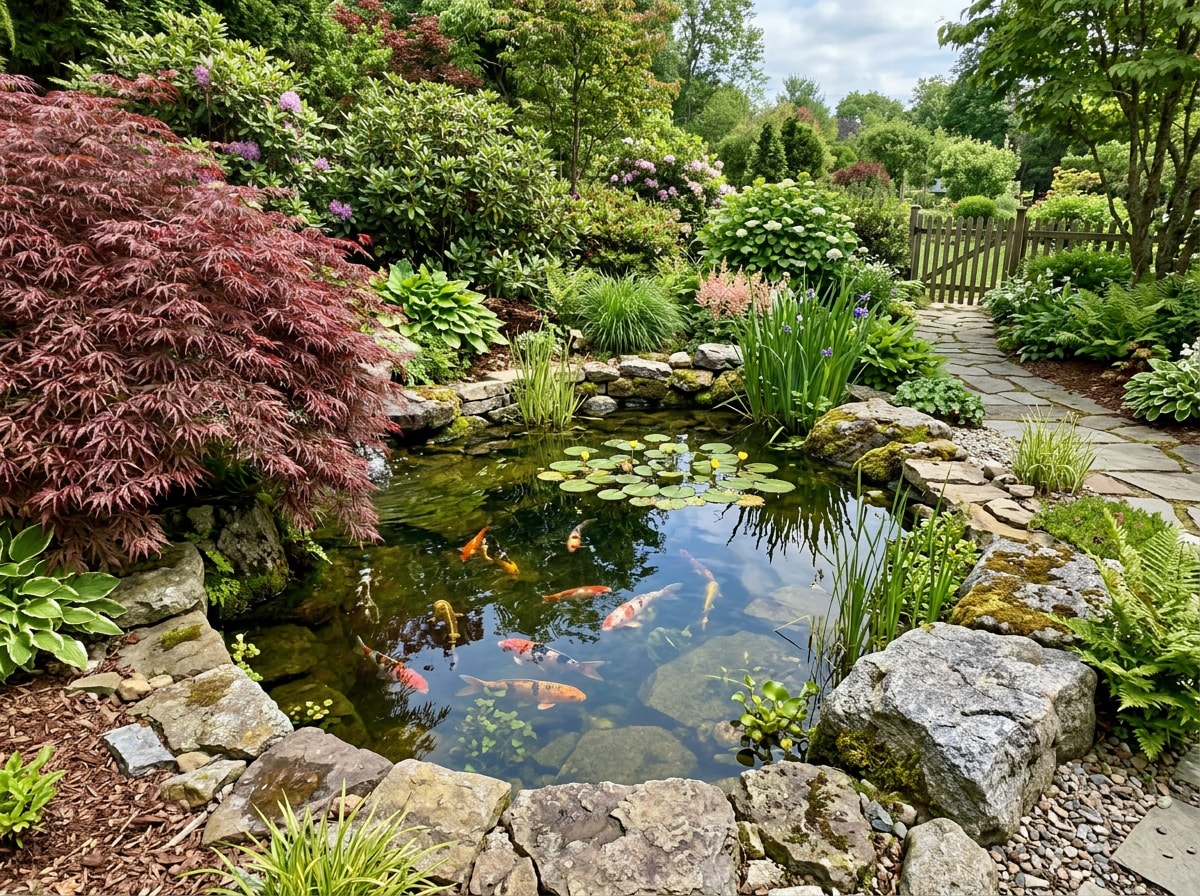
Water carries deep symbolic weight in Japanese garden design — it represents life, renewal, purity, and cleansing. It can take the form of a koi pond, a simple fountain, or even a small birdbath, with the sound and movement said to bring calm to the whole space. For pond edges, natural fieldstone or granite boulders work best: place the larger stones first as anchors, then fill gaps with medium and smaller stones for a weathered, authentic look.
In Bel Aire's hot, windy summers, though, not every water feature performs equally well. Here's how the three most common options stack up:
| Feature | Upfront Cost | Summer Water Demand | Winterizing | Bel Aire Suitability |
|---|---|---|---|---|
| Koi pond | High | High (evaporation, heat stress on fish) | Requires de-icers or draining fish to indoor tanks | Moderate — needs shade and wind buffer |
| Bamboo fountain (recirculating) | Low–Moderate | Low (small recirculating volume) | Simple to drain and store | Good — low maintenance, minimal wind issues |
| Dry stream bed / gravel river | Low | None | None | Excellent — zero water loss, zero freeze risk |
For homeowners wary of upkeep, a dry stream bed delivers the visual rhythm of water without any of the evaporation or freeze concerns. If you do want real water, a bamboo fountain with a small recirculating basin is far more forgiving than a full koi pond in this climate. Any of these can be plumbed through our irrigation installation service so the feature and the surrounding beds share one water plan instead of two separate systems.
Choosing Japanese Garden Plants & Trees
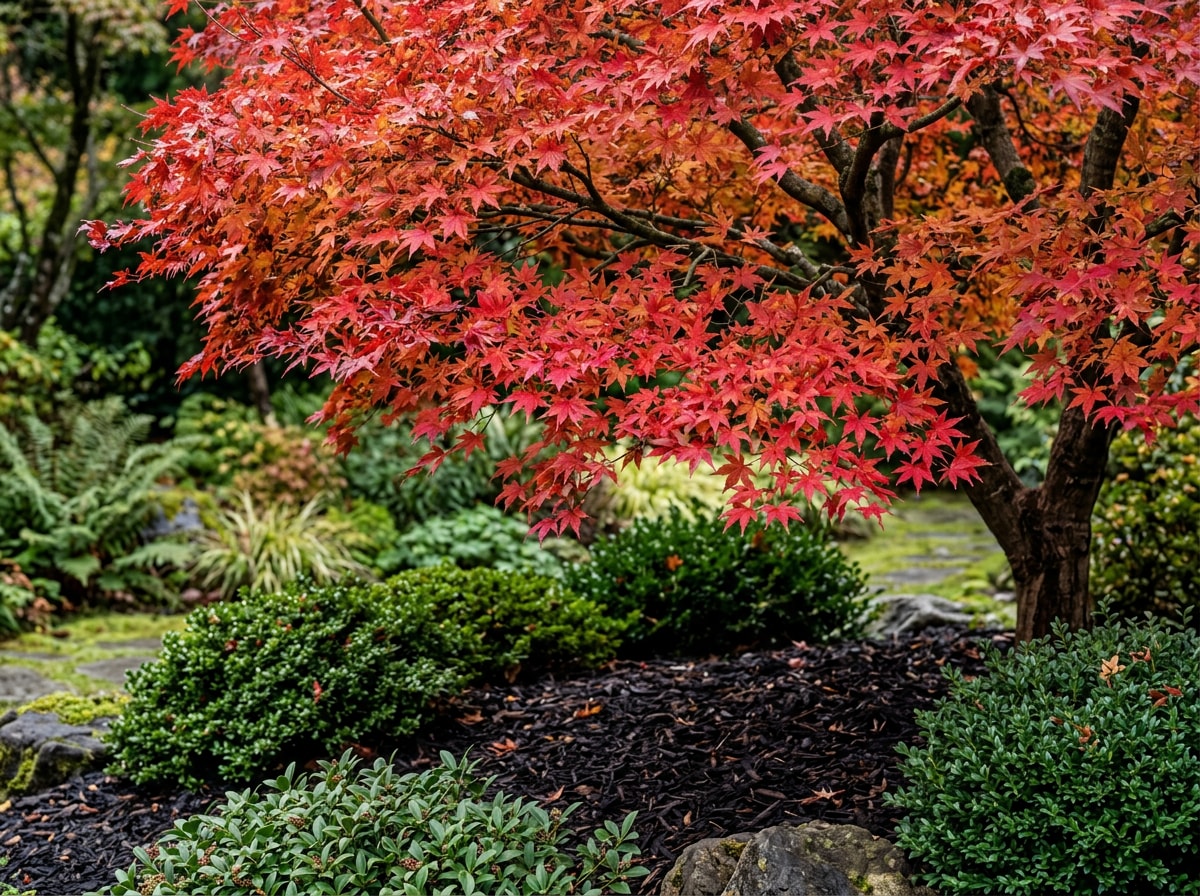
Traditional choices like cherry, wisteria, Japanese maple, and ginkgo are prized for seasonal beauty, layered by trees, shrubs, perennials, and ground covers to create visual depth. Moss is often the dominant ground cover, adding to the sense of quiet and age.
A well-planned garden offers color across seasons:
- Spring: cherry trees, camellias, azaleas, and wisteria
- Summer: Japanese iris, lotus, and hydrangeas
- Fall: fiery Japanese maples, dwarf ginkgo, and chrysanthemums
True Japanese maples and several broadleaf evergreens can still struggle through a harsh Kansas winter, even in the warmer zone. K-State's Sedgwick County Extension arboretum emphasizes trees that thrive in alkaline soils and are adapted to limited irrigation or natural rainfall, windy conditions and hardiness zone 6B — a useful cross-check for anything you're planting outside that core list. Serviceberry, dwarf Japanese holly substitutes, and other regionally tested species often perform more reliably here while keeping the same layered, seasonal design intent. For a full list vetted locally, see K-State Research and Extension's water-wise and hardy plant guidance for Sedgwick County.
Container plantings are a low-risk way to test a species before committing it to the ground, and they fit naturally into a Japanese layout along a path or entry. Our front yard pots guide for Bel Aire covers sizing and placement if you want to start that way.
Pathways, Bridges & Walkways
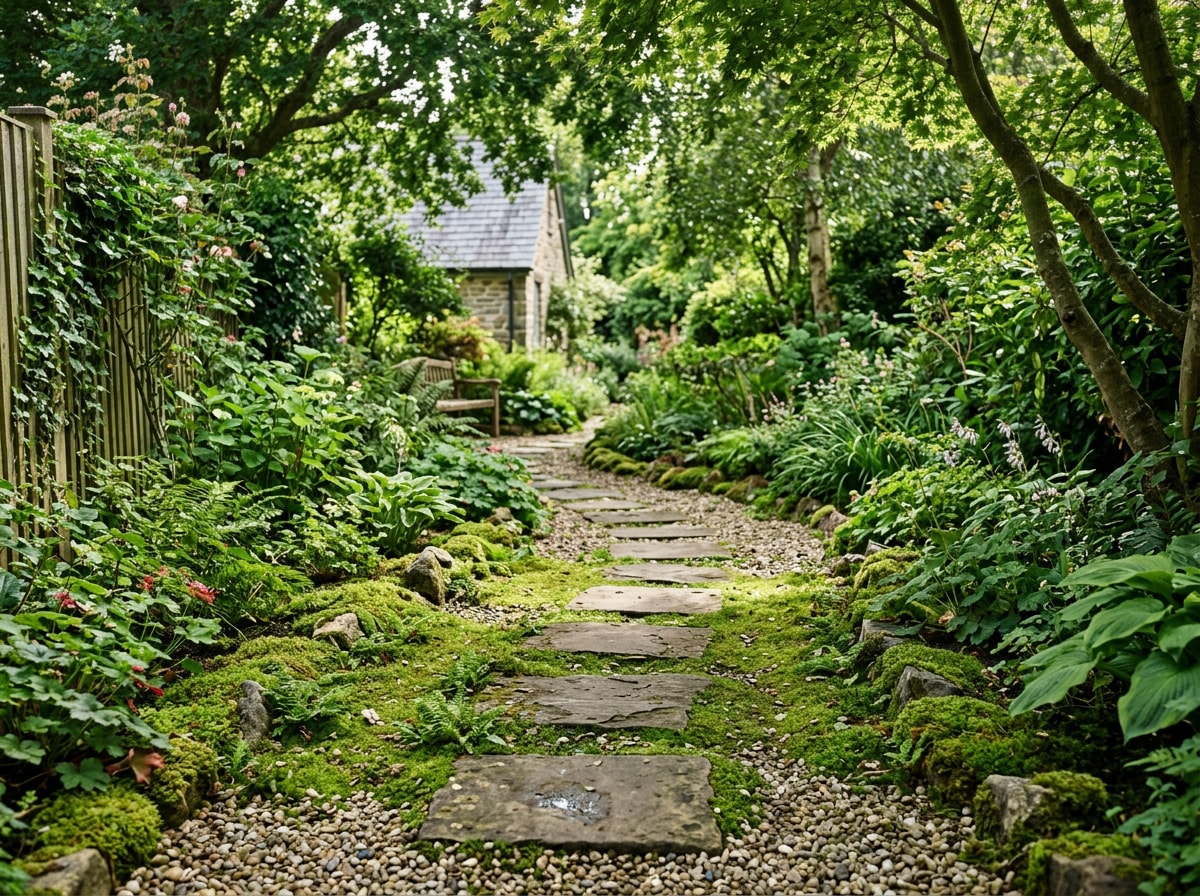
Movement through a Japanese garden is as deliberate as the planting itself. Stepping stones, gravel sections, and small bridges guide the eye and feet in a slow, winding rhythm rather than a straight line, echoing the rock and water elements already in place.
Lay Stepping Stones Across Moss and Gravel
A Japanese garden pathway typically relies on natural moss growing between stepping stones, softening the hard edges of the stone and adding an organic, aged texture underfoot.
Moss needs consistent shade and moisture, which can be tricky in sunnier, windier parts of Bel Aire. For yards without reliable shade, a gravel walkway between stepping stones gives nearly the same visual rhythm without the maintenance demands of true moss.
Key Design Moves for Kansas Climate & Soil
Generic Japanese garden advice rarely accounts for Kansas clay soil, wind exposure, or winter freeze-thaw cycles. These moves are about making the style hold up structurally and visually in our region, not just copying a national template.
Establish Borrowed Scenery (Shakkei) Before You Plant
On flat Midwest residential lots, there's rarely a distant mountain to frame, so the goal shifts to creating vertical focal points instead. Place a specimen tree at the rear corner of the property to anchor sightlines, then position a viewing stone or lantern to align with it. This small bit of planning creates manufactured depth, borrowing the visual trick of shakkei even without a dramatic natural backdrop.
Use Crushed Kansas Limestone Instead of Imported Granite
Authentic Japanese gardens often use white Shirakawa-suna gravel, but local crushed limestone achieves a nearly identical look once it weathers. It drains through clay soil better than rounded river rock and typically costs far less than trucked-in granite, with angular faces that catch light much like traditional Japanese materials.
Wichita-area limestone has a long track record in local construction — use of the Cresswell Limestone has generally been restricted to the Winfield and Wichita areas , which is part of why it's an easy, inexpensive material to source locally rather than shipping in granite. Confirm current pricing with a local quarry or supplier, since costs shift by season. For background on the region's geology, see the Kansas Geological Survey's work on Kansas building limestone.
Design for Winter Ice & Freeze-Thaw, Not Just Looks
Winter ice storms can accumulate significant weight on horizontal surfaces, so water features need to drain completely to avoid freezing solid. Stone lanterns need footings set below the frost line to prevent heaving, and any garden bridge should use a shallow slope to avoid becoming a hazard once ice forms. These aren't cosmetic details — they're structural necessities for anything built to last through a Kansas winter.
How Much Does Japanese Landscaping Cost in Bel Aire, KS?
Cost depends heavily on which elements you choose, but the projects our crews build most often in Bel Aire fall into a few rough bands:
| Element | Typical Range |
|---|---|
| Dry stream bed (per linear foot) | $15–$40 |
| Stepping stone path with gravel infill | $800–$2,500 |
| Bamboo fountain with recirculating basin | $300–$1,500 |
| Koi pond (small, professionally installed) | $3,500–$15,000+ |
| Crushed limestone groundcover (per cubic yard, installed) | $45–$80 |
These are general planning ranges, not a quote. Site access, grading, and plant selection all move the final number. If you want an exact figure for your yard, get a free estimate before you commit to a layout.
How to Maintain a Japanese Garden
Maintenance is often the top concern for homeowners considering this style, and the good news is that it's less demanding than it looks once established.
Keep It Natural
The core philosophy here is restraint: allow moss to grow naturally on rocks, and let trees and shrubs keep their natural shape rather than forcing tight, formal pruning. This hands-off approach reduces long-term upkeep compared to manicured landscaping styles.
A landscape maintenance plan built around that restraint keeps the balance right without over-trimming the natural form that makes the style work. If you're planning a full build from scratch, our landscape design and landscape construction teams handle the grading, stone, and planting plan together so the garden reads as one cohesive space instead of pieces added over time. You can browse completed yards in our project gallery or start on the Stellar Wichita homepage to see the full range of services we bring to a Bel Aire property.
FAQ
What are the essential elements of a Japanese garden?
The essential elements include tranquil water features, carefully designed pathways with stepping stones, traditional plants like Japanese maples and bamboo, stone arrangements following Zen principles, and focal points such as stone lanterns. Together they create harmony between human creativity and the surrounding landscape.
How do I create water features for my Japanese garden?
Start with a koi pond using natural stone edges, add a bamboo water fountain for soothing sound, or design a small dry stream bed using river rocks or crushed limestone. In Bel Aire's climate, the dry stream bed is the lowest-maintenance option since it carries no freeze or evaporation risk.
What plants work best in Japanese gardens?
Japanese maples provide seasonal color, bamboo groves add privacy and sound, and moss groundcover creates a green carpet underfoot. Seasonal plants like cherry blossoms, azaleas, and camellias extend visual interest, though some varieties need cold-hardy, wind-tolerant substitutions to handle Kansas winters reliably.
How should I design pathways in a Japanese garden?
Use stepping stones placed at comfortable, natural walking intervals, allowing moss to grow between them where shade permits. Complement the stones with gravel sections for areas that get more sun or wind.
Do Japanese maples survive Kansas winters?
Yes, in sheltered spots with afternoon shade and wind protection, but they're not as reliable in exposed Bel Aire yards as they are in milder climates. Many homeowners plant one Japanese maple as a feature tree near the house and use hardier substitutes elsewhere in the design.
How much does Japanese landscaping cost in Bel Aire, KS?
Small projects like a gravel path or bamboo fountain often run under $2,500, while a full design with a koi pond, stonework, and layered planting can run well into five figures. Request a free estimate for a number based on your actual yard.
What's the difference between a Japanese garden and a Zen garden?
A Zen garden, or karesansui, is a specific subtype that uses raked gravel or sand instead of water to represent movement, often paired with minimal planting. A broader Japanese garden can include real water features, layered planting, bridges, and lanterns alongside or instead of a rock garden.