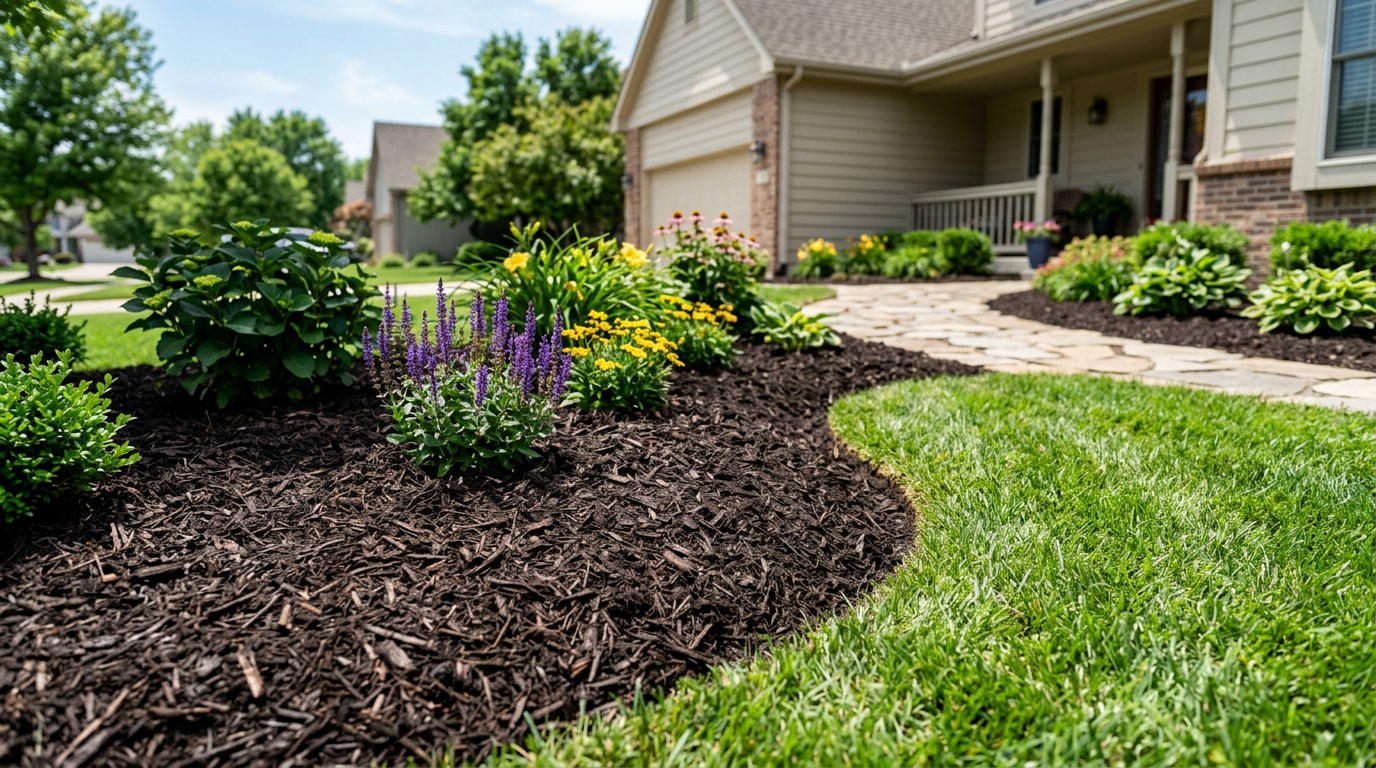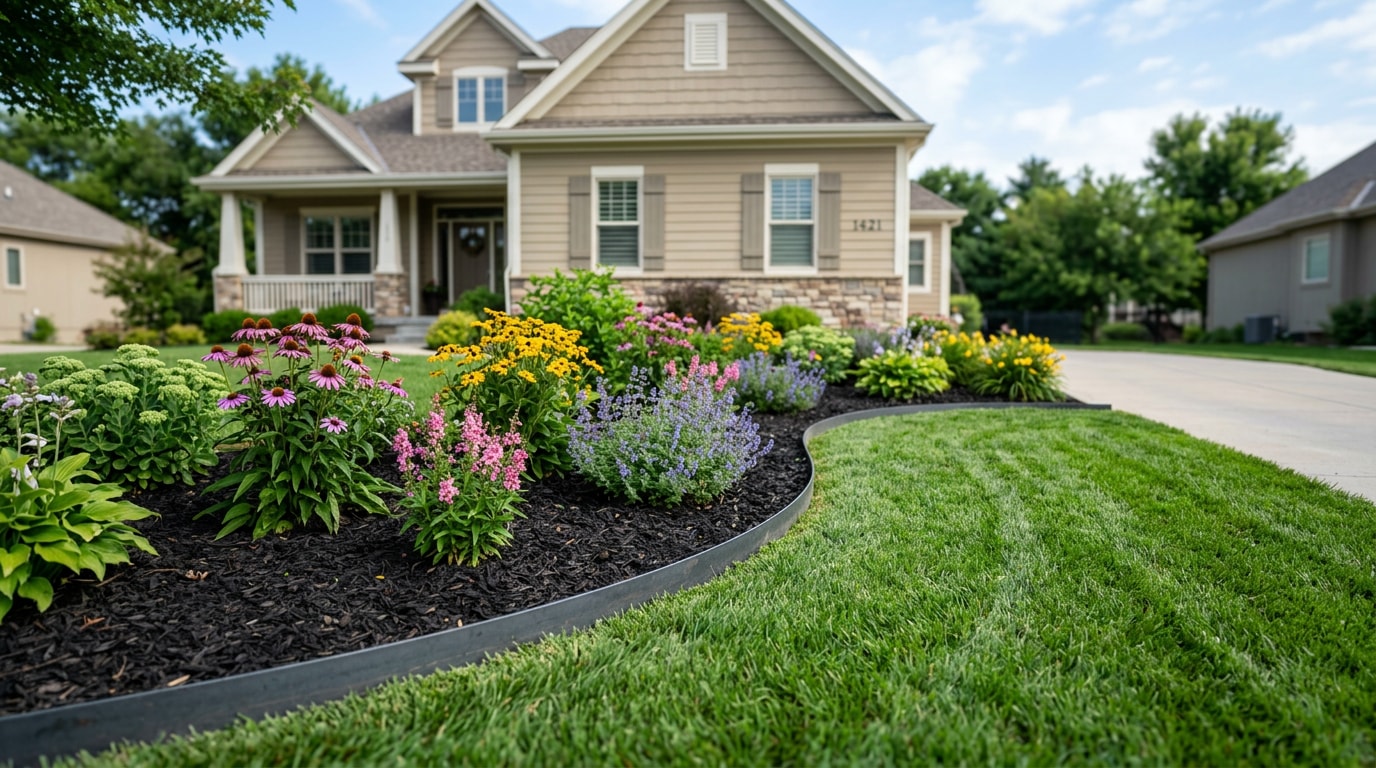
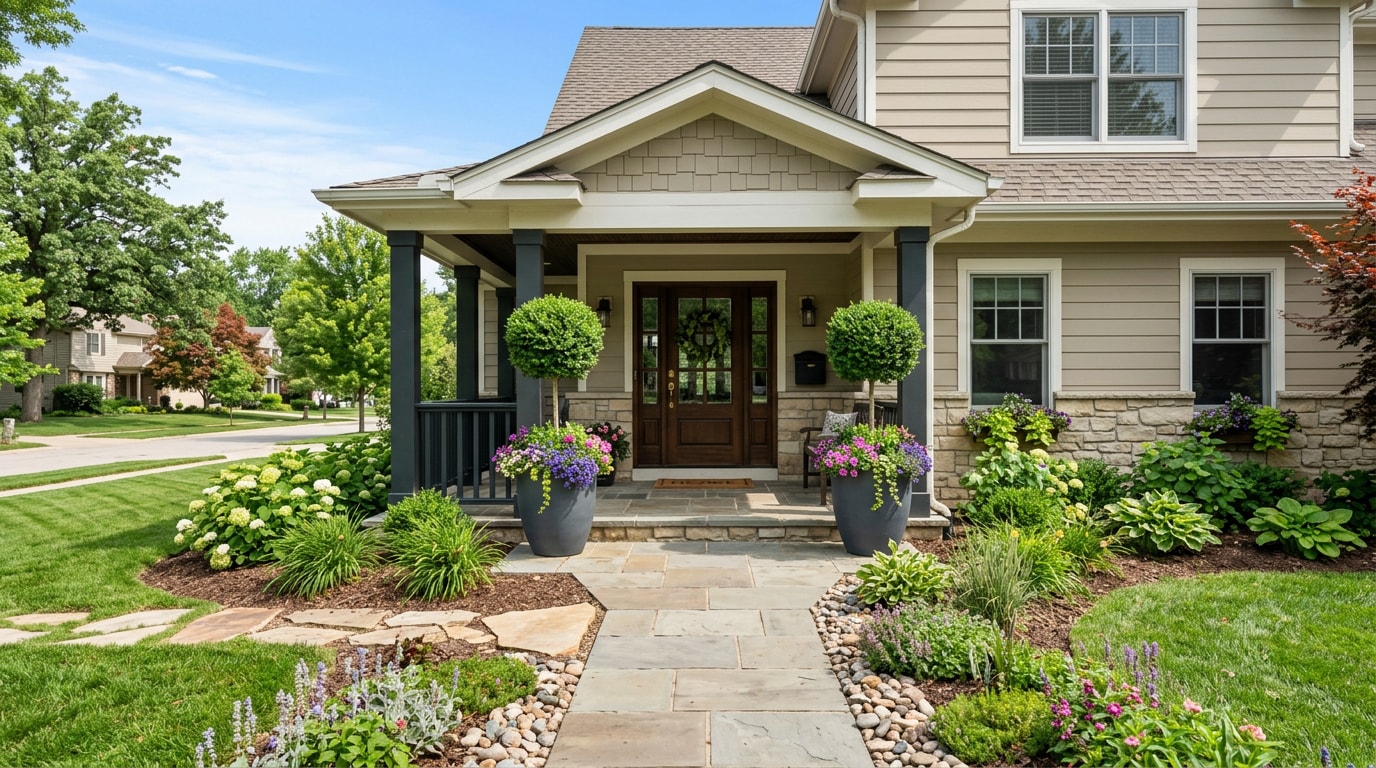
Front yard landscaping with pots in Bel Aire, KS turns a plain entrance into a finished one without tearing up turf or pouring new concrete. Containers let you test color, height, and style, then change your mind next season if something doesn't work. The hard part is picking pots and plants that survive our freeze-thaw winters and July heat, not just ones that look good at the garden center.
Our crew at Stellar Lawn & Landscape plants and resets containers across Bel Aire every spring, and the choices below are what actually holds up through a full year here, not just what photographs well.
Picking Pots That Survive a Bel Aire Winter
Pot material matters more here than most buying guides admit. Bel Aire's weather swings from a mild afternoon to single digits within a few days, and that freeze-thaw cycle is harder on a container than the raw cold ever is.
One correction worth making up front: a lot of older gardening content still lists this area as Zone 6b. In Kansas, most of the state shifted about a half zone warmer under the 2023 USDA update, and the range of Zone 7 in the southern part of the state grew significantly larger.
Wichita itself is now mapped as Zone 7a , and Bel Aire sits right on that edge. Check your exact address on the USDA Plant Hardiness Zone Map before you buy anything marketed as "hardy to Zone 6," since that label may be more conservative than you actually need, as confirmed by K-State Research and Extension's coverage of the map update.
Zone rating aside, a pot's material still decides whether it survives winter at all. Large pots that are at least 18 to 24 inches insulate plant roots better than smaller pots because they hold more soil.
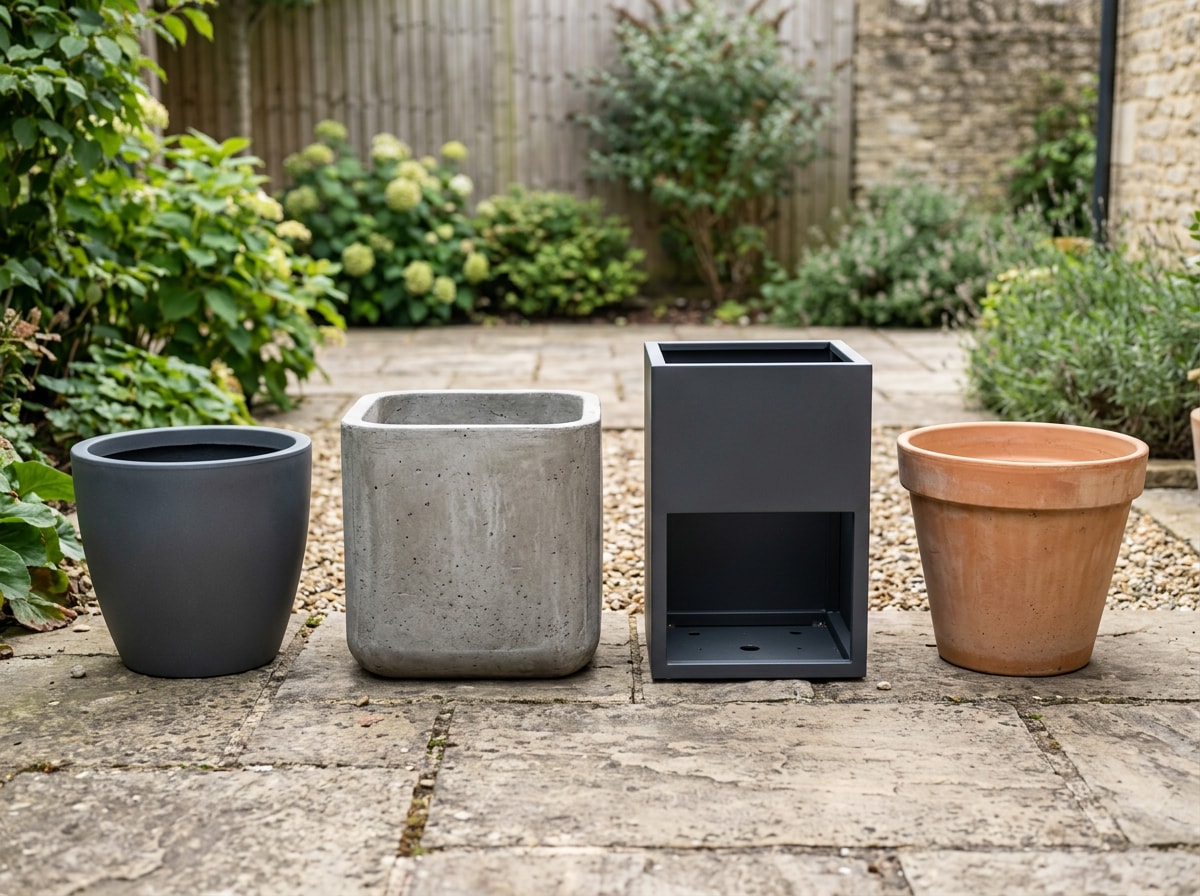
Terra cotta, concrete, and ceramic containers generally don't tolerate winter ravages well, and terra cotta and concrete pots need walls at least 1.5 to 2 inches thick to resist cracking when they freeze , according to a Washington State University Extension Master Gardener fact sheet on winter container care.
We learned this the hard way on a Bel Aire install near Rock Road: two thin terracotta pots cracked straight through after a single January cold snap, and we swapped the client into fiberglass before spring planting. It's a small fix, but it saves the whole display.
| Pot Material | Freeze-Thaw Durability | Weight & Portability | Cost Tier | Best Use in Bel Aire |
|---|---|---|---|---|
| Fiberglass | High, flexes instead of cracking | Light, easy to rotate seasonally | Mid to high | Best all-around pick for most entrances |
| Concrete | Durable structurally, but conducts cold to roots | Heavy, usually needs two people | Mid to high | Permanent centerpieces, large single pots |
| Metal | Moderate, dents rather than cracks | Light to moderate | Low to mid | Partial shade; heats up fast in full sun |
| Terracotta/Clay | Low, porous clay cracks when frozen solid | Light to moderate | Low | Seasonal annuals; store empty over winter |
If you'd rather skip the trial and error, our landscape design team can spec pots and plantings sized to your entrance and your budget. You can also get a free estimate before you commit to a full container plan.
Match Plants to Your Bel Aire Sun and Soil
Most front entrances face a mix of morning shade and afternoon sun, which narrows plant choices more than homeowners expect. Confirm what actually survives here using the USDA Plant Hardiness Zone Map before falling for something at the garden center that's rated for a milder climate.
A classic approach is the "thriller-filler-spiller" formula: one tall centerpiece plant, mid-height fillers around it, and a trailing plant spilling over the rim. Mixing textures and heights this way keeps a single pot from looking flat, even in a small space near the door.
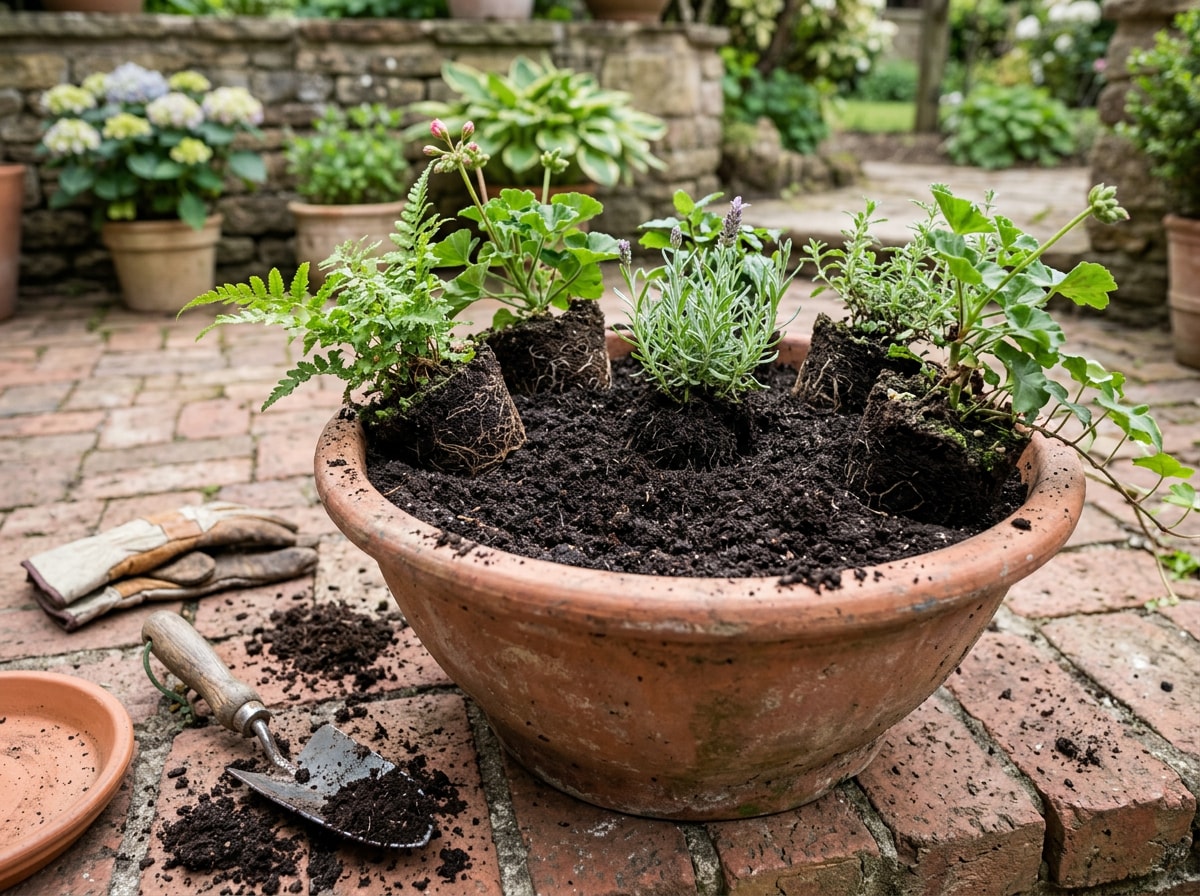
Plant Your Containers in 5 Steps
Potting is simple once you've picked plants and pots:
- Fill with fresh potting soil, not garden dirt, which compacts and drains poorly in a container. Fill the pot about a third full to start.
- Set the thriller plant in the center of the pot first, keeping its root ball level with the rim.
- Add fillers and spillers around the edges, with trailing plants positioned near the rim where they'll cascade over.
- Backfill with soil around every root ball, firming gently so there are no air pockets.
- Water thoroughly right after planting. This settles the soil and removes trapped air around the roots, and it matters more for long-term success than almost anything else in the process.
Front Yard Pot Styles to Try
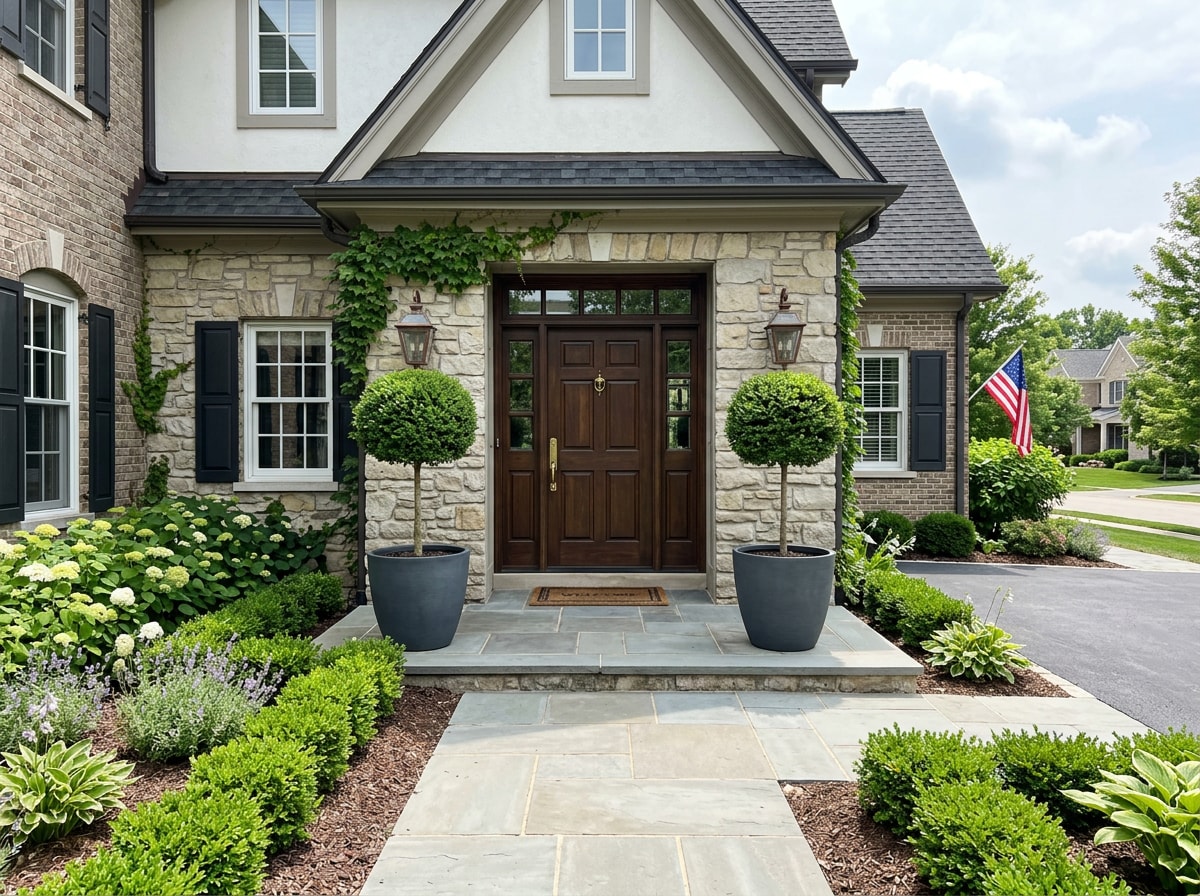
Classic Elegance with Topiary Trees
Matched topiary trees in fiberglass pots flanking a front door create an instantly formal look. The symmetry reads as intentional from the street, and topiaries hold their shape year-round with occasional trimming. This style works best on homes with a defined entrance and a bit of covered porch space to shelter the pots from wind.
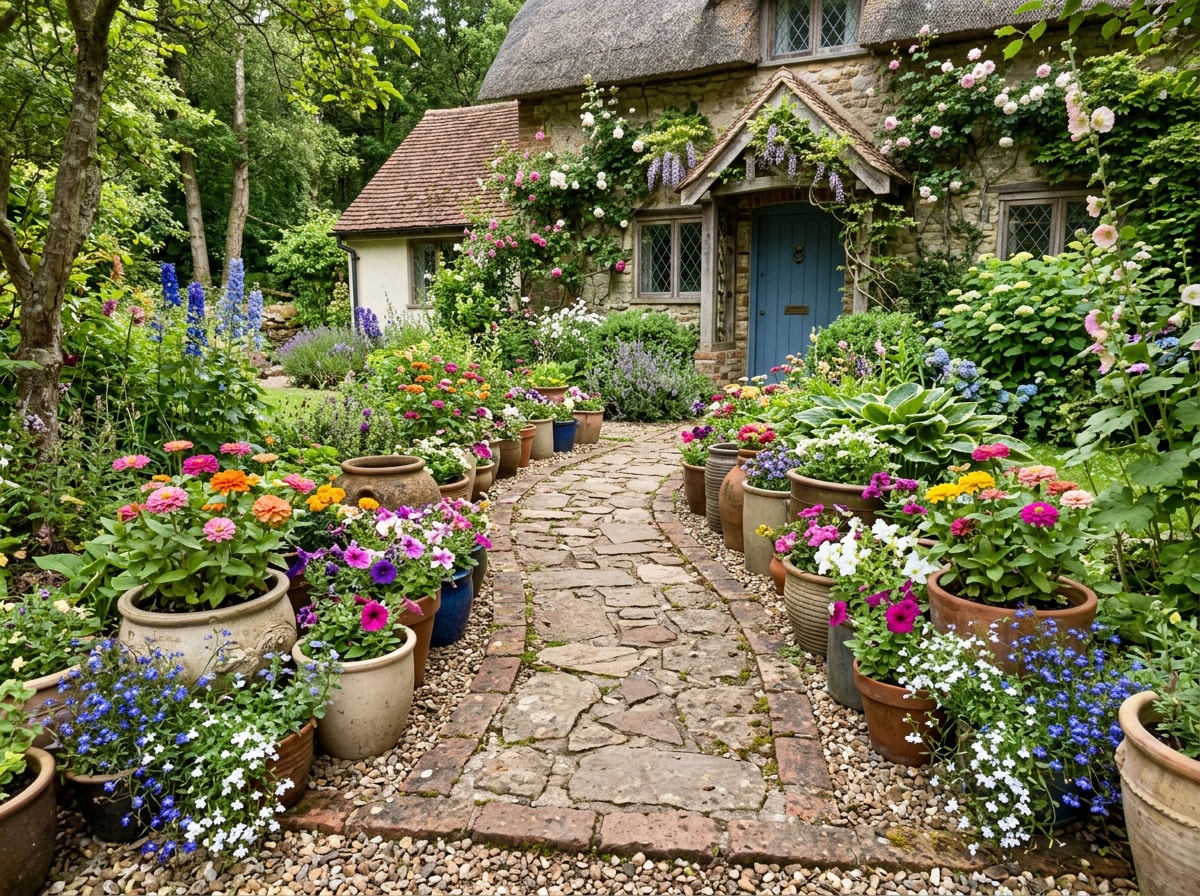
Cottage Garden Charm
A cottage look embraces mismatched pots in varying sizes lining a front walkway. Fill them with loose, colorful annuals like zinnias, petunias, and trailing lobelia rather than tightly clipped plants. The slightly imperfect arrangement is the point. It should feel gathered over time, not purchased in a single trip.
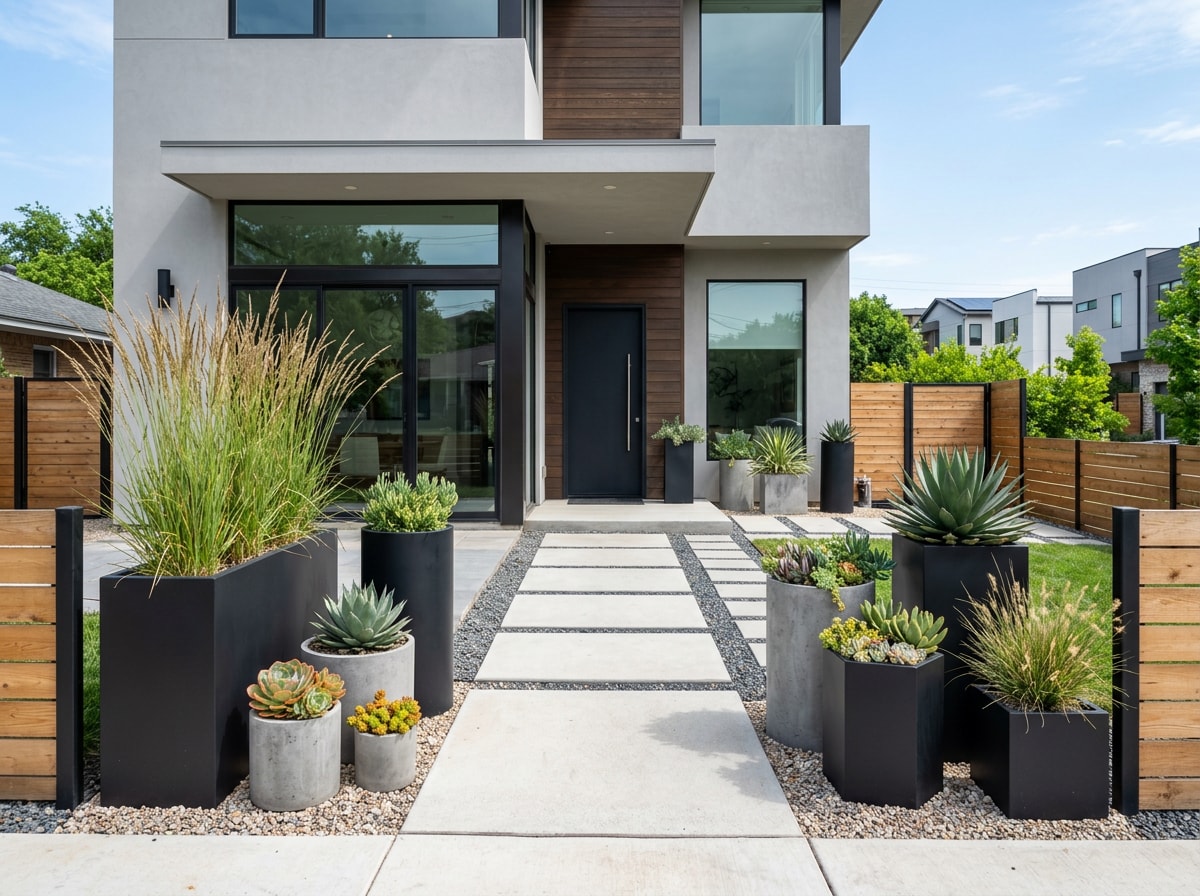
Modern Minimalism
Monochromatic planters in black, white, or concrete gray pair well with ornamental grasses or succulents for a clean, contemporary front yard. Keep the plant palette narrow, two or three species repeated, and let the pots' simple lines do the visual work. This style suits newer builds with clean architectural lines.
Symmetrical Entryway
Placing identical containers on both sides of the front door is one of the simplest curb appeal upgrades available. Symmetrical planters create balance that reads as welcoming before a visitor reaches the door. Keep the plantings identical too, same species and same height, so the eye isn't drawn to one side over the other.
Vertical Gardening
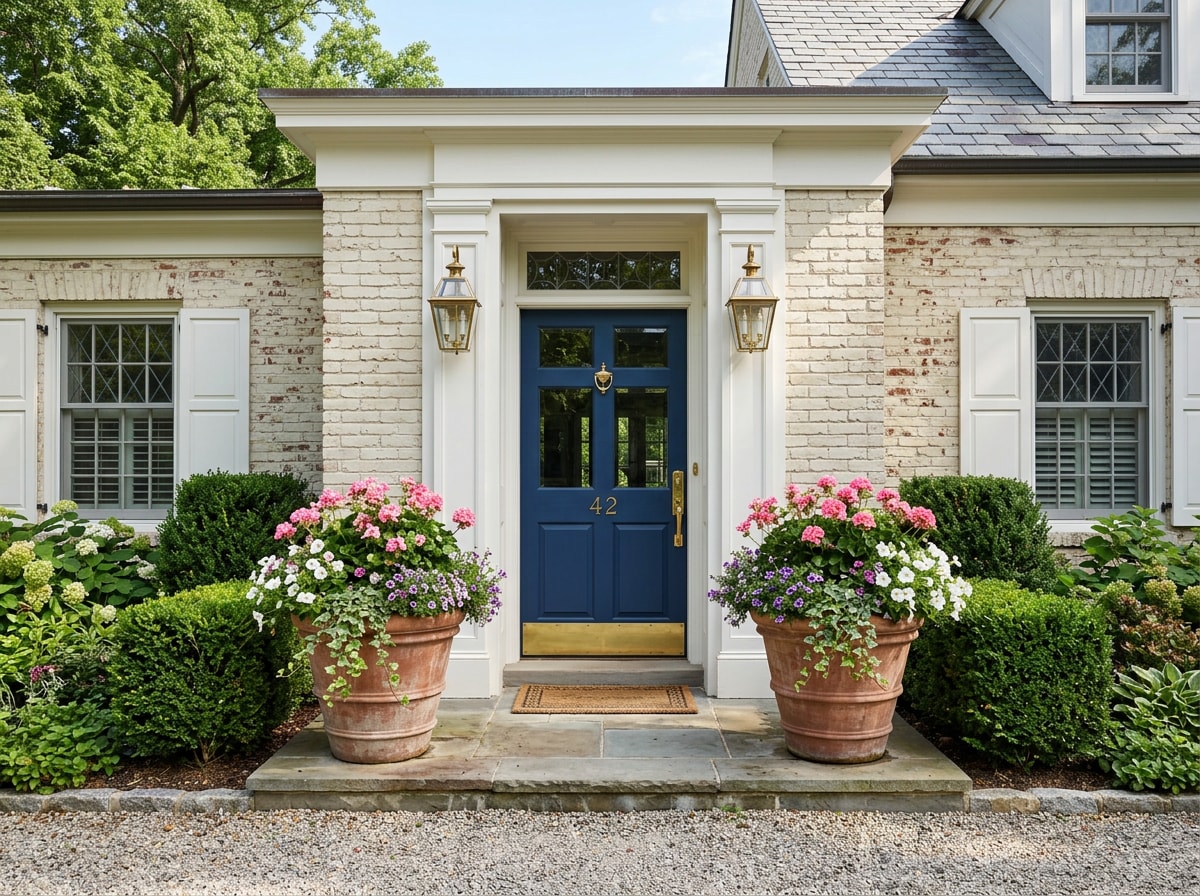
Wall-mounted pots and hanging planters make sense for small front yards where ground space is limited. Trailing plants like ivy or creeping jenny cascade down and soften hard surfaces like brick or siding. This works especially well on homes with a narrow strip between the front door and the sidewalk.
Seasonal Rotation
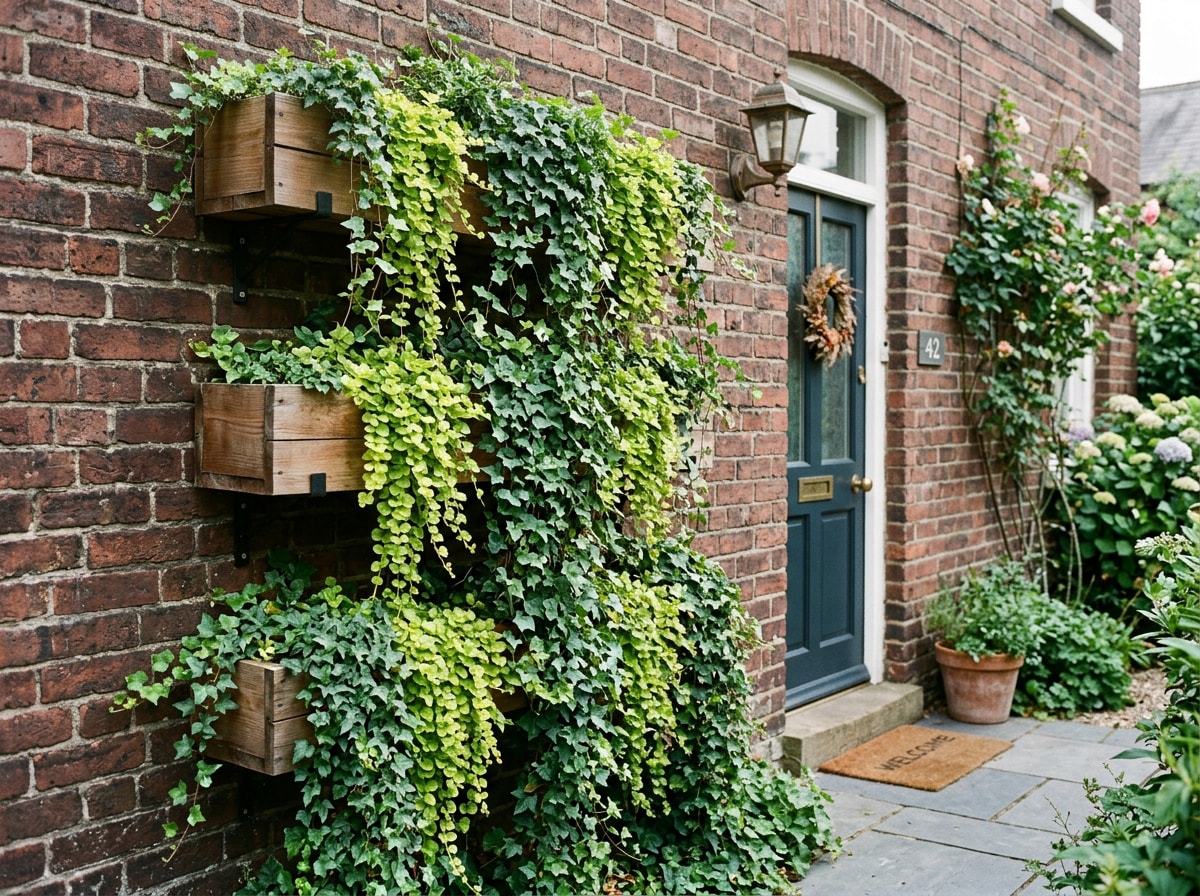
Swapping plantings with the seasons keeps front yard pots looking fresh instead of fading by midsummer. Pansies and spring bulbs give way to heat-tolerant annuals in June, then mums and ornamental kale take over in fall. It's a small, repeatable task that keeps color near the entrance without redesigning the whole bed.
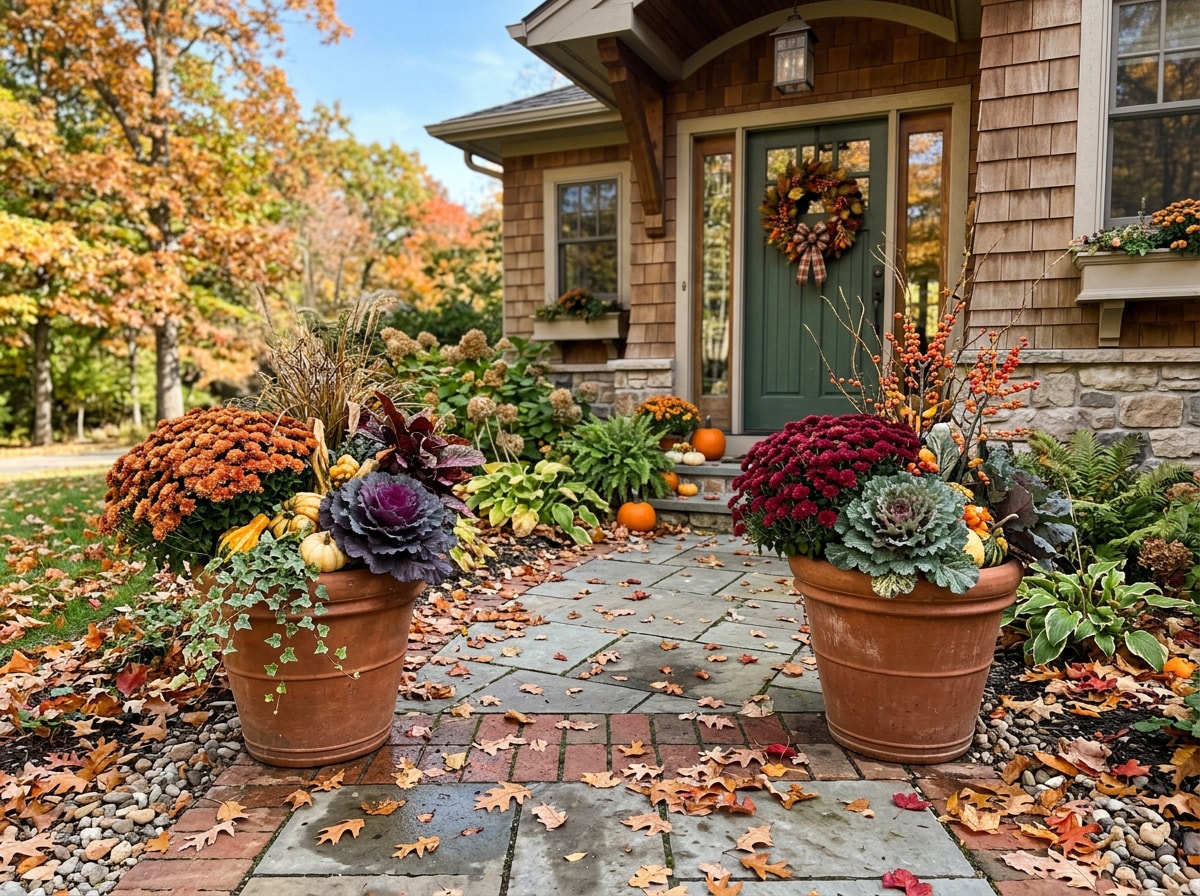
Front Yard Landscaping with Pots and Rock: Ideas for Bel Aire, KS
Pairing containers with rock elements adds structure and cuts down the lawn area you need to mow and water. These combinations hold up well in Kansas heat since rock mulch doesn't dry out or need replacing like wood mulch does. If you want a deeper look at this approach, our guide to low-maintenance river rock landscaping in Andover, KS covers rock selection in more detail.
Front Yard Centerpiece with Large Pots on a Rock Base
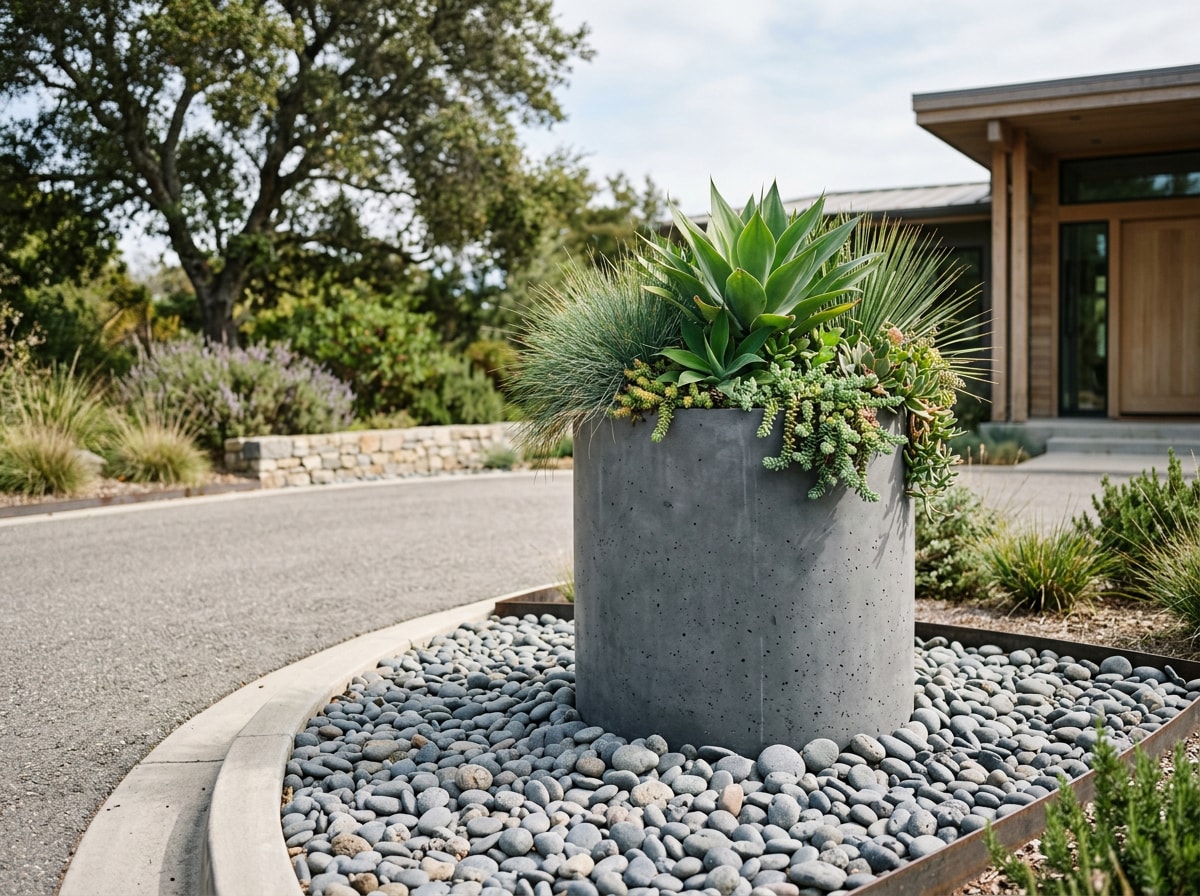
A single oversized pot set on a rock base makes an effective centerpiece near a driveway entrance or at the corner of a front walk. The rock base keeps soil from splashing onto the pot during rain and gives the arrangement a finished, elevated look without extra plantings around it.
Front Yard Planter Boxes with Rock Mulch
Built-in planter boxes surrounded by rock mulch create a more structured, permanent-feeling front yard than loose pots alone. The rock mulch suppresses weeds and keeps the area tidy between plantings. If you want boxes built into your landscape rather than freestanding containers, our landscape construction team can frame and install them.
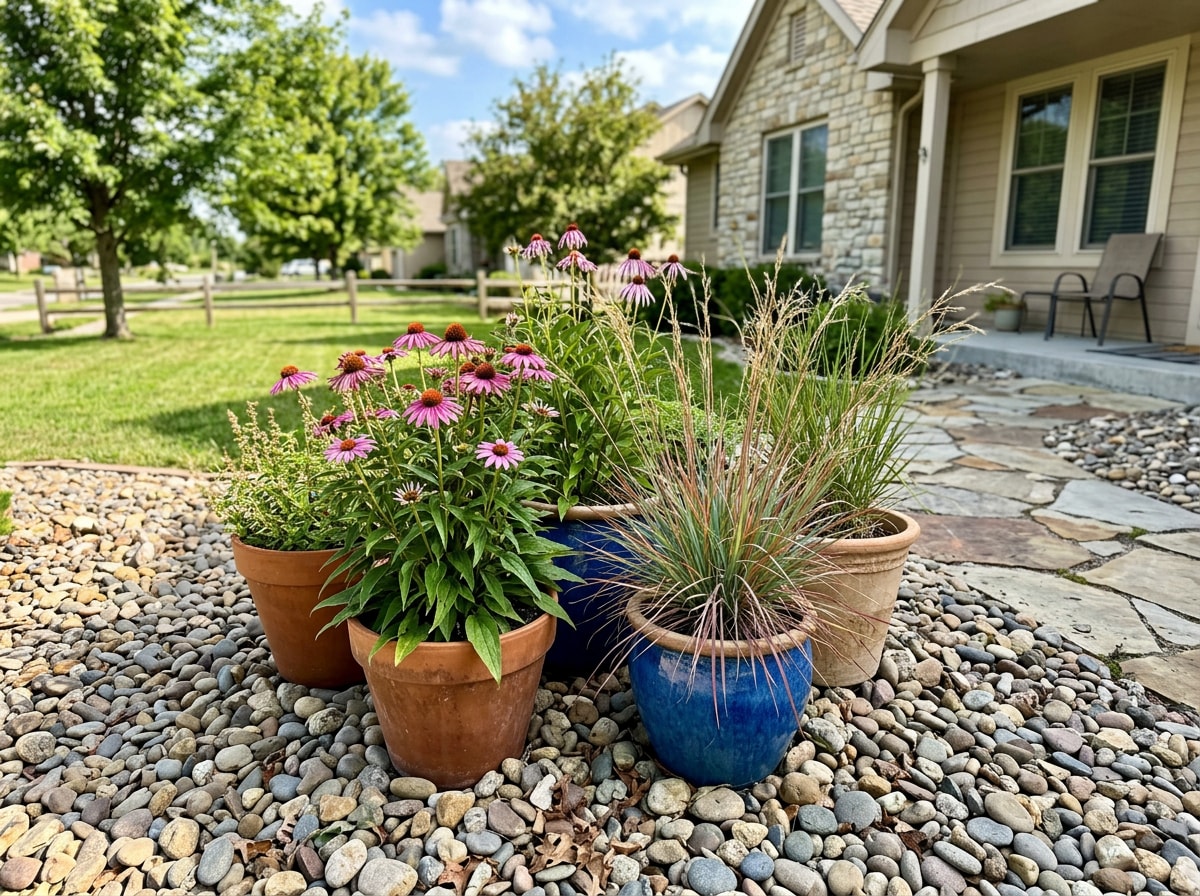
Low-Water Native Plants in Decorative Pots
Grouping drought-tolerant native plants in decorative pots with river rock cuts down on watering while still giving a front yard visual interest. Kansas natives like little bluestem, black-eyed Susan, and coneflower tolerate pot life well and handle our hot, dry summer stretches better than many ornamentals.
Outdoor water use accounts for about 30 percent of household use, and as much as 70 percent in drier parts of the country.
Native plants are adapted to local climate and soil conditions, so they need less supplemental water and fertilizer , per EPA WaterSense guidance on water-efficient landscaping. That's a real consideration during Kansas's dry summer stretches, when watering restrictions sometimes come into play. Pairing drought-tolerant pots with an efficient irrigation system cuts water use further without sacrificing the look.
Corner Yard Pots with Boulder Accents
Awkward corner areas of a front yard, the kind that are hard to mow around or always look bare, benefit from pairing boulders with pots. The boulders anchor the space visually while the pots add softness and color. This combination needs very little upkeep once placed, which makes it a practical fix for corners that never seem to look right.
Small Front Yard Container Garden for Townhomes
Compact container groupings work well for townhomes and smaller lots where a full landscaped bed isn't practical. Clustering three to five pots of varying heights near the entrance, set against light-colored rock, brightens a small space without overwhelming it. For homeowners in our Bel Aire, KS service area, this is often the most realistic starting point for a first container project.
FAQ
How do you decorate a front yard with potted plants?
Pick a style first, formal, cottage, modern, or seasonal, before buying pots or plants. Once you know the look you're going for, choose containers and plantings that support it, and place them around key focal points like the front door or walkway edges.
How do I arrange flower pots in my front yard?
Use one or two large pots as focal points near the entrance, then fill gaps with smaller pots around walkways or steps. Vary height, color, and texture between pots so the grouping feels layered rather than repetitive, and keep sightlines to the front door clear.
How do you use pots in landscape design?
Pots work as flexible design tools. They create focal points, help define boundaries like walkway edges or patio borders, and allow quick seasonal changes without disturbing permanent beds. Movable containers also let you test an arrangement before committing to in-ground planting.
How do I landscape my front yard on a budget?
Choose cost-effective pathway materials like gravel instead of pavers, lean on native or low-maintenance plants that need less upkeep, and reuse containers you already own rather than buying new ones. A few well-placed pots often cost less than a full bed redesign and still make a visible difference.
Do front yard planters need drainage holes?
Yes. Without a drainage hole, water pools at the bottom, roots sit wet, and plants eventually rot. If you love a pot without one, use it as a decorative sleeve and keep the actual plant in a nursery pot with drainage set inside it.
When should I plant my front yard containers in Bel Aire?
The average last spring frost in this part of Kansas falls in mid-April, and the average first fall frost lands in late October. Wait until after that mid-April date for tender annuals, and plan fall swaps before late October if you want color through the first frost.
If you'd rather hand off the planting, placement, and seasonal swaps, get a free estimate from our team and we'll put together a container plan built for your specific entrance and sun exposure.