Verticutting in Park City, KS is the fix most homeowners reach for when a lawn feels spongy, drains unevenly, or stays thin no matter how often it's watered. The usual culprit is thatch, a dense mat of dead grass and roots sitting between the soil and the green blades you actually see. Here's how the process works, what it costs locally, and how to tell if your lawn needs it this season or can wait.
What Is Verticutting?
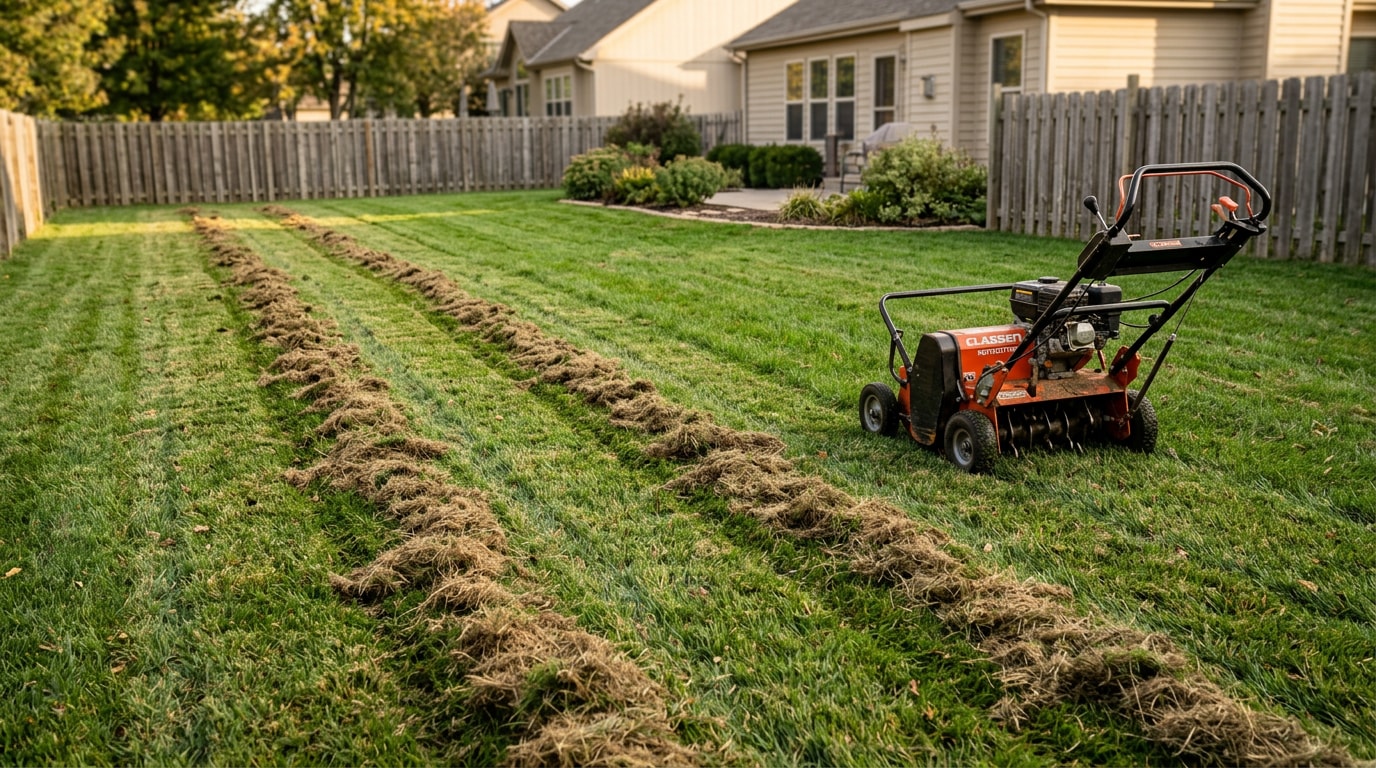
Verticutting uses a machine with vertical, fixed steel blades that slice down through the thatch layer and into the top inch of soil. The cuts create narrow grooves across the lawn, pulling thatch to the surface so it can be raked up and removed.
It's a more aggressive process than standard dethatching, which mostly skims debris off the top. Verticutting physically thins dense turf, cuts through spreading stems called stolons and rhizomes, and opens real channels for water, air, and seed to reach bare soil.
Verticutting vs. Dethatching vs. Aeration
These three terms get used interchangeably around Park City, but they solve different problems. Knowing which one your lawn actually needs saves money and avoids unnecessary stress on your turf.
| Treatment | What It Does | Depth | Best For |
|---|---|---|---|
| Verticutting | Vertical blades slice through thatch and into the soil surface | 1/4" to 1/2" | Thatch over 1/2"-3/4" thick, lawn renovation, pre-overseeding |
| Dethatching (power rake) | Spring tines comb and lift loose surface debris | Surface only | Light to moderate thatch, annual maintenance |
| Core aeration | Hollow tines pull small soil plugs | 2" to 3" | Compacted clay soil, improving root depth |
K-State Research and Extension notes that in highly maintained bluegrass turf, more than 1/5 inch of thatch can accumulate per year, which is why most Park City lawns need some form of cultivation on a regular schedule. Once that layer passes roughly 1/2 inch, water and nutrients start getting trapped above the soil instead of reaching the roots.
Signs Your Park City Lawn Needs Verticutting
Walk your yard and check for these before booking anything:
- The lawn feels spongy or bouncy when you walk across it
- Water pools on the surface instead of soaking in
- Grass looks thin or patchy even with regular fertilization
- You can't easily push a screwdriver a few inches into the soil
- Pulling back the grass reveals more than 1/2 inch of brown, matted material above the soil line
If you see two or more of these, it's worth having a crew measure the actual thatch depth before deciding between dethatching and full verticutting.
When to Verticut in Park City, KS
Timing matters as much as the technique itself. Cool-season lawns common throughout Sedgwick County, mainly tall fescue and Kentucky bluegrass, recover best when verticutting happens during active growth, not right before stress season.
Early fall, roughly September through early October, is the preferred window for cool-season turf in this part of Kansas. The soil is still warm enough for fast recovery, but the heat stress of a Kansas summer has passed. Early spring is a secondary option, but it carries more risk of weed pressure filling in bare grooves before the grass does.
University of Florida IFAS Extension guidance on vertical mowing is a useful reminder here even outside Florida's climate: cuts should run in a single, consistent direction rather than crisscrossing the lawn, and the work should never happen on dormant or stressed turf. The same rule applies to fescue and bluegrass lawns around Park City. Cutting a stressed lawn in July heat does more damage than good.
How Much Does Verticutting Cost in Park City, KS?
Pricing depends on lawn size, thatch severity, and whether the job is bundled with aeration or overseeding. These are typical ranges homeowners in the area can expect:
| Lawn Size | Typical Verticutting Cost |
|---|---|
| Up to 5,000 sq ft | $125 – $250 |
| 5,000 – 10,000 sq ft | $250 – $400 |
| 10,000 – 15,000 sq ft | $400 – $600 |
| 15,000+ sq ft | $600 and up |
Lawns with heavy thatch, difficult access, or hauling requirements tend to land at the higher end of each range. Bundling verticutting with aeration and overseeding usually costs less than booking each service separately. For an exact number based on your lot, get a free estimate rather than relying on a generic online calculator.
How Professional Verticutting Works
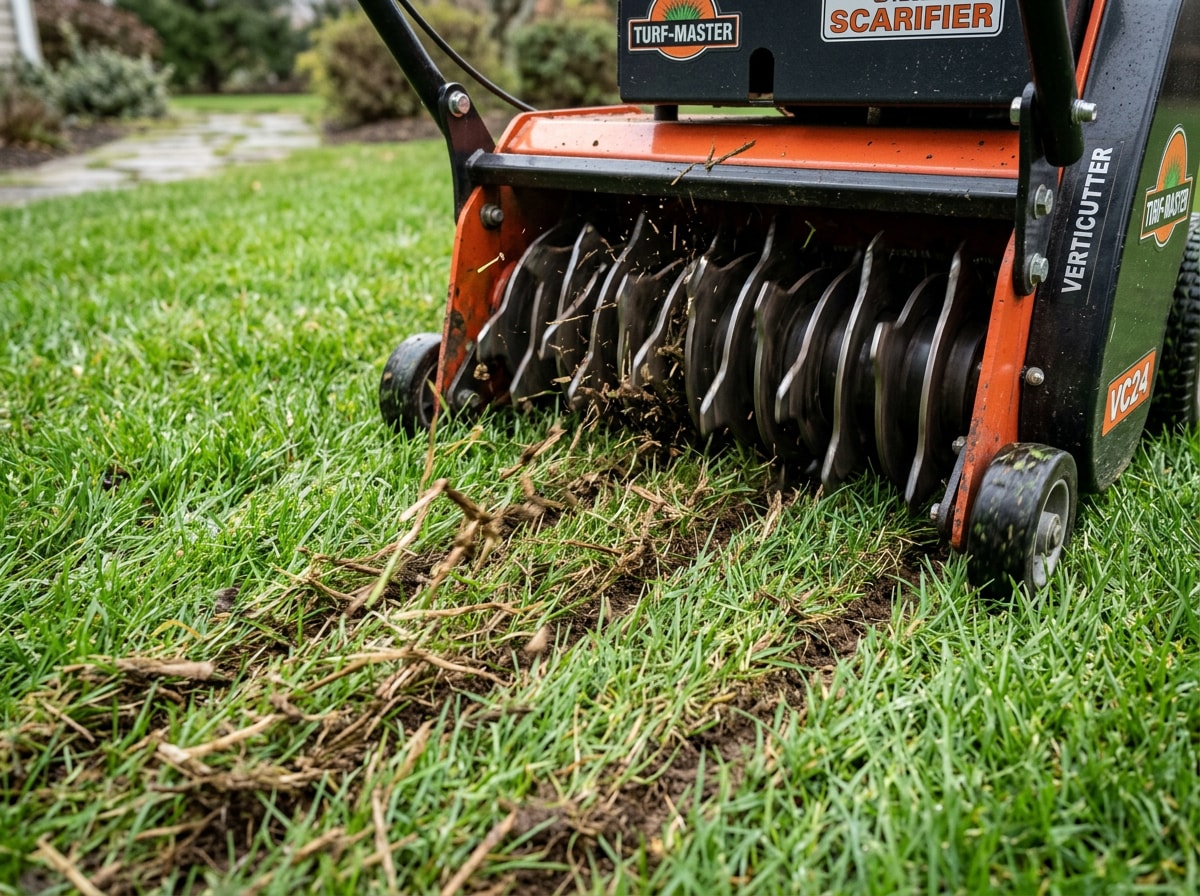
A properly run verticutting job follows a sequence, not a single pass with a rented machine:
- Thatch measurement. A crew pulls a small plug or cuts a wedge to confirm actual thatch depth before touching the lawn.
- Mowing short. The lawn is cut lower than normal so the verticutter blades can reach the thatch layer cleanly.
- Blade calibration. Depth is set based on grass type and soil; fescue and bluegrass need shallower settings than thicker spreading grasses.
- Verticutting pass. The machine runs in one consistent direction, slicing grooves and pulling thatch to the surface.
- Debris removal. Thatch is raked, bagged, or collected and hauled off, not left to smother the lawn underneath.
- Overseed and starter fertilizer (if needed). Seed drops directly into the open grooves for real seed-to-soil contact, followed by a light starter feeding.
Skipping steps, especially calibration and debris removal, is the most common reason a DIY verticutting job ends with a scalped, patchy lawn instead of a healthier one.
DIY vs. Hiring a Pro
Renting a verticutter for a weekend is possible, but it comes with real trade-offs:
- DIY pros: Lower upfront cost, flexible scheduling, no waiting on a crew
- DIY cons: Equipment rental runs $90–$150 per day, hauling thatch yourself takes hours, and incorrect blade depth can scalp healthy turf
- Professional pros: Correct depth calibration for your soil, full debris haul-away, and timing matched to your grass type
- Professional cons: Higher cost than a weekend rental, though usually offset by better results and less follow-up repair
For a small, flat yard with mild thatch, a rental can work. For anything over 5,000 square feet, uneven terrain, or a lawn that's already stressed, a professional crew is the safer bet.
Pairing Verticutting With Other Lawn Care
Verticutting rarely works as a standalone fix. It's most effective as part of a seasonal plan that also includes lawn fertilization to feed recovering turf and weed control to keep opportunistic weeds from filling in the fresh grooves before new grass does. Homeowners a short drive away have had success combining verticutting with overseeding in the fall, a process covered in more detail in our guide to aeration and overseeding services in Andover, KS.
Browse the full lawn care service menu to see how verticutting fits alongside mowing, fertilization, and seasonal programs.
Why Park City Homeowners Work With Stellar
Our crews verticut lawns throughout Park City and the greater Wichita metro every fall, calibrating blade depth to the clay-heavy soils common across Sedgwick County. That local experience matters: a setting that's correct for sandy soil in another region can scalp a clay-based Kansas lawn. You can see examples of completed lawn and landscape work on our projects page, or visit the Stellar homepage to browse every service we offer in the area. For details specific to your neighborhood, check our Park City, KS service area page.
Ready to stop guessing at thatch depth? Get a free estimate and we'll tell you honestly whether your lawn needs verticutting, a simple dethatch, or just aeration this season.
FAQ
What is the purpose of verticutting a lawn?
Verticutting removes built-up thatch and creates grooves that let water, air, and nutrients reach the root zone. It also gives grass seed direct contact with soil, which is why it's commonly done right before overseeding.
What's the difference between verticutting and dethatching?
Dethatching uses spring tines to comb loose debris off the surface. Verticutting uses solid, fixed blades that cut deeper into the soil, making it more aggressive and better suited to thatch layers over 1/2 inch thick.
How often should you verticut a lawn in Kansas?
Most cool-season lawns in the Park City area need verticutting once a year at most, usually in early fall. A lawn with mild thatch may only need it every two to three years; a crew can confirm by measuring thatch depth first.
Is verticutting bad for grass?
Done at the right time and depth, verticutting is not harmful. It can look rough for one to two weeks afterward as the lawn recovers. Verticutting in summer heat or on a drought-stressed lawn is what actually causes damage.
When is the best time to verticut in Park City, KS?
Early fall, roughly September into early October, is ideal for the fescue and bluegrass lawns common in this area. The grass is still actively growing but past peak summer heat stress, so it recovers fast.
Can verticutting and overseeding happen on the same day?
Yes. In fact, that's the standard approach. The grooves cut during verticutting are the ideal spot for new seed to settle, so most professional jobs combine both services in a single visit.