Solar lights for landscaping in Haysville, KS come in more varieties than most homeowners expect, and picking the wrong one means a yard that goes dark halfway through the night. This guide breaks down fixture types, brightness, and weatherproofing in plain terms so you buy once and get it right. By the end, you'll know exactly which lights belong where on your property.
Why Solar Landscape Lighting Makes Sense Here
Solar fixtures skip the trenching, conduit, and electrician calls that wired systems require. Stake the light, point the panel toward open sky, and you're done in an afternoon.
They also run on stored sunlight instead of your home's grid, so there's no monthly cost bump from running dusk-to-dawn fixtures all season. And since there's no power cord tying them down, you can move solar landscape lighting around as your plantings change without hiring anyone to reroute wiring.
Types of Solar Landscape Lights
Most Haysville yards end up using a mix of fixture types rather than just one. Each is built for a different job:
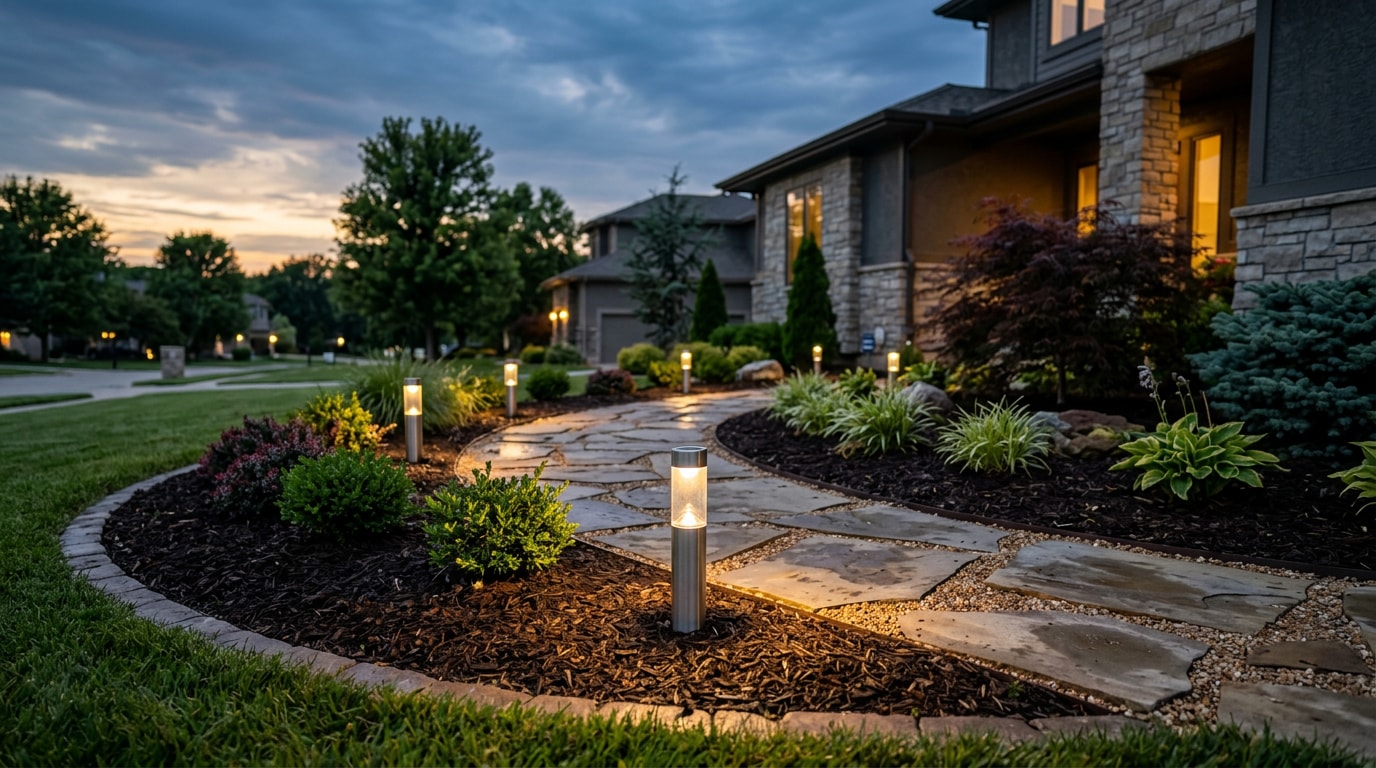
- Path lights – line walkways and borders with a soft, even glow at ankle height
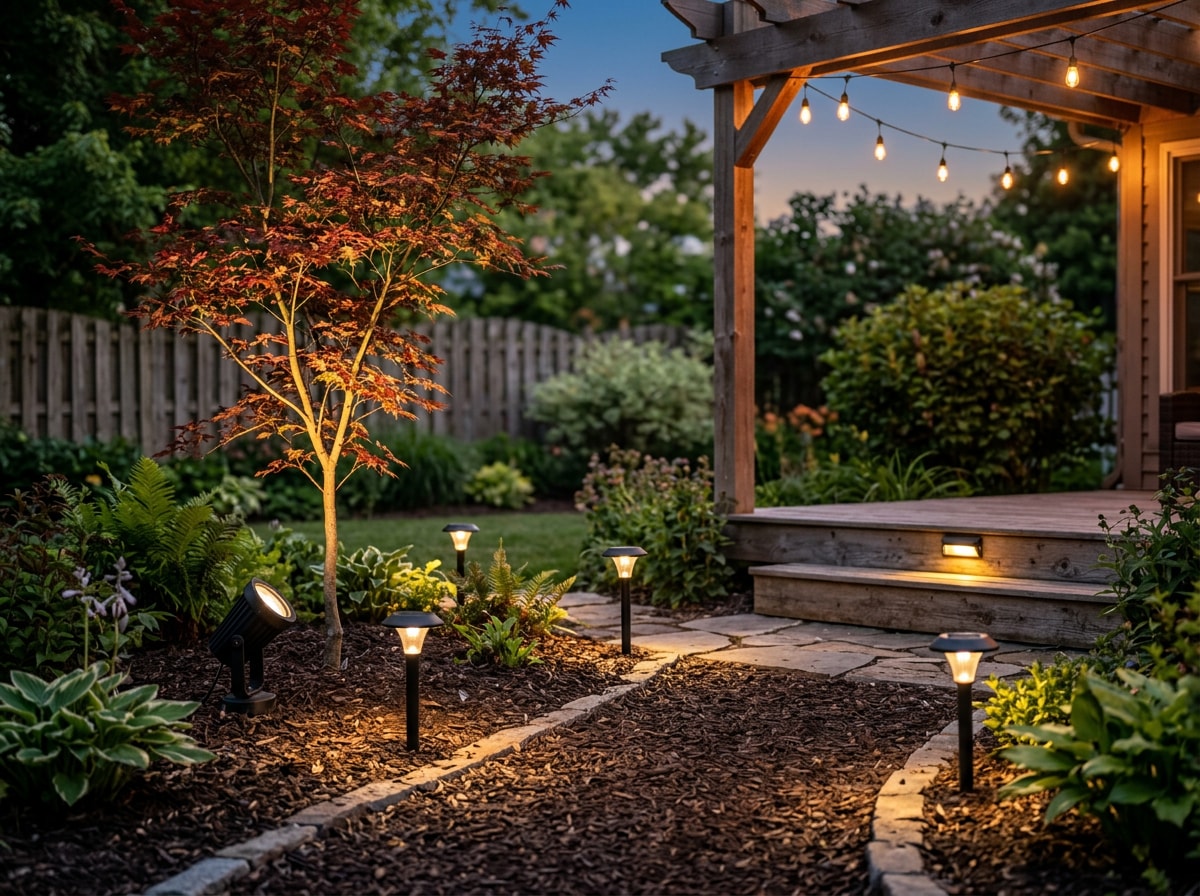
- Spotlights (accent lights) – aim upward or outward to highlight a tree, shrub, or architectural feature
- Deck or step lights – mount flush into stair treads, railings, or posts so you can see the edge of a step safely
- String lights – drape across patios, pergolas, and fence lines for ambient, non-functional lighting
Solar Spotlights and Floodlights for Security and Highlighting
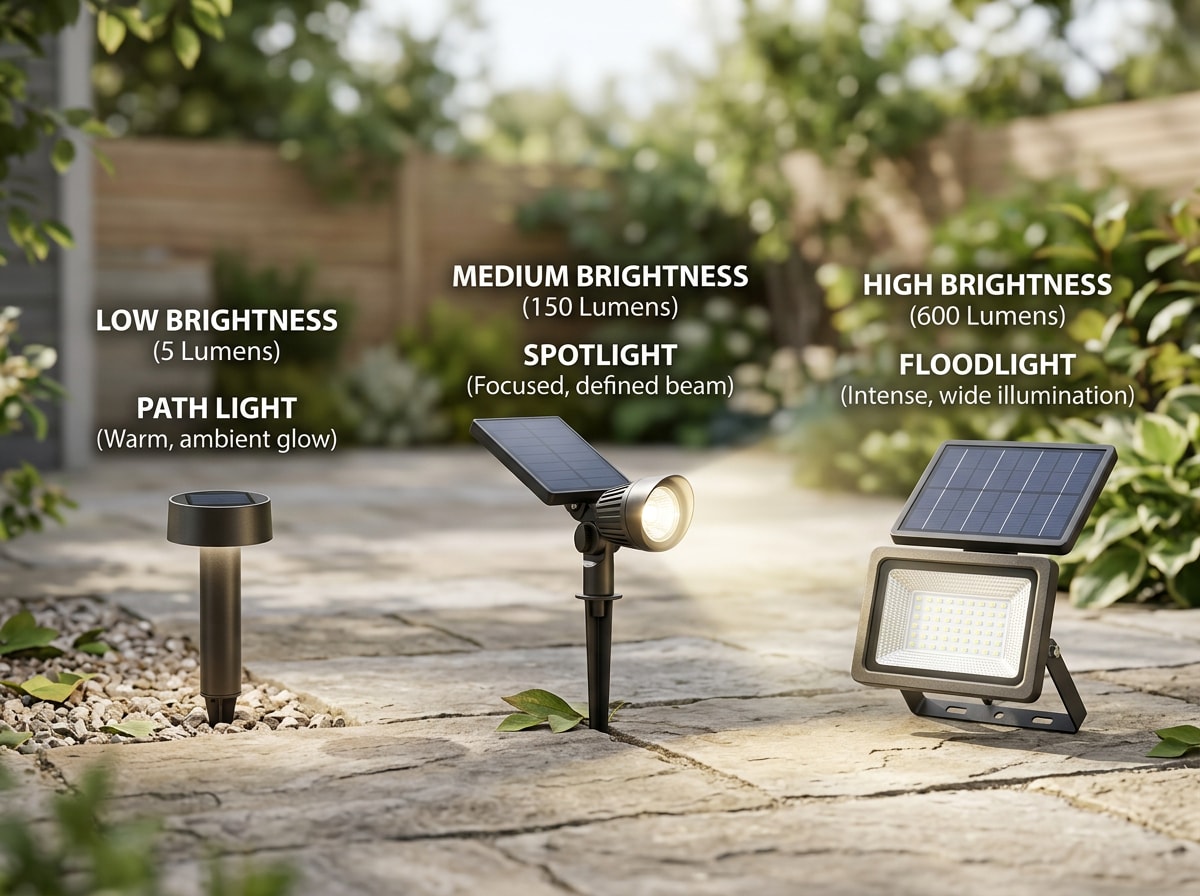
Spotlights and floodlights throw a wider, more concentrated beam than path lights, which makes them better suited for security lighting and highlighting taller features like trees or facades. Floodlights generally run at higher lumens and cover a broader area, while spotlights focus a tighter beam on a single object.
Many of these fixtures include a built-in motion sensor that keeps the light off, and the battery charged, until movement triggers it. That combination makes spotlights and floodlights a practical pick for driveways, side yards, and entry points.
How to Choose: Lumens, Battery, and Durability
Picking the right fixture comes down to three decisions: matching the type to the job, choosing a brightness level suited to that zone, and confirming the build quality can handle outdoor exposure.
How Many Lumens Do You Actually Need?
Application, not personal preference, should drive the lumen choice. Pathway lights sit lowest, accent lighting falls in the middle, and security fixtures need the highest output.
| Zone | Recommended Lumens | Typical Fixture |
|---|---|---|
| Pathway / walkway | 10–100 | Solar path lights |
| Accent / highlighting | 50–200 | Solar spotlights |
| Security / entry points | 300–1,000+ | Solar floodlights |
For a baseline on what a lumen actually measures, the Lighting Facts label gives you information to compare different bulbs, including brightness in lumens and yearly estimated energy cost . That same logic applies when comparing solar fixture brightness claims.
Solar Panel and Battery Quality
Panel efficiency and battery chemistry determine how consistently your lights perform after sunset. Budget fixtures typically use NiMH batteries, which lose capacity faster in cold weather. Lithium batteries cost more upfront but hold a charge better through winter and generally last longer overall.
Look for a target runtime of 8 to 10 hours on a full charge, enough to cover a long winter night. When the sun shines onto a solar panel, energy from the sunlight is absorbed by the PV cells in the panel, creating electrical charges that move in response to an internal electrical field, causing electricity to flow . A higher-efficiency panel converts that light faster on partly cloudy days, which matters given how variable Kansas skies can be.
Our crews have installed lighting across yards from Haysville to Bel Aire, and one pattern holds up every winter: aluminum ground stakes hold firm in Haysville's dense clay soil, while thin plastic stakes tend to crack during freeze-thaw cycles. If your yard has heavy clay, spend the extra few dollars on metal stakes.
Durability and Weather Resistance (IP65 vs. IP67)
An IP65 rating is the minimum worth considering for outdoor solar lights. The first numeral refers to protection against solid objects, rated from 0 to 6, while the second numeral rates protection against liquids on a scale from 0 to 9 , so IP65 means fully dust-protected with resistance to low-pressure water jets. IP67 goes a step further, covering brief submersion, which matters more for low-mounted deck or path lights that sit in standing water after storms.
Beyond the IP rating, look for rust-resistant housings, UV-stabilized plastics so fixtures don't go brittle in direct sun, and sturdy stakes if your yard gets wind or foot traffic. A good-looking fixture that lets moisture in won't survive a full Kansas year.
Do Solar Lights Work in Shade or Cloudy Weather?
Solar lights perform best with 6 to 8 hours of direct, unobstructed sunlight. In partial shade or persistently cloudy conditions, output and runtime both drop. For yards with mature trees or north-facing beds, look for larger panels, higher-capacity batteries, and adjustable panel heads that angle toward available light.
Local sun exposure matters more than most buying guides mention. Wichita-area homes average roughly 5.4 peak sun hours per day, based on NREL PVWatts data , and actual output depends on roof direction, tilt, shading from trees, and season, with production highest in summer and lowest during shorter winter days . A spot that charges fine in July may underperform by December, so test placement before committing to a permanent layout.
If you're planning a full lighting layout rather than a few scattered fixtures, our landscaping services team can map sun exposure across the whole property before you buy anything.
Placement and Spacing Tips
Positioning affects performance as much as the fixture itself. Aim for spots that get 6 to 8 hours of direct sunlight daily. Avoid shaded zones under trees, near fences, or under roof overhangs where panels won't fully charge.
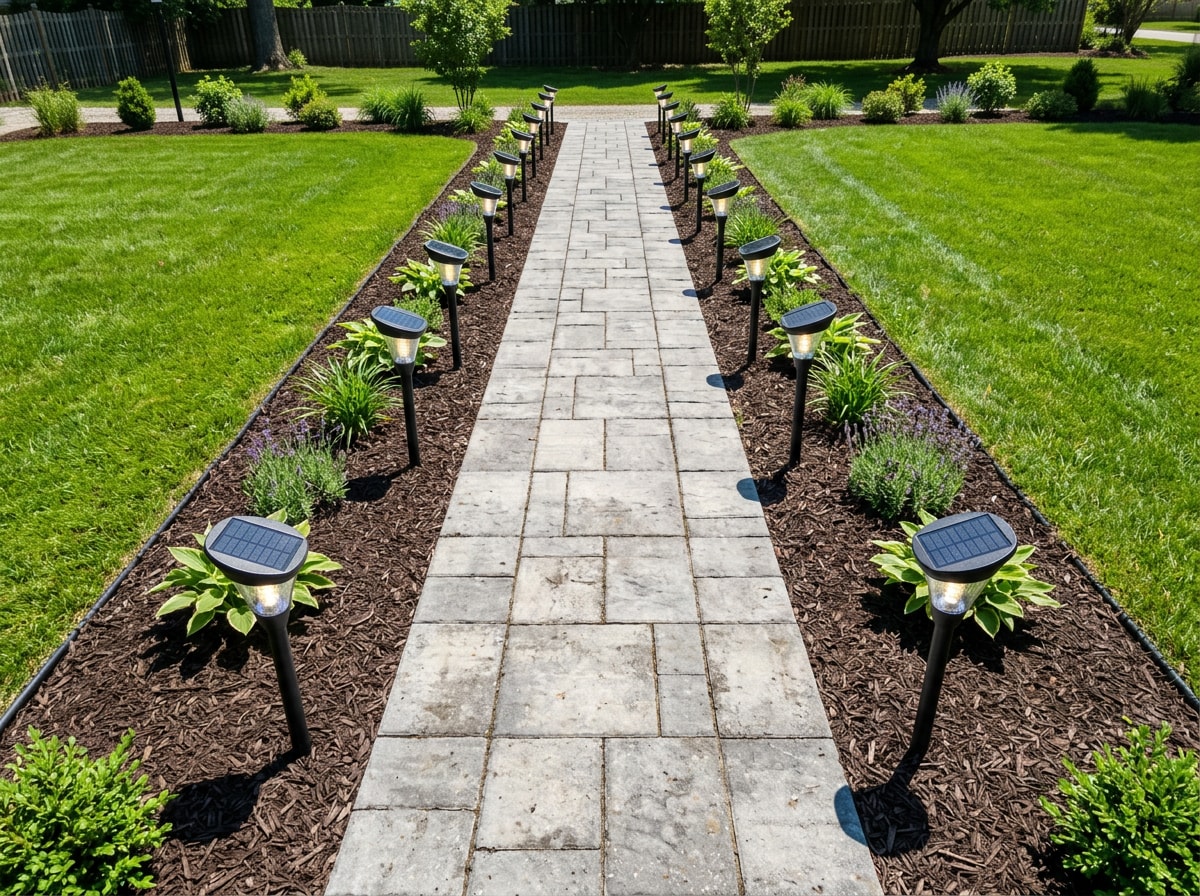
For pathways, space fixtures roughly 6 to 8 feet apart to create even, overlapping light without harsh gaps. Angle spotlights upward and slightly away from windows or sitting areas so the beam highlights a feature instead of someone's eyes.
For larger projects, a professional exterior light installation visit can save you from guessing at spacing and sun angles yourself.
How Solar Landscape Lights Work
Every fixture relies on four parts working together: a solar panel that captures sunlight, a rechargeable battery that stores it, an LED bulb that converts stored energy into light, and a sensor that decides when the light should turn on.
Dusk-to-dawn sensors detect falling light levels and switch the fixture on at sunset, then off at sunrise, with no manual switching required. Motion sensors take this further, keeping the light dark until movement is detected nearby. Both features exist to conserve battery life, which matters most during shorter winter daylight hours.
Maintenance Tips for Longer Runtime
Solar landscape lights are low-maintenance by design, but not zero-maintenance. The two most common fixes for dim or inconsistent lighting:
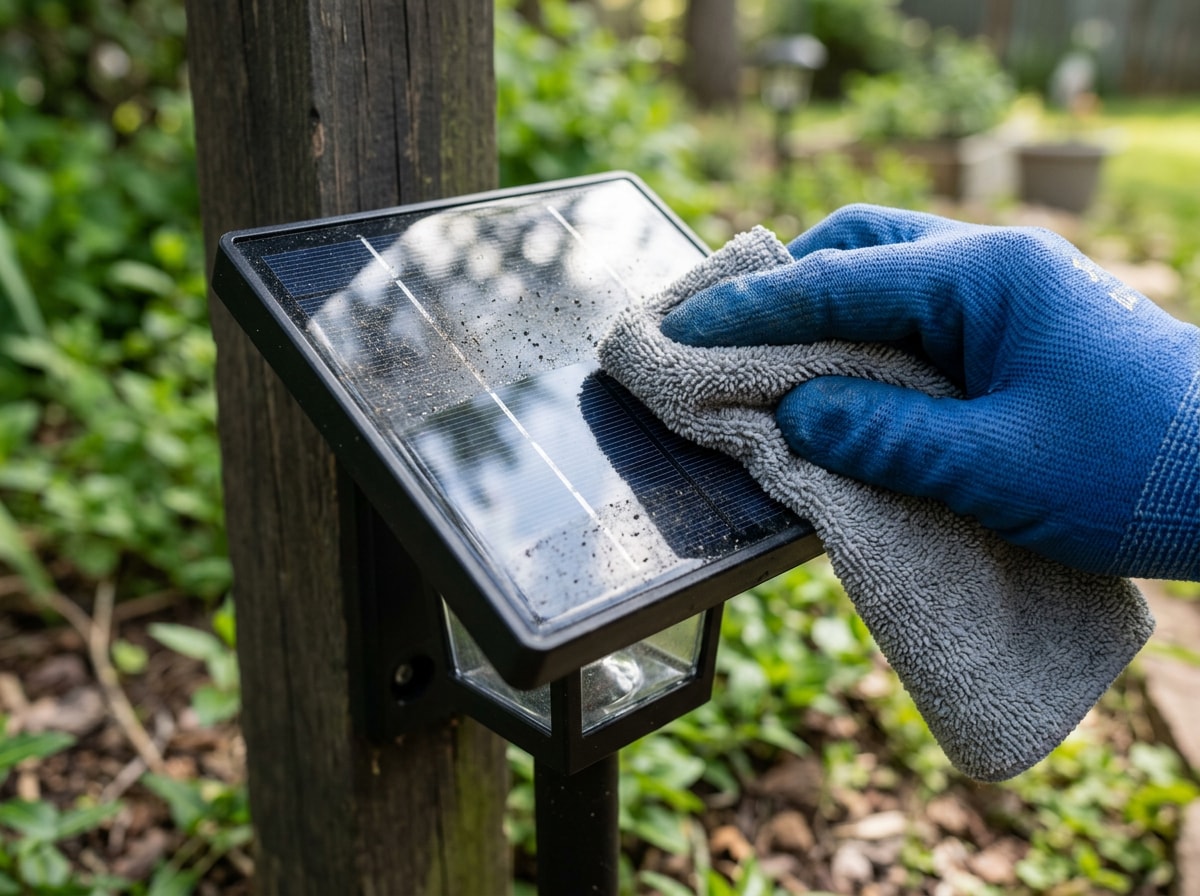
- Clean the panel. Wipe it down monthly with a soft, damp cloth to clear dust, pollen, and grime that block sunlight absorption. This single step resolves a surprising share of "my lights got dimmer" complaints.
- Replace the battery. Rechargeable batteries typically need replacing every 1 to 2 years as they lose charge capacity over repeated cycles, even with a perfectly clean panel.
Homeowners across Haysville, KS can expect this same basic upkeep routine regardless of yard size or fixture count. If you're also updating hardscaping while you're at it, our concrete landscaping guide for Haysville covers how paths and patios pair with lighting layouts.
Ready to put a full lighting plan in place instead of trial-and-error? Get a free estimate from our team and we'll walk your property with you.
About the Author
This guide was written by Stellar Wichita's landscape design team, which installs and services outdoor lighting, irrigation, and hardscape projects across Haysville, Wichita, Andover, and the surrounding area through Stellar Wichita. Questions about your specific yard? Contact us directly.
FAQ
What are the best solar landscape lights according to Consumer Reports?
Consumer Reports typically evaluates path lights, post-cap and step lights, and string lights for brightness and durability rather than naming one universal winner. Check their current ratings directly before buying.
What are the highest lumens for solar garden lights?
Security and floodlight-style fixtures reach the highest output, typically 300 to 1,000+ lumens, well above standard path or accent lighting ranges.
What are the best solar lights for a garden pathway?
Pathway lighting generally performs best between 10 and 100 lumens, spaced 6 to 8 feet apart for even coverage without harsh gaps or glare.
Do solar landscape lights work in winter?
Yes, but with less runtime. Shorter winter days mean less charging time, and cold temperatures reduce battery capacity, especially in NiMH units. Lithium-battery fixtures hold up noticeably better through a Kansas winter.
How long do solar landscape lights last before needing replacement?
The LED itself can last years, but the rechargeable battery is the part that wears out first, usually every 1 to 2 years depending on fixture quality and sun exposure.
How many solar landscape lights do I need?
As a rule of thumb, space path lights 6 to 8 feet apart, open-area fixtures 8 to 10 feet apart, and plan for roughly one light per 50 to 100 square feet in larger yards.