Small backyard hot tub landscaping on a budget in Park City, KS comes down to one decision first: where the tub sits. Everything else, screening, surfaces, lighting, and seating, gets built around that spot. Get placement right and a tight lot stops feeling cramped and starts feeling finished.
Where to Put a Hot Tub in a Small Park City Backyard
Placement decides the rest of the budget. A tub tucked against an existing wall, fence corner, or deck edge needs less screening, less surface prep, and fewer electrical runs than one dropped in the middle of open yard.
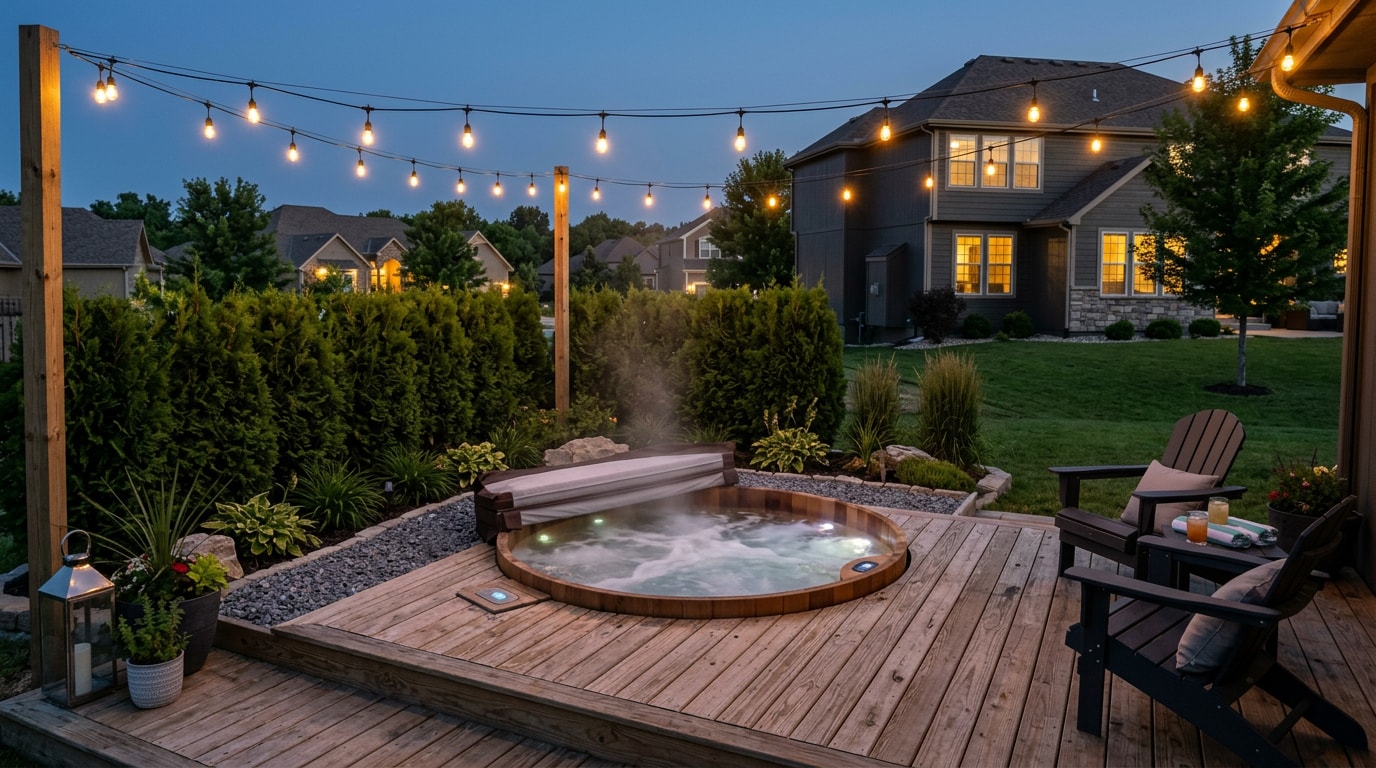
An in-deck hot tub is usually the cheapest option on a small lot because it uses a deck you already have (or are already planning) instead of a separate concrete pad. That keeps excavation, grading, and extra material costs off the list. For homeowners retrofitting a current deck, sinking the tub flush with the surrounding boards removes the step-up access problem of above-ground units and avoids the "bolted-on" look that tends to happen on tight footprints.
Based on the small-lot backyards we work on most often around Park City, the tub's spot usually dictates how much privacy screening, surface area, and lighting a homeowner actually needs, so it pays to settle placement before buying a single plant or paver. A landscape design walkthrough can confirm a spot works with drainage, sun exposure, and deck framing before anything gets built.
Privacy on a Budget
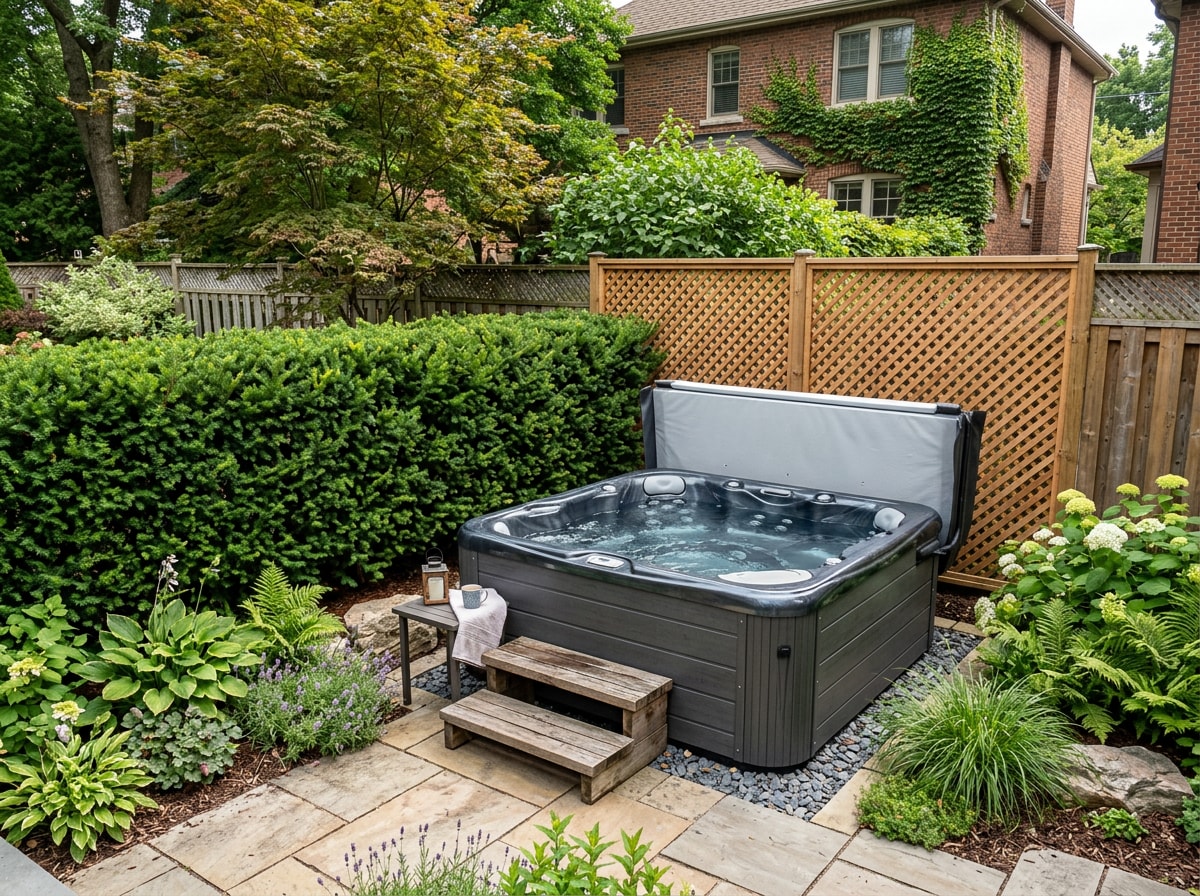
Privacy doesn't require a full fence rebuild. Fast-growing hedges, lattice panels, and repurposed fencing sections all create a hot tub privacy screen for a fraction of a full enclosure's cost, and they scale easily to a small yard.
Kansas winters narrow the plant list. Not every hedge variety handles the freeze-thaw cycle well, and most of south-central Kansas sits in a cooler hardiness zone than gardeners moving from milder states expect. Spacing matters too: crowding shrubs too close wastes money on plants that never fill in correctly. K-State Research and Extension's planting guidance notes that within rows, shrubs should be placed 3 to 6 feet apart , which is a useful starting point before buying anything for a privacy hedge around a tub.
Budget-Friendly Surfaces & Hardscaping
Gravel, pavers, and stamped concrete are the three most common budget surface choices around a small hot tub, and each lands in a different price and durability range.
| Surface | Approx. 2026 Cost/sq ft | Durability |
|---|---|---|
| Gravel | $2–$5 | Low-moderate; needs periodic refresh |
| Pavers | $10–$18 | High; easy spot repairs |
| Stamped concrete | $12–$20 | High; cracks harder to fix |
Gravel keeps costs low but shifts over time and needs the occasional top-off. Pavers sit in the middle of the price range and are simple to patch if one cracks. For help comparing these for your own layout, the hardscape installation page breaks down what fits a tight backyard footprint. Homeowners weighing the full project cost can also see our Park City backyard landscaping cost guide for a line-item breakdown.
Garden & Greenery That Don't Blow the Budget
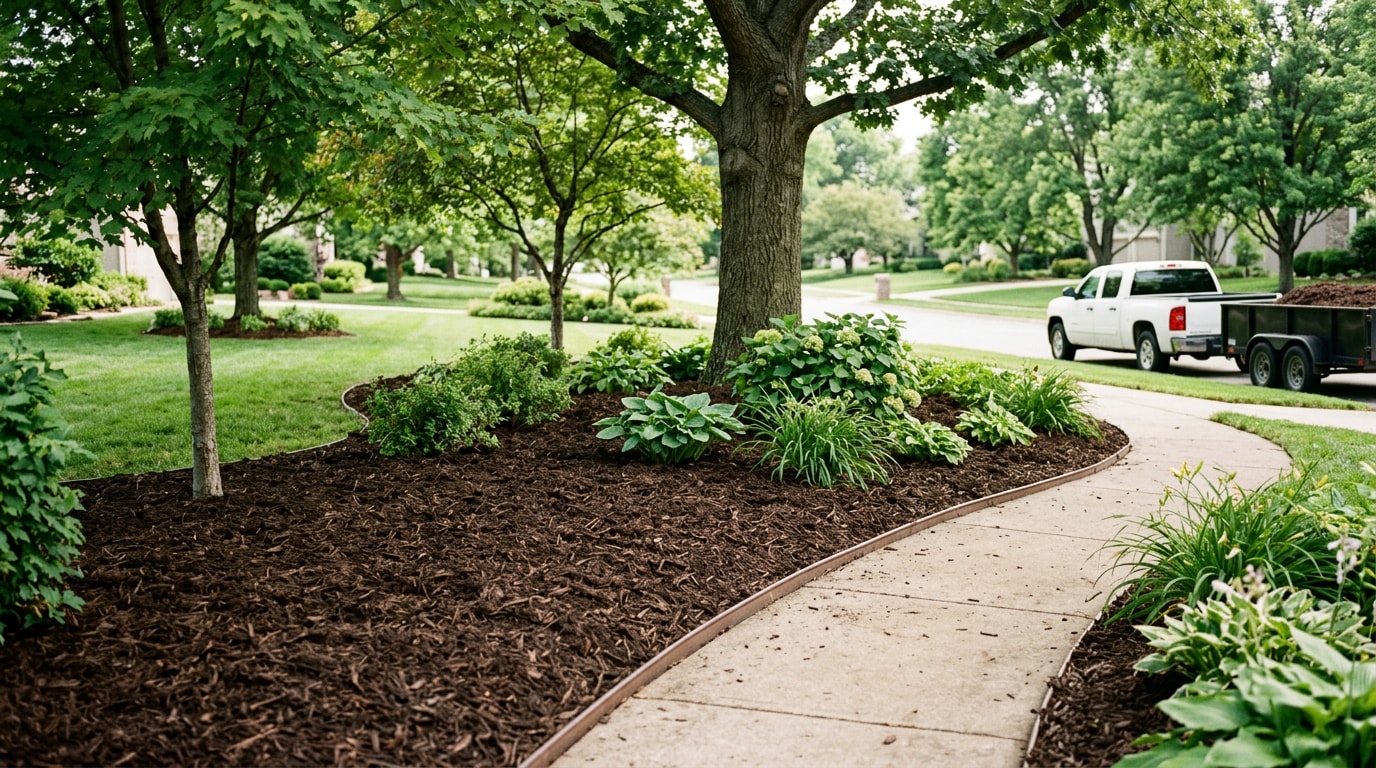
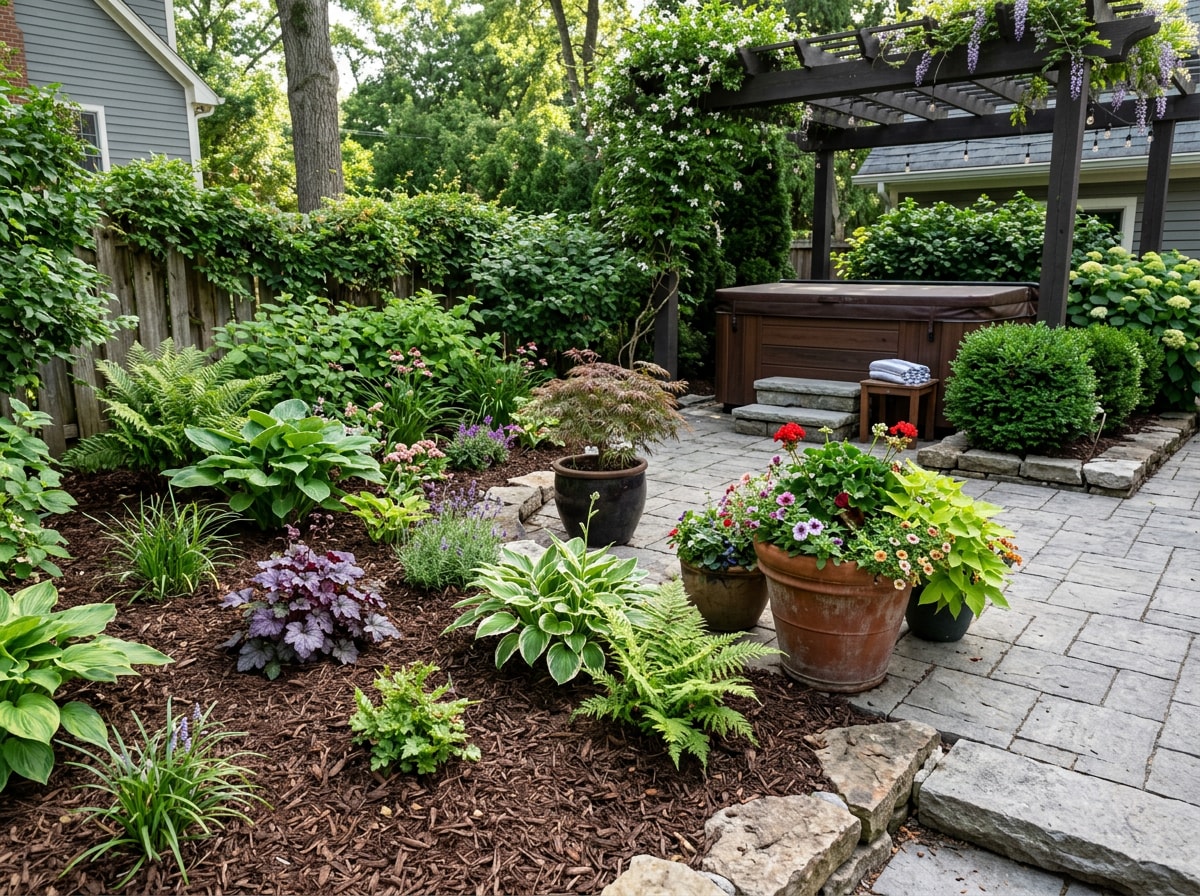
Container plants, hardy perennials, and mulch beds soften a hot tub area without a full landscape overhaul. These additions cost little and can be added gradually as budget allows.
Reusing existing garden beds or transplanting divisions from elsewhere in the yard is close to a zero-cost option. A fresh layer of mulch around new beds also keeps weeds down without ongoing spend. Low-maintenance container plants make it easy to rearrange the space as the seasons change.
Lighting on a Budget
Solar path lights, string lights, and battery-powered LED fixtures all deliver budget-friendly ambiance without the expense of hardwired landscape circuits. They install fast and move easily if the layout changes later.
Solar fixtures cost more upfront per unit but draw no electricity, while low-voltage wired systems last longer with steadier output. The U.S. Department of Energy notes that LED exterior luminaires can save even more energy and operating costs, as well as extend fixture lifetime compared to older bulb types, which is worth factoring in if you're deciding between disposable solar lights and a small wired run.
Electrical and Drainage Prep (Don't Skip This)
Every budget plan still needs to account for safe electrical hookup and drainage, and this is the part most landscaping checklists skip. Ground leveling, water runoff away from the tub base, and GFCI-protected power are the three non-negotiables before a tub ever gets filled.
The Consumer Product Safety Commission has warned for years about shock risk around pools, spas, and hot tubs, and part of its standing safety advice is to use battery-operated appliances instead of cord-connected appliances in and around a pool, spa, or hot tub . A licensed electrician should confirm GFCI protection on any circuit feeding the tub before it's used, regardless of how small the install is. If standing water or poor runoff is part of the picture, an irrigation installation assessment can catch drainage problems before they undermine a new patio or deck.
Comfort & Functionality
A few small, low-cost additions make a compact hot tub area feel finished:
- A slip-resistant pad at the entry step
- A small side table or bench for drinks and towels
- A weatherproof storage box for covers and accessories
These touches keep the space functional rather than an afterthought. Small seating paired with simple storage is usually enough for a tight footprint. Our landscaping services page and Park City, KS area page both have more local project context if you're sketching out a full plan. For general yard inspiration, the homepage outlines the full range of services we bring to small-lot projects like this one.
FAQ
What is the least expensive way to landscape around a hot tub?
Mulch beds, container plants, loose gravel, and DIY lattice screening are the cheapest realistic options. Combining two or three of these covers most of a small hot tub yard without major spending.
Where should I put a hot tub in a small backyard?
Place it near the house for easy access, away from low spots that collect water, and with some thought to sun and wind exposure. An in-deck setup often solves several of these at once.
Can I use gravel as a base under a hot tub?
Yes. Gravel provides stable, well-drained footing for lighter hot tub installs and costs less than pavers or concrete, though it does need occasional refreshing as it settles or shifts.
Can I use old or recycled materials for a budget hot tub landscape?
Yes. Reclaimed pallet wood, leftover pavers, and transplanted plant divisions are common ways to cut costs without cutting corners on the finished look.
What electrical and drainage prep does a hot tub need?
Ground leveling, water runoff control, and a GFCI-protected circuit installed by a licensed electrician are the core requirements. Skipping any of these creates safety and water-damage risks later.
What backyard hot tub trends are popular in 2026?
Solar lighting and multi-use small patios remain the most practical trends for compact yards, since both pair directly with the budget ideas above without adding major cost.
Ready to put a plan on paper? Get a free estimate and we'll walk your Park City backyard with you before you spend a dollar on materials.