Searching for backyard landscaping near me in Valley Center, KS usually starts with one problem: the yard feels unfinished, hard to maintain, or stuck in a layout that never quite worked. Before calling anyone, it pays to think through zones, drainage, plant choices, and hardscape options so you know what you're actually asking for. This guide walks through the planning decisions that shape a workable, lower-maintenance backyard built for north-central Kansas conditions.
Think in Zones, Not Square Footage
The biggest planning mistake homeowners make is treating the backyard as one open rectangle instead of a set of purposeful zones.
Before sketching plant beds or pricing pavers, decide how the space actually gets used day to day. A seating area, a dining spot near the kitchen door, garden beds along the fence line, a fire feature, and paths connecting them give a yard structure, whether you're on a quarter-acre suburban lot or a larger rural property around Valley Center.
This zone-first approach is also the foundation of most landscape design work, since zones determine layout before anyone picks materials.
Plan for Drainage Before You Install Anything New
Kansas clay soil drains slowly, and a backyard that looks fine in spring can turn into standing water after a summer storm. Grading and drainage deserve attention before a single plant or paver goes in.
A quick walk-through catches most problems early:
- Watch where water pools 30 minutes after a hard rain.
- Check that the ground slopes away from the foundation.
- Look for bare, eroded patches where topsoil has washed away.
- Note low spots near fences where runoff collects.
- Confirm downspouts discharge well clear of planting beds.
A simple soil test backs this up: dig a hole, fill it with water, and watch how long it takes to drain. A simple test can determine if you have a drainage problem, and if your soil takes longer than a few hours to drain, that's usually due to excessive clay in the soil. That's the norm across most Sedgwick County yards, not the exception.
Grading matters just as much as drainage fixes after the fact. Changing the timing of residential runoff helps reduce peak flows and mitigate flooding potential , which is the entire point of correcting slope before construction rather than after. If water lingers for more than a few hours, regrading or terracing is worth discussing before any landscaping work begins. Homeowners planning new beds near downspouts should also loop in irrigation installation planning at the same time, since trenching for drain lines and sprinkler lines often happens in the same pass.
Choose Plants Suited to Valley Center's Split Hardiness Zone
Plant selection matched to local hardiness is the single biggest factor in how much upkeep a backyard demands long term. The USDA Plant Hardiness Zone Map is the standard by which gardeners and growers can determine which plants are most likely to thrive at a location.
Here's a detail most local landscaping content glosses over: Valley Center doesn't sit cleanly in one zone. ZIP Code 67147 (Valley Center) falls across 2023 USDA Hardiness Zones 6b (-5°F to 0°F) and 7a (0°F to 5°F) . That split means a plant rated hardy only to 7a could struggle on the colder, more exposed side of a property while thriving a few blocks away. When in doubt, shop for Zone 6b hardiness to build in a margin of safety, and check your exact plant hardiness zone before buying anything borderline.
| Plant Category | Examples | Water Needs | Best Use |
|---|---|---|---|
| Native wildflowers | Purple coneflower, black-eyed Susan, butterfly milkweed | Low once established | Pollinator beds, color |
| Native shrubs | Fragrant sumac, ninebark | Low to moderate | Borders, wind buffers |
| Native trees | Bur oak, eastern redbud | Moderate while young | Shade, structure |
| Native vines | Trumpet creeper, Virginia creeper | Low | Fences, trellises, arbors |
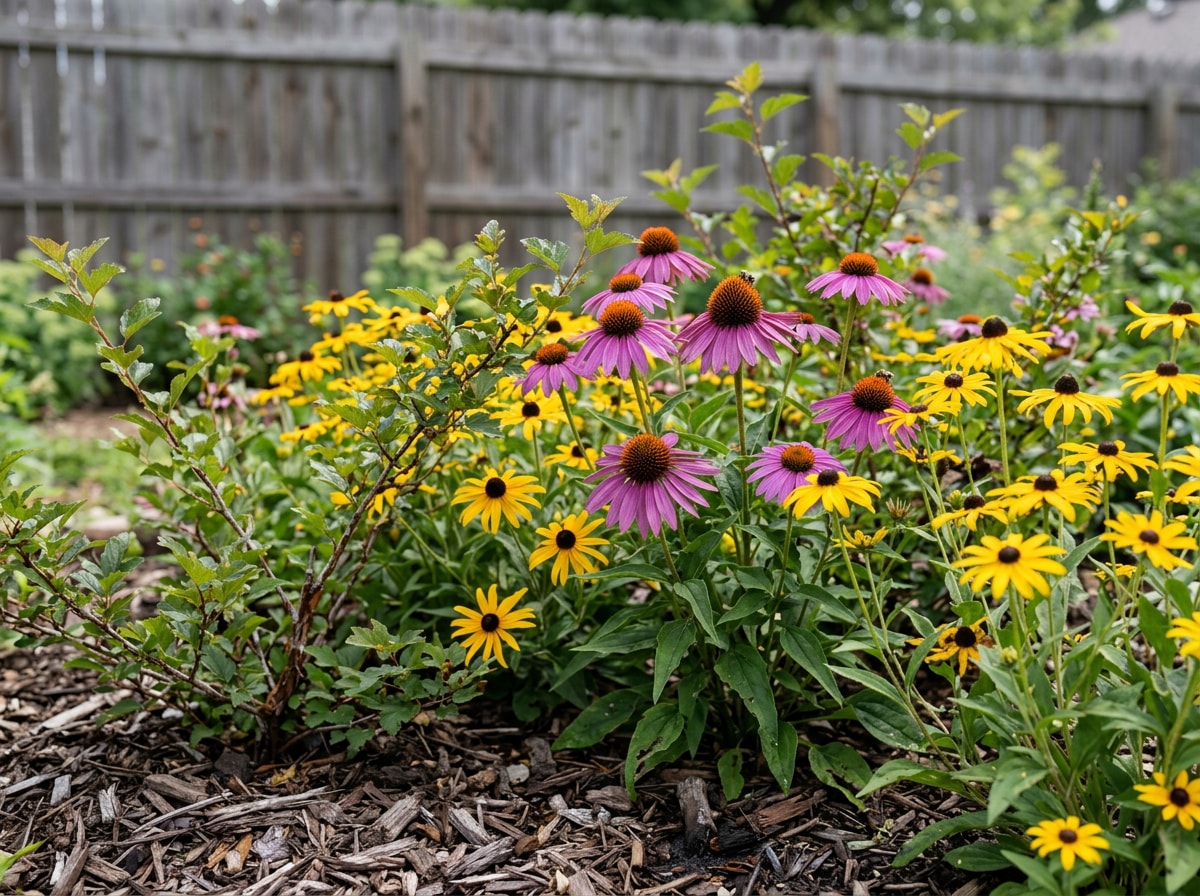
Native Wildflowers
Purple coneflower, black-eyed Susan, and butterfly milkweed establish deep roots that need little supplemental water after the first season. They also draw bees and butterflies, turning a plain bed into a working pollinator garden, and most tolerate clay-heavy soil without amendments.
Native Shrubs and Trees
Fragrant sumac and ninebark tolerate wind and poor drainage better than many nursery imports. For taller screening, bur oak and eastern redbud provide shade and structure over decades. A mixed row of shrubs and small trees along a fence line works well for privacy, since layered heights block sightlines more effectively than one species alone.
Native Vines
Trumpet creeper and Virginia creeper work well on fences, trellises, or arbors where a flat bed isn't practical. These climbers add vertical interest without taking up ground space, and once anchored, native vines need minimal feeding or pruning.
Add Hardscaping That Cuts Weekly Upkeep
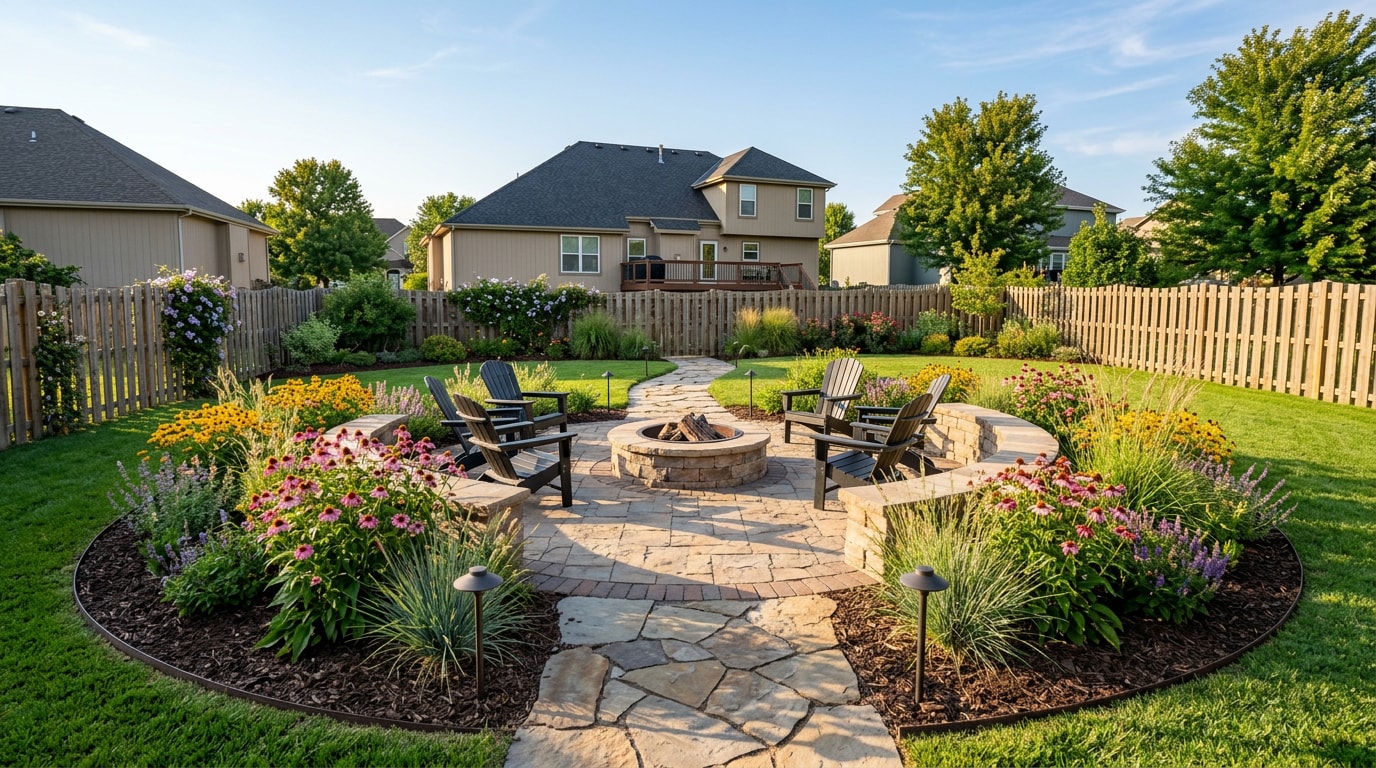
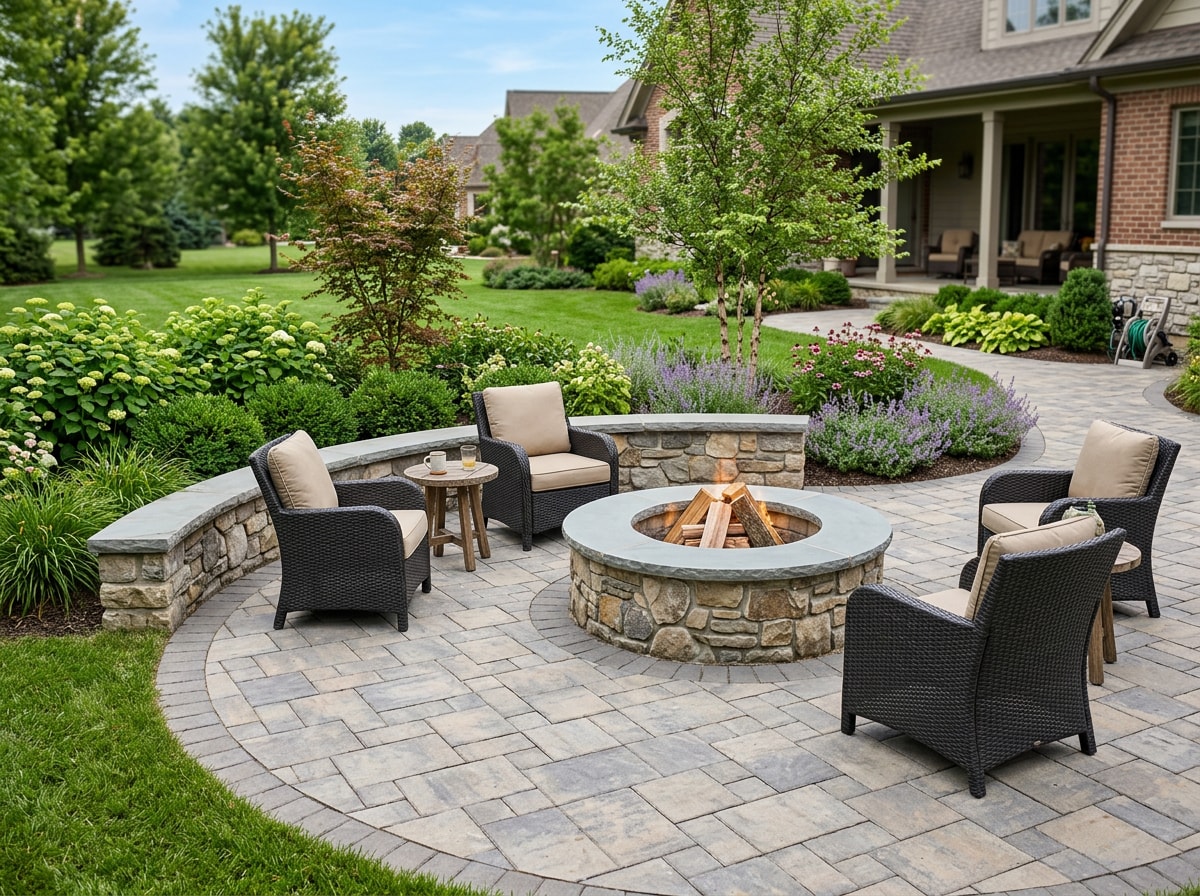
Hardscaping reduces the square footage that needs mowing, watering, or weeding, while adding usable living space. Patio pavers, gravel paths, and a built-in fire pit create defined areas for seating without relying on turf or beds to fill the space.
This pairs naturally with drought-tolerant plant choices, since less lawn means less irrigation overall. A paver patio also tends to handle Kansas freeze-thaw swings better than poured concrete, since individual pavers can shift slightly instead of cracking. For homeowners exploring full hardscape installation, a fire pit is consistently the most-requested addition to an otherwise low-maintenance yard.
Use Elevation Changes to Add Dimension
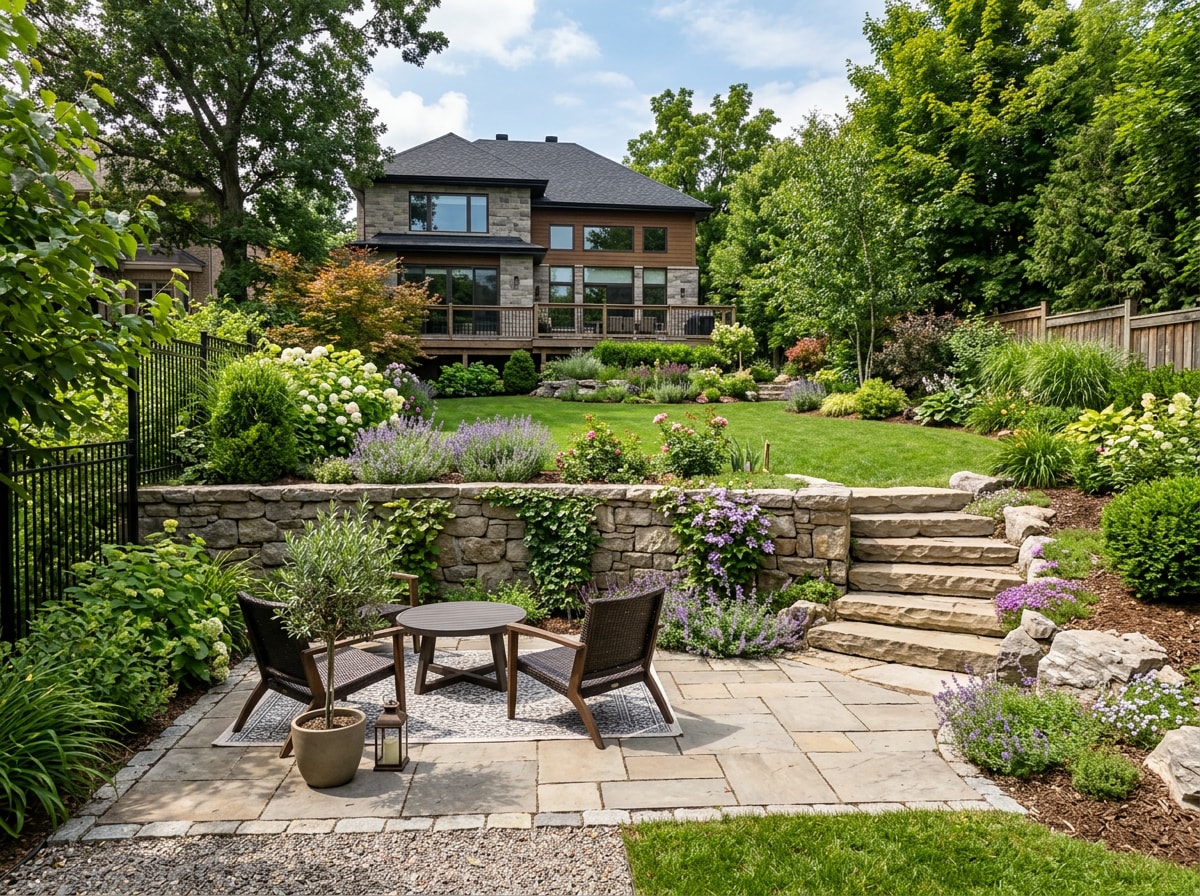
A flat backyard can feel smaller than it actually is. Introducing elevation changes, a raised bed, a short retaining wall, or terraced patio steps, breaks up that flatness and adds visual depth.
A terraced yard also solves practical problems on sloped lots, since each level can be graded independently to manage water flow. Even a modest multi-level patio, with one step down to a lower seating area, reads as more intentional than a single flat slab. Projects at this scale usually fall under landscape construction rather than a weekend DIY job, mainly because moving and compacting soil correctly takes equipment most homeowners don't own.
Mulch: The Cheapest Upgrade That Does the Most
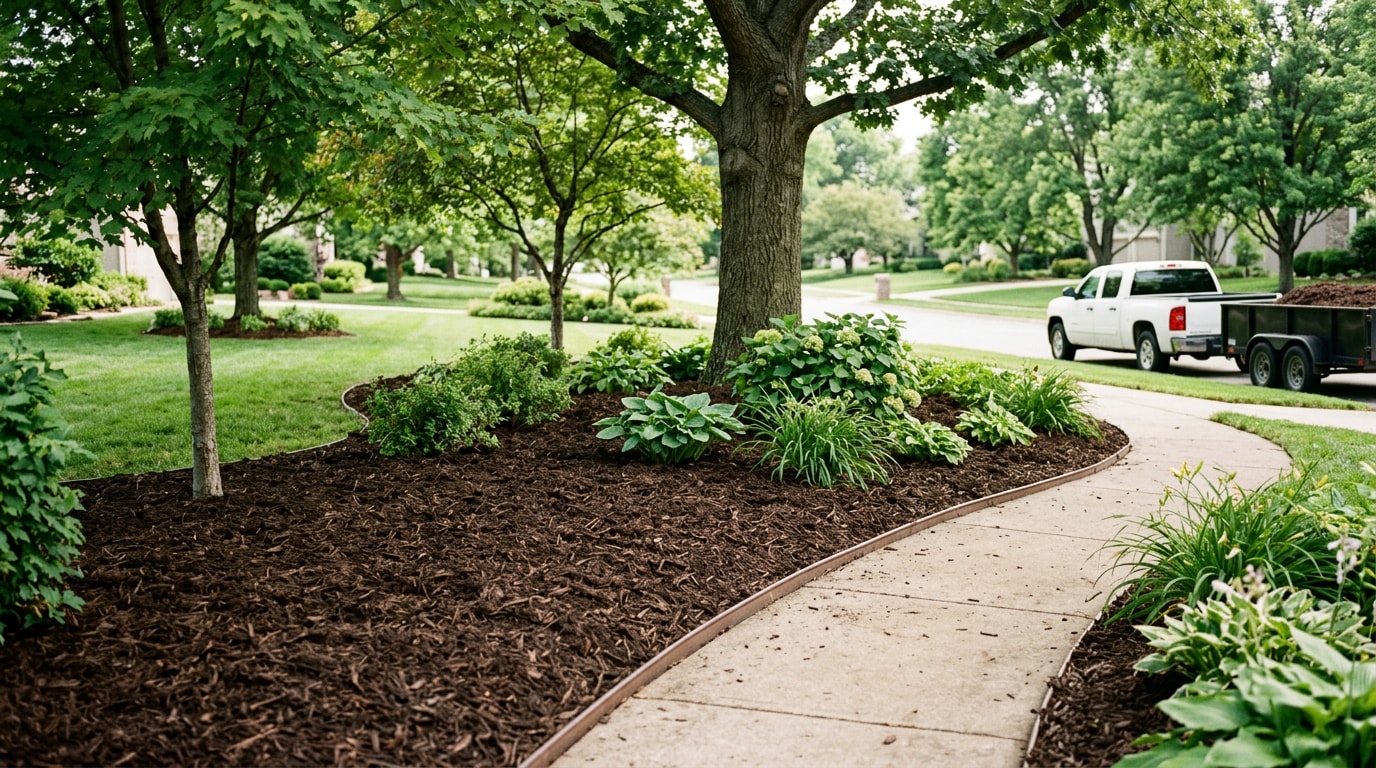
A fresh layer of mulch is one of the most affordable upgrades available for a backyard. Mulch beds retain soil moisture far longer than bare dirt, which matters during Kansas's hot, dry summer stretches.
Beyond moisture retention, a 2 to 3-inch layer handles weed suppression by blocking the sunlight weeds need to germinate. Organic mulch improves soil structure over time, while rock mulch suits xeric beds built around drought-tolerant plantings with minimal annual upkeep. If you're weighing rock versus bark for a specific bed, the crushed granite landscaping guide for Valley Center breaks down where each material performs best. For larger beds, a professional mulch installation crew can turn a weekend job into an afternoon.
Consider Turf Alternatives for Hot, Dry Stretches
Traditional turf is the thirstiest part of most landscapes, and that's backed by real numbers, not just a sales pitch. Comparing landscape water use before and after converting turfgrass to water-efficient landscaping, EPA found the water-efficient option used 76 percent less water per unit area.
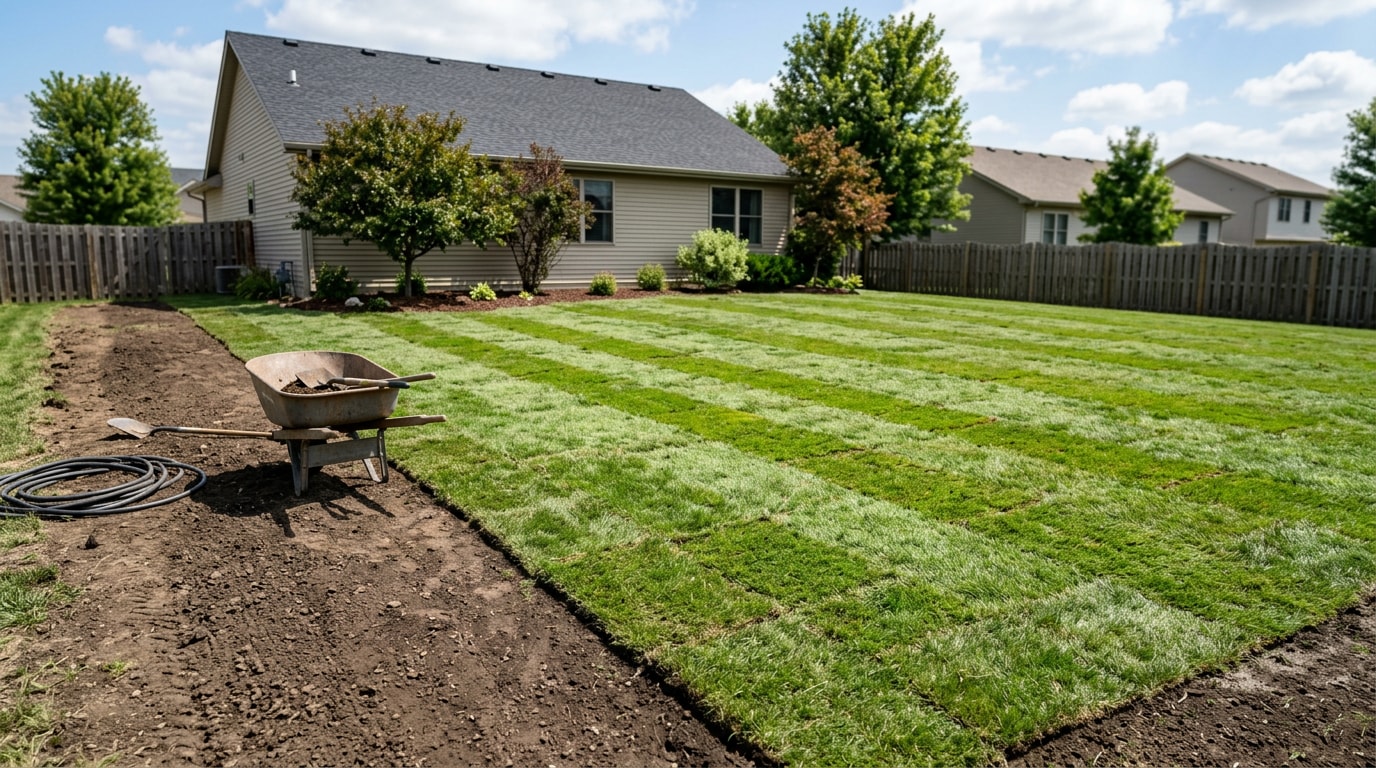
That doesn't mean every lawn has to go. It does mean reducing turf to the areas that actually get used, like a play space or a dog run, while converting the rest to beds, groundcover, or hardscape. Lower-water lawn alternatives cut irrigation demand sharply, especially on south- and west-facing yards that bake all summer.
Extend Living Space After Dark With Landscape Lighting
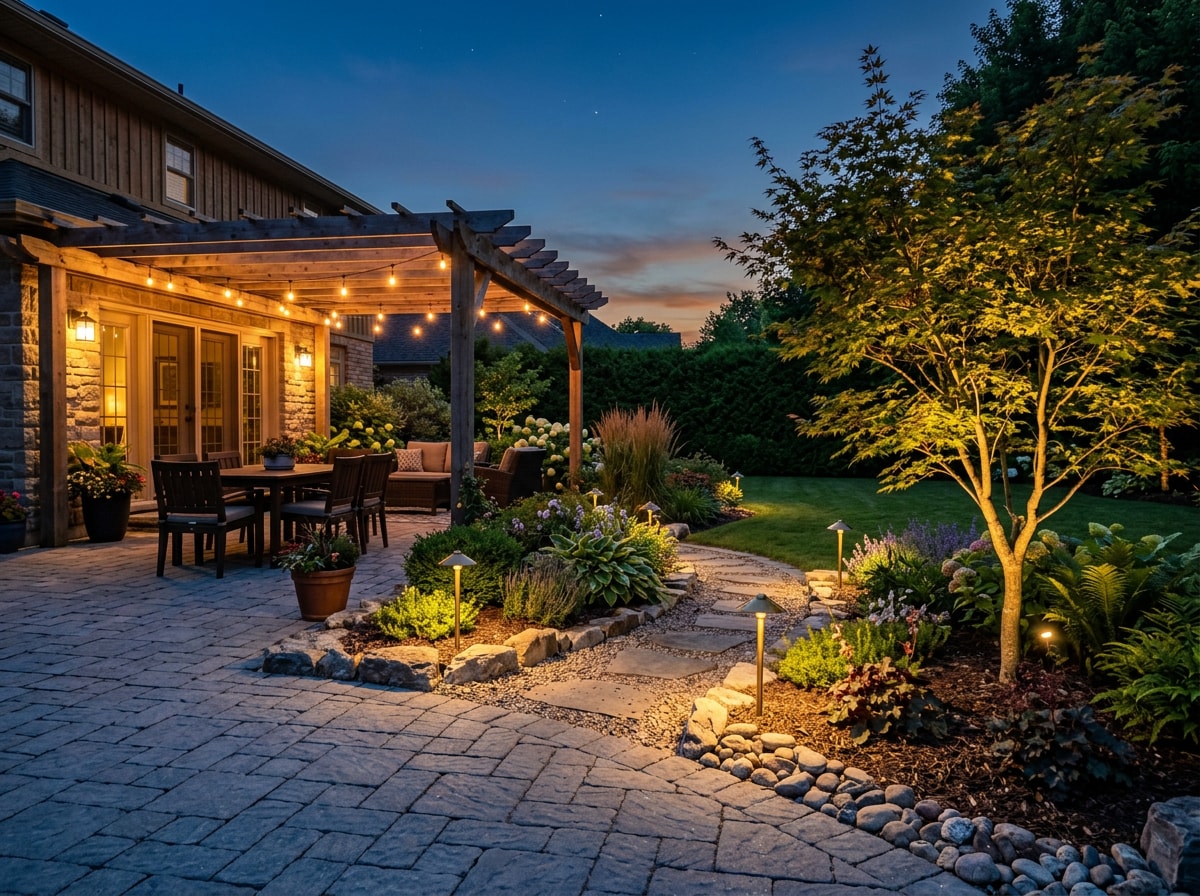
Landscape lighting turns a backyard that shuts down at sunset into usable space well into the evening. Path lights guide movement safely, while uplighting on a tree or accent wall adds depth that disappears in daylight.
This lighting protects the investment already made in hardscaping and planting, since a fire pit or patio only delivers half its value if it's unusable after dark. Most systems run on low-voltage wiring, which is energy-efficient and simple to expand later as the yard evolves.
When to Call a Local Landscaping Pro
Some backyard projects suit a weekend DIY approach, mulching a bed or adding simple path lighting. Others, like regrading a yard with drainage problems or installing a multi-level patio, call for equipment most homeowners don't have on hand.
That's usually the point to hire a landscaper rather than trial-and-error your way through it. On the Valley Center properties we've walked, the pattern repeats: a homeowner starts with one complaint, standing water near a fence line or a lawn that won't hold grass, and the fix ends up touching grading, plant selection, and hardscape all at once. A local landscaper can map out what's realistic for your specific lot before you spend money on materials that won't solve the actual problem.
If you've been searching backyard landscaping near me in Valley Center, start with a site visit. Browse recent completed projects for a sense of style and scope, then get a free estimate before committing to a design. You can also see the full range of what we handle on the homepage or check coverage for your specific neighborhood on the Valley Center, KS service area page.
FAQ
How much does backyard landscaping cost in Valley Center, KS?
Cost depends heavily on scope. A mulch-and-bed refresh can run a few hundred dollars, while a full backyard with a paver patio, drainage correction, and new planting beds typically runs into the thousands. Get a free estimate for pricing specific to your yard and goals.
What are the best landscape design ideas for a Wichita-area backyard?
The strongest designs combine layered planting beds, low-maintenance shrubs and perennials, a paver patio or walkway, landscape lighting, and a drainage plan built for Kansas weather swings. Combining several elements, rather than picking just one, produces the most durable results.
How do I make my backyard lower maintenance?
Start with plants suited to Valley Center's zone 6b/7a split, grouped by water need. Clean bed edging, mulch or decorative rock, and fewer awkward mowing strips cut weekly upkeep. A seasonal maintenance routine beats reacting to problems after they show up.
Should sprinkler systems be planned before landscaping goes in?
Yes, in most cases. Irrigation lines need to run under areas that become inaccessible once pavers or mature plantings are in place, so planning irrigation zones before the hardscape and beds go in avoids expensive rework later.
Do I need a permit for backyard landscaping projects in Valley Center?
It depends on the project. Simple planting and mulching rarely require permits, but structures like retaining walls over a certain height, decks, or anything affecting drainage easements may need city sign-off. Check with Valley Center's building department before starting structural work.
What's the first step if my backyard has standing water?
Dig a test hole, fill it with water, and time how long it takes to drain. If it's still standing after several hours, the fix usually starts with grading or a drainage line rather than more plants or mulch.