Tropical landscaping in Valley Center, KS doesn't mean palm trees gambling against a Kansas blizzard. It means choosing cold-hardy stand-ins and a few design tricks that fake the resort look through a Zone 6b winter. This guide covers the plants that actually survive here, the frost dates that set your calendar, and the hardscape ideas that turn a flat yard into a backyard escape.
Can You Really Grow a Tropical Garden in Valley Center's Zone 6b Climate?
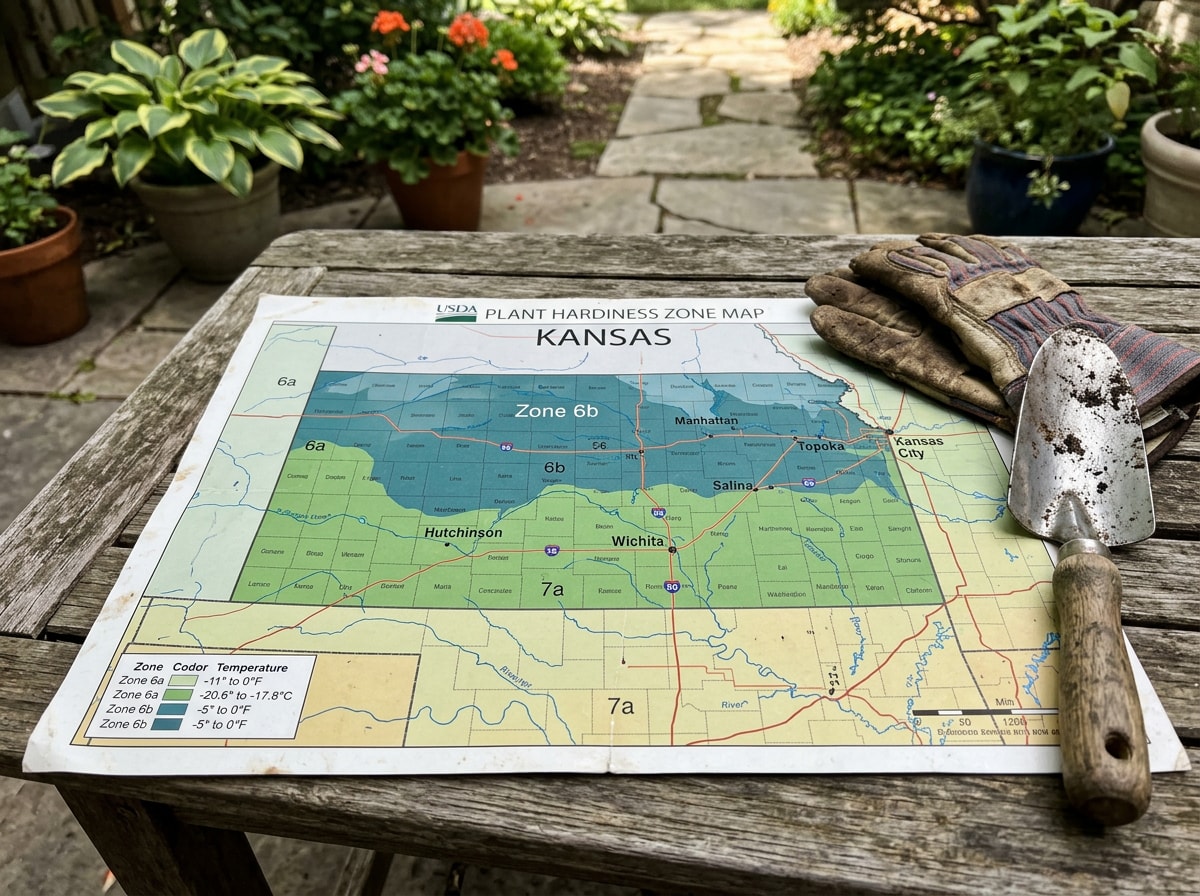
Valley Center sits in USDA Hardiness Zone 6b. The Plant Hardiness Zone Map is based on the average annual extreme minimum winter temperature, displayed as 10-degree F zones ranging from zone 1 (coldest) to zone 13 (warmest) , which for Zone 6b works out to winter lows between -5°F and 0°F. True tropical plants simply can't sit outside through that kind of cold, so a tropical-style garden here relies on cold-hardy lookalikes planted in-ground, plus tender tropicals grown in containers and moved indoors before the first hard frost.
Timing matters more than most homeowners expect. Wichita's climate normals put the average first fall freeze at 32°F around October 25, and the average last spring freeze at 32°F around April 9 , which leaves roughly six months of growing season to work with. On our installs around Valley Center, the plants that fail almost always failed for one reason: nobody checked which category a plant fell into before buying it. Some species can stay in the ground year-round once established. Others need to be containerized and brought inside before the first cold snap. Knowing the difference before you plant saves a lot of frustration, and a lot of dead plants, by December.
Best Cold-Hardy "Tropical Look" Plants for Valley Center Yards
These four plants consistently deliver a bold, tropical look in Kansas beds without a greenhouse. The table below is a quick reference before the plant-by-plant detail.
| Plant | Typical Season Size | Winter Strategy | Needs a Container? |
|---|---|---|---|
| Needle Palm | 4-6 ft spread | Mulch root zone; shelter from wind | No, stays in ground |
| Banana Basjoo | 6-14 ft | Cut stalk after frost, mulch heavily | Optional |
| Canna Lily | 3-6 ft | Mulch heavily or dig rhizomes each fall | No (hardy types) |
| Hardy Hibiscus | 3-5 ft | Dies back, mulch the crown | No |
| True Tropical Hibiscus | 3-8 ft (potted) | Must move indoors before frost | Yes, always |
Needle Palm Tree
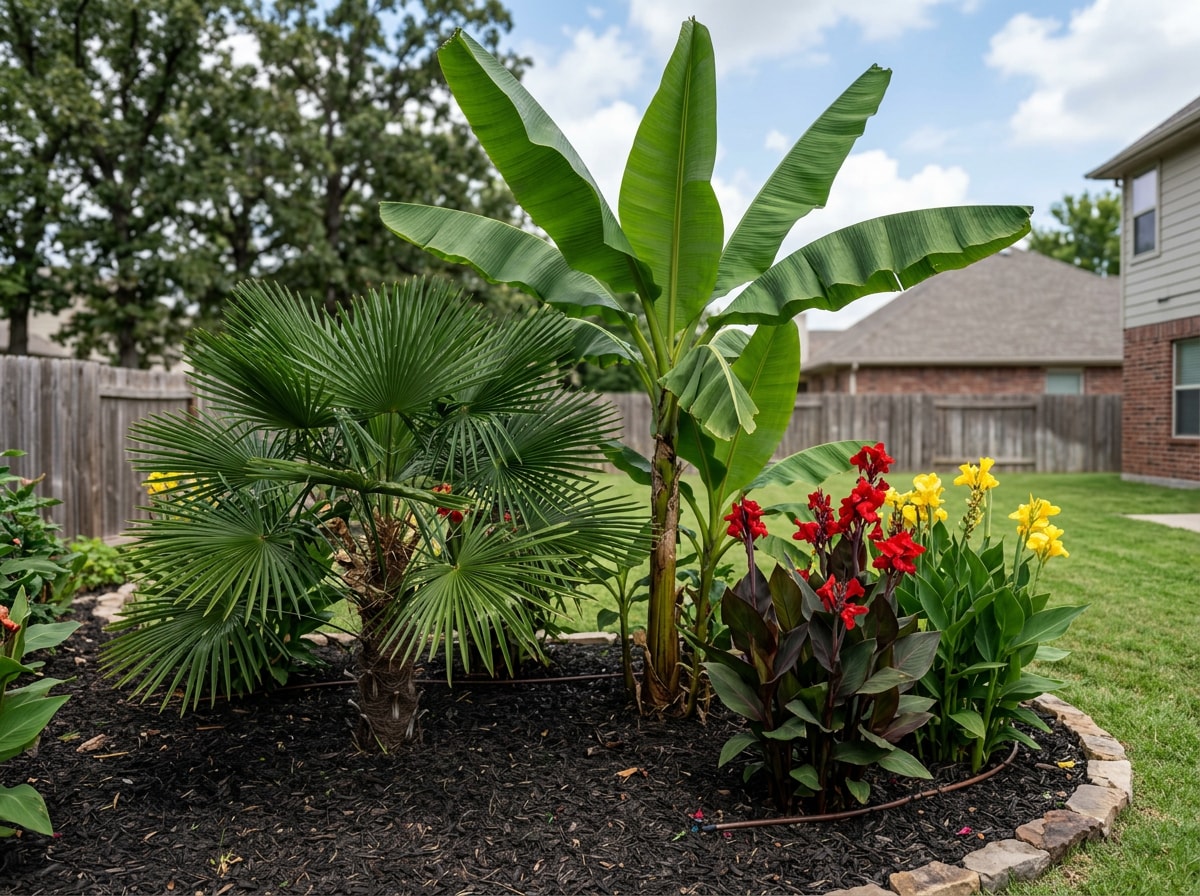
The needle palm is widely regarded as the hardiest palm species available, and one of the few palms that can stay outdoors through a Kansas winter. It prefers well-drained soil and partial shade, though it tolerates full sun once established. Plant it somewhere shielded from harsh winter wind, a south-facing wall or fence line works well. This is the anchor plant most Valley Center tropical beds are built around, because it's one of the only "true" tropical-looking plants that doesn't need to move indoors.
Banana Basjoo
Musa basjoo, often called the hardy banana tree, is the most cold-hardy banana species available to home gardeners. This banana is considered winter hardy to USDA Zones 5-10 because the roots, if well mulched, will survive winter temperatures of -10°F , according to the Missouri Botanical Garden's Plant Finder. The top growth doesn't share that toughness: in USDA Zones 5-8, plant growth will die to the ground in winter . Overwintering it here means cutting the stalk back after the first hard frost and piling a thick layer of mulch over the root ball before the ground freezes. It regrows from the roots each spring and can reach several feet of broad, dramatic foliage in a single Kansas summer.
Canna Lily
Canna Lily brings bold foliage texture along with bright blooms in red, orange, yellow, and pink. It thrives in moist soil, making it a strong choice for low spots or the edges of a water feature. Hardy canna varieties can handle Kansas winters under heavy mulch, but many gardeners still dig up the rhizomes each fall and store them in a cool, dry spot before the ground freezes, then replant in spring.
Hibiscus Trees and Hardy Hibiscus
Don't confuse Hardy Hibiscus with true tropical hibiscus, only one survives a Valley Center winter. According to K-State Research and Extension, tropical hibiscus will not survive winter outdoors in the Midwest because they are truly tropical . The hardy native variety is a different plant entirely: hardy hibiscus is a perennial that returns each spring from a thick, fleshy crown , dying back to the ground each fall and pushing dinner-plate-sized blooms the following summer. Tropical hibiscus, by contrast, has glossier leaves and brighter color but needs to be containerized and moved indoors before the first freeze.
Design Features That Build a Resort-Style Backyard
Plants carry the "tropical" look, but hardscaping and layout are what make it feel intentional instead of accidental.
Walkways and Pathways
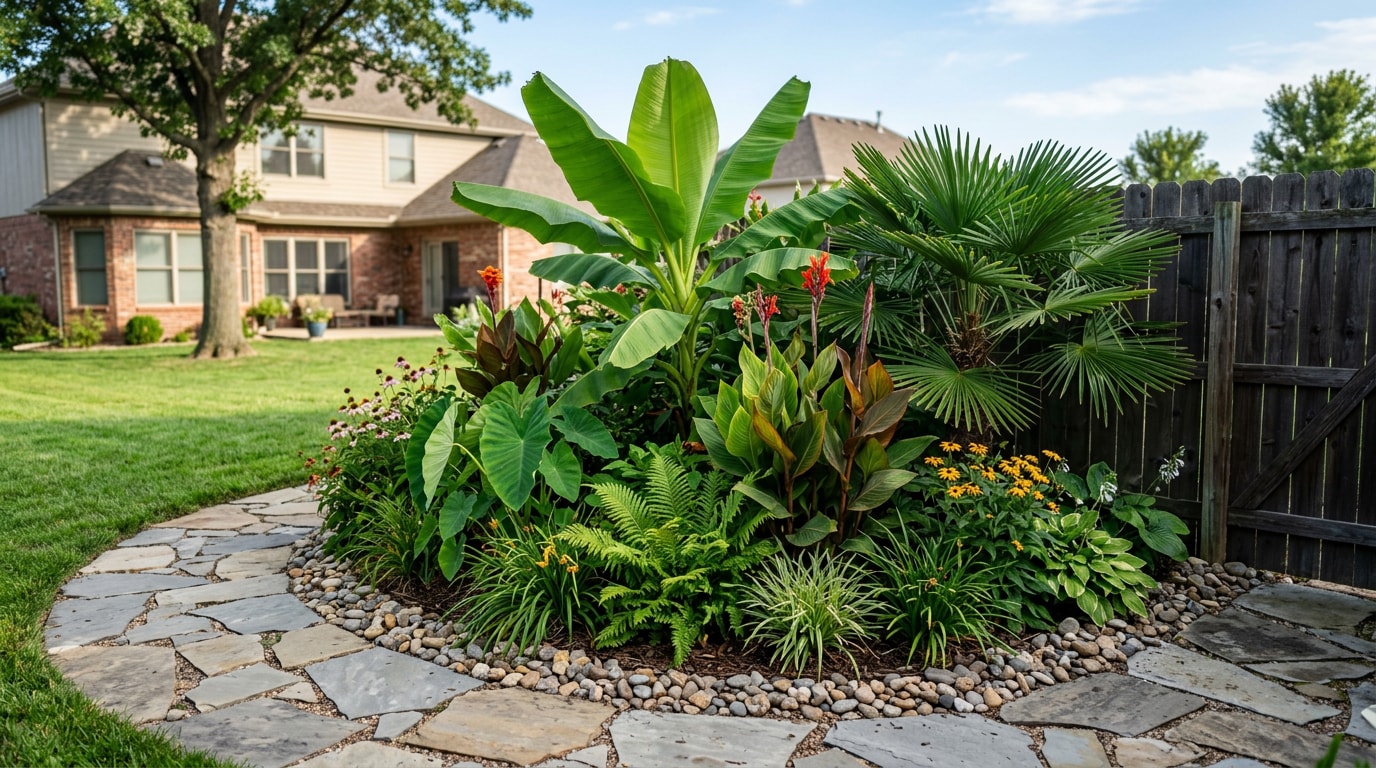
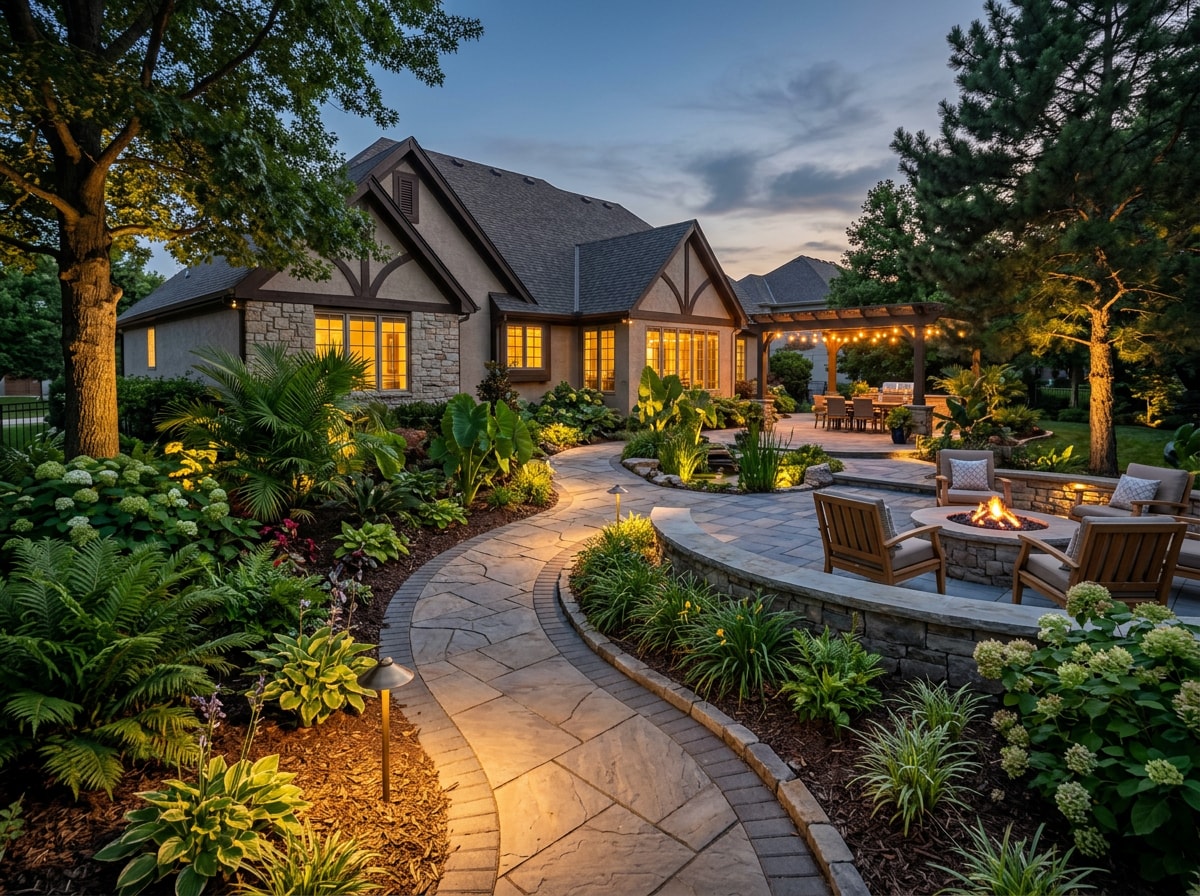
A tropical-feeling pathway doesn't require tropical materials. Lava rock, river pebbles, and flagstone all work in a Kansas landscape and hold up to freeze-thaw cycles better than some softer pavers. If low-maintenance ground cover is part of the plan, our guide to low maintenance river rock landscaping in Andover, KS breaks down rock sizing and base prep that applies just as well in Valley Center. Border the path with bushy, flowering plants like hardy hibiscus or ornamental grasses to soften the edges, and curve the walkway rather than running it straight to add to the resort-like feel. For help choosing materials suited to the local freeze-thaw cycle, see our hardscape installation services.
Water Features
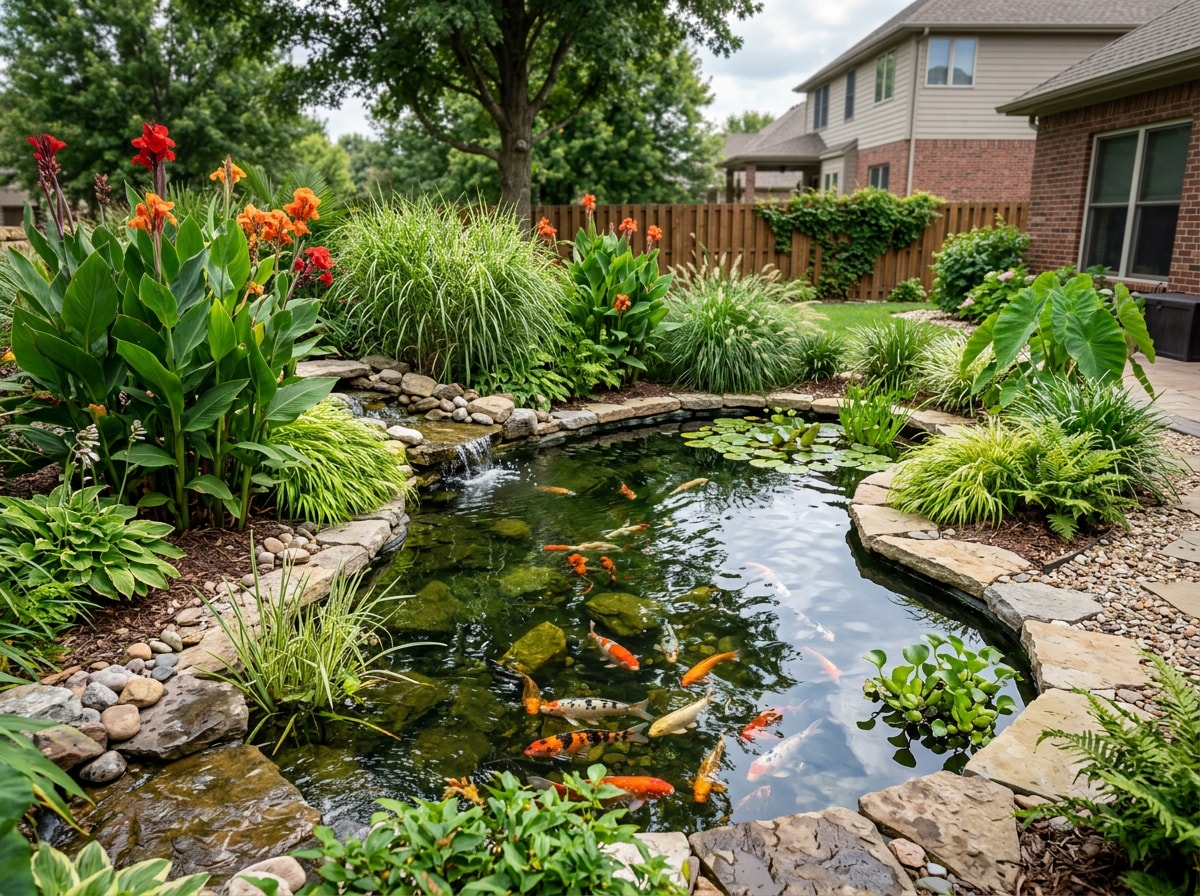
Moving water does more to create a tropical mood than almost any other design element. A small fountain surrounded by potted cannas or elephant ears delivers that effect on a modest budget, while a mini waterfall built into a slope adds both sound and movement. For homeowners ready to invest more, a koi pond combines the calm of still water with the texture of aquatic plants along its edges.
Layering Texture and Symmetry
Layered texture is what separates a flat flower bed from a true tropical design. Combine broad-leafed plants like hardy banana with finer textures, ferns, ornamental grasses, or container bromeliads, against a backdrop of mulch or natural stone.
- Tall plants go in back, medium shrubs in the middle, groundcover up front.
- Resist filling every inch of a bed; tropical gardens read as lush, not overcrowded, when there's breathing room between groupings.
- Mirrored plantings near a doorway or walkway create a formal, intentional feel.
- Looser, asymmetrical groupings farther from the house feel more natural and jungle-like.
- A climbing vine paired with a pergola or fence adds vertical texture without using more ground space.
Work With a Landscape Design Team in Valley Center
Pulling all of this together usually means working with a local professional who understands Zone 6b. A typical design-build process starts with plant selection suited to the climate, then layers in hardscaping, boulders, pavers, retaining walls, to define spaces. Irrigation installation keeps cold-hardy tropicals properly watered through Kansas's hot, dry summers, while landscape construction handles the water features, beds, and grading that tie the whole design together. For a Valley Center homeowner, the goal is a yard that reads as tropical from spring through fall and holds up through winter without a fight every November.
This guide reflects hands-on installation experience from the landscape crew at Stellar Wichita, who build and maintain tropical-style beds throughout Sedgwick County, including Valley Center. You can browse recent landscape projects or see our landscape design services for Valley Center, KS to start planning. Ready to talk through your yard? Get a free estimate and we'll walk the site with you before you buy a single plant.
FAQ
What Gardening Zone Is Valley Center, KS?
Valley Center falls within USDA Hardiness Zone 6b, meaning winter lows can reach -5°F to 0°F. That range shapes exactly which plants survive outdoors year-round versus which need extra protection or a container.
What Is the Most Cold-Hardy Banana Plant?
Musa basjoo, the hardy banana, is the most cold-hardy banana species widely available. Its roots can survive down to -10°F when heavily mulched, even though the above-ground stalk dies back each winter and regrows from the roots in spring.
How Do You Protect Cold-Hardy Tropical Plants During Winter?
Most cold-hardy tropicals need a thick layer of mulch, roughly 6 to 12 inches, piled over the root zone after the first hard frost. Timing matters: mulch too early and the roots may not harden off properly before real cold arrives.
How Can I Get a Tropical Look in a Cold-Winter Garden?
There are two practical paths: plant cold-hardy lookalikes like hardy banana and canna directly in the ground, or grow tender tropicals in containers and move them indoors before frost. Many Valley Center yards combine both approaches, in-ground anchors plus potted accents.
Do I Need to Bring Plants Indoors Every Winter?
Only the true tropicals, like tropical hibiscus, true palms other than needle palm, and tender container specimens. Hardy banana, canna, hardy hibiscus, and needle palm can stay in the ground with proper mulching.
How Much Does Tropical-Style Landscaping Cost in Valley Center?
Cost depends heavily on the mix of plants, hardscaping, and water features you choose, a simple bed of hardy perennials costs far less than a koi pond with custom pavers. The most reliable way to get an accurate number for your yard is a free on-site estimate, since plant counts, soil prep, and irrigation needs vary lot to lot.