Low maintenance river rock landscaping in Andover, KS fixes two chronic yard problems at once: endless weeding and a water bill that spikes every July. Unlike mulch, river rock won't wash out in a Kansas gully-washer or need refreshing every spring. This guide covers what it actually costs, which plants survive next to it, and the installation details that decide whether a rock bed stays low maintenance for one year or for fifteen.
Why River Rock Works So Well in Andover's Climate and Soil
Andover sits in heavy clay soil country with hot, dry summer stretches broken up by sudden heavy rain. That combination is rough on grass and brutal on organic mulch, which compacts into the clay and needs replacing almost every season.
River rock does neither. It doesn't rot, it doesn't compact, and once it's bedded over fabric it stays put through wind and downpours alike. K-State Research and Extension's south-central Kansas office notes that the region still averages over 32 inches of rainfall yearly , which sounds like plenty until it falls in three storms instead of thirty. Rock beds shed that water instead of channeling it against your foundation the way bare soil does.
That's a big reason river rock has become the default low-upkeep choice for homeowners exploring landscaping services in the Wichita metro, including Andover, Augusta, and Rose Hill.
River Rock vs. Mulch vs. Turf: The Real Maintenance Math
Every material looks similar on day one. The difference shows up at year three.
| Material | Typical Upfront Cost | Replacement Frequency | Annual Upkeep | Adds Soil Nutrients? |
|---|---|---|---|---|
| River rock | Higher per square foot | 10+ years (rarely replaced) | Leaf cleanup, occasional top-off | No |
| Organic mulch | Lower per cubic yard | Every 1-2 years | Annual refresh, weeding | Yes |
| Turf/grass | Moderate (sod or seed) | N/A, ongoing care | Mowing, fertilizing, watering weekly | Indirect |
River rock is classified by horticulture extensions as an inorganic mulch, which means it skips the soil-building step entirely. Penn State Extension is direct about this trade-off: inorganic mulches such as gravel, stone chips, river rock, and rubber do not provide the same benefits as organic mulches as they do not decompose .
Organic mulch, by contrast, earns its upkeep. University of Utah Extension researchers have found that mulching around trees, shrubs, and in flower beds can result in a ten-fold reduction in evaporative water loss from soil , and organic materials enhance soil structure, increase soil fertility, prevent compaction, and increase soil organic matter as they break down and are incorporated into the soil . If you're actively feeding garden beds, a hybrid layout, mulch near plant roots and river rock in open ground or walkways, often beats an all-or-nothing choice.
One detail most guides skip: Colorado State University Extension notes that mineral mulch (gravel) is the best option for making landscapes more fire-resistant , but also warns that larger stones do not confer the benefits of mulch . Translation: decorative boulders look nice but don't do the weed-blocking, moisture-regulating work that smaller river rock does. Size matters more than most homeowners assume.
Popular River Rock Landscaping Ideas for Andover Yards
Once the trade-offs make sense, the design options open up fast.
Dry Creek Beds for Drainage
A dry creek bed layers larger stones at the edges with smaller river rock down the center channel, mimicking a natural streambed. It's one of the few landscaping features that's both decorative and functional, since it routes storm runoff away from the foundation instead of letting it pool against the house. In Andover's clay-heavy lots, that drainage function matters as much as the look.
Xeriscape Rock Gardens
Pairing river rock with drought-tolerant plants reduces irrigation needs dramatically. K-State Extension's Sedgwick County office outlines xeriscaping as a method built around drought tolerant plants along with planting and maintenance methods that result in a water efficient landscape , following the "7 Principles of Xeriscape" developed by the Denver Water Department in 1978 . River rock beds are a natural fit for principle five: using mulch, organic or mineral, to cut evaporation.
Foundation Beds and Low-Traffic Borders
Replacing grass along foundations, fence lines, and narrow side yards with river rock eliminates string-trimming and mower scalping in spots where grass struggles anyway.
Best Plants to Pair with River Rock in Andover's Clay Soil
Not every plant tolerates reflected heat and fast-draining rock beds, but several thrive in them:
- Russian sage and little bluestem handle full sun and reflected heat with minimal watering once established.
- Sedum varieties spread low and tight against rock edges without crowding.
- Ornamental grasses like blue fescue soften large rock areas visually.
- Hostas and heuchera work in shaded, north-facing rock borders, but keep them a few inches back from direct stone contact in summer.
How Much River Rock Do You Need?
To calculate coverage, multiply bed length by width by depth (in feet), then divide by 27 to get cubic yards. For a standard 2-inch bed depth, plan on roughly 0.75 to 1 ton of river rock per 100 square feet, depending on stone size and density. Always order 5-10% extra to cover uneven grading and natural settling.
Total project costs vary with rock size, delivery distance, and whether you hire installation, but most homeowners budget for materials plus a base layer and edging rather than rock alone. A landscape construction team can give you an exact tonnage and cost estimate after walking your specific yard.
Installing River Rock for Results That Actually Stay Low-Maintenance
Correct installation is what determines whether a rock bed stays weed-free for a decade or turns into a weed patch by year two.
Prep, Base Layer, and Fabric
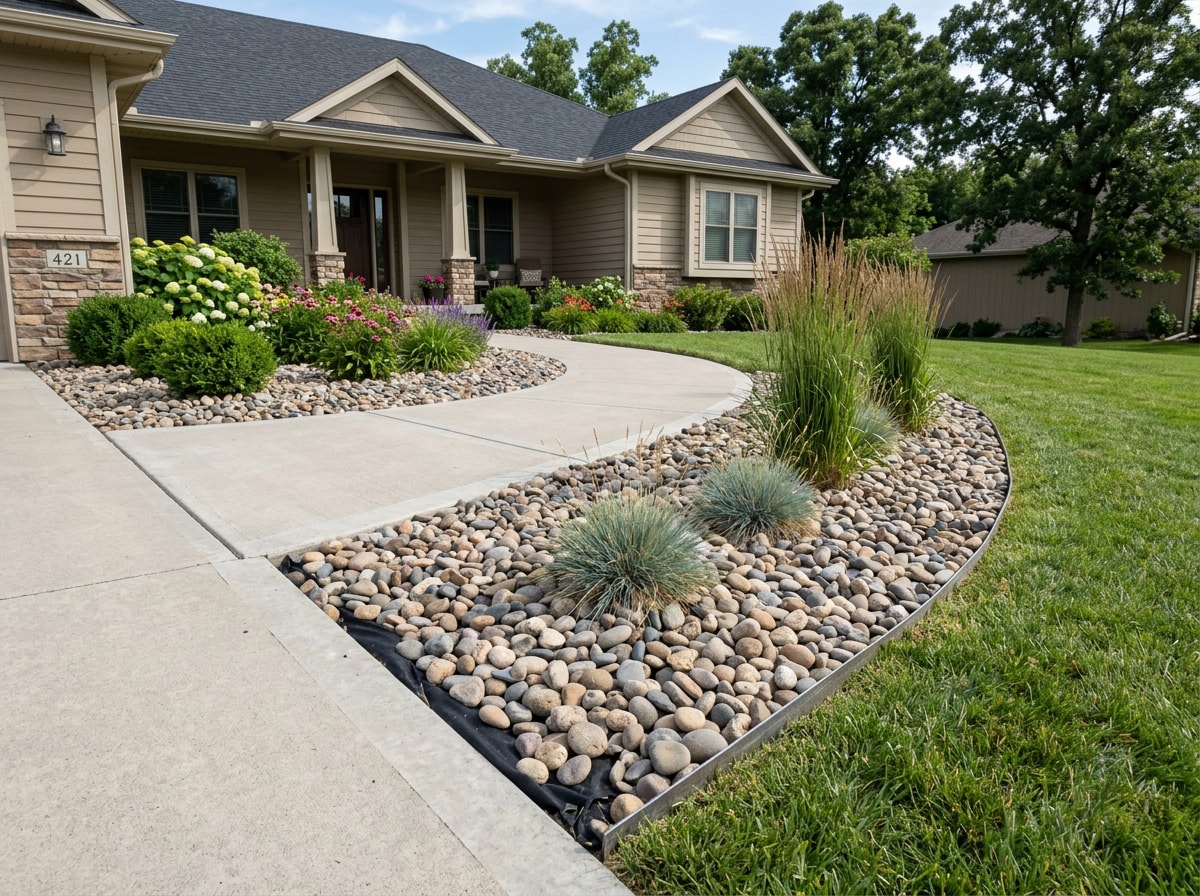
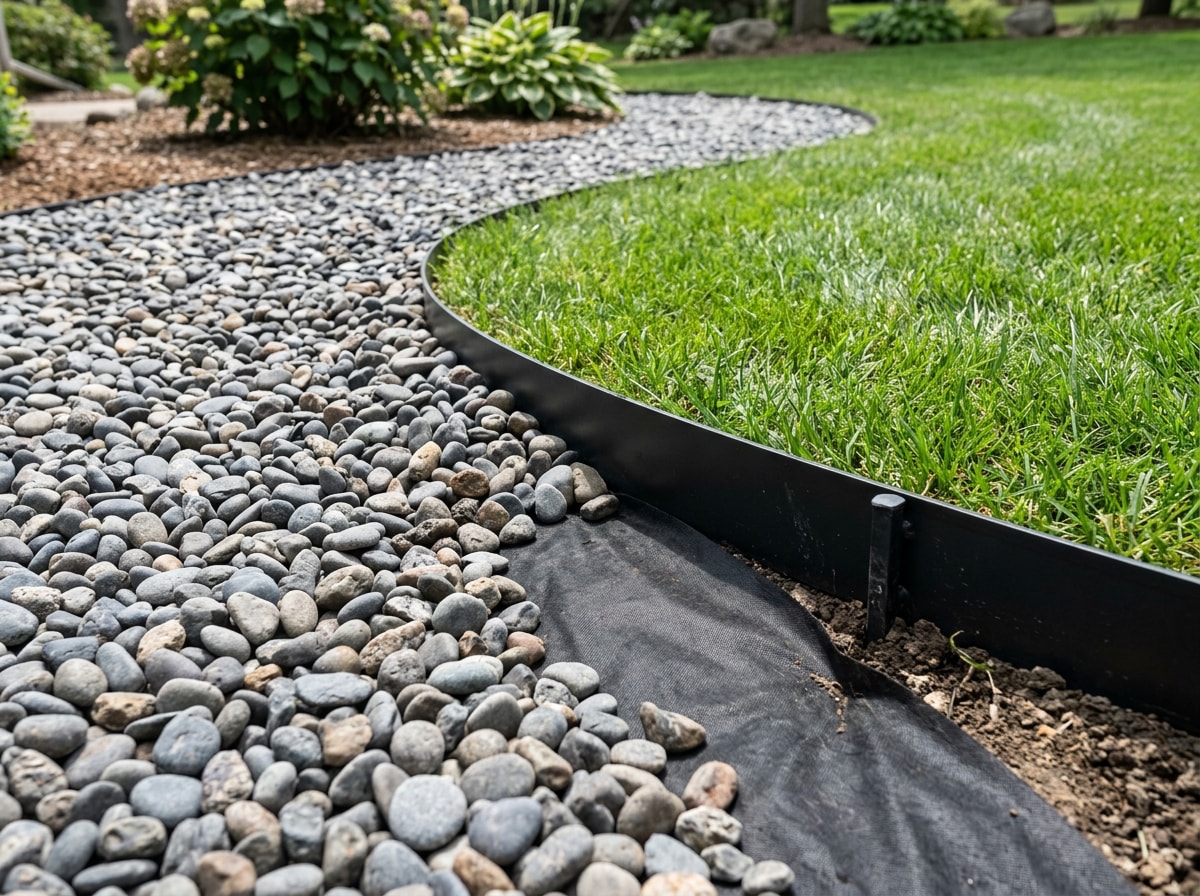
Start by clearing grass, roots, and debris, then grade the area slightly for drainage. Lay landscape fabric across the entire footprint before adding rock. Utah State University Extension explains why this step is non-negotiable: fabric is very effective in weed suppression and allows for water and air penetration into soil, and landscape fabric is also resistant to puncture or tearing when rocks are used as a decorative top cover .
Skipping fabric is the single most common reason river rock beds fail early. Weed seeds blow in, settle in the rock itself, and root straight into the soil underneath with nothing to stop them.
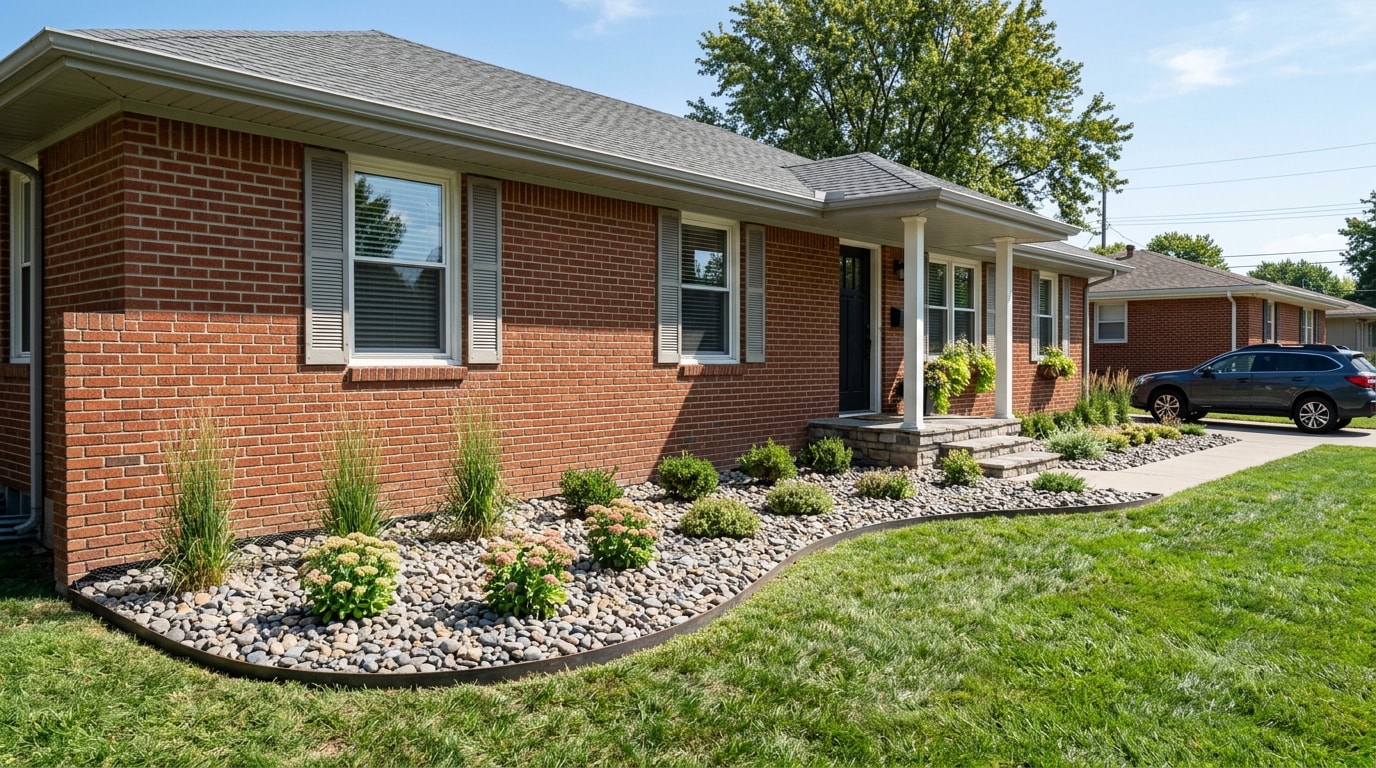
Next comes a compacted base layer, typically 2-3 inches of crushed gravel or road base, which keeps rock from sinking into soft clay over time. Spread rock evenly to your target depth, rake it level, then edge the perimeter with steel, paver, or brick edging to keep stones contained. If you're weighing edging materials, our brick edging cost and installation guide covers pricing and durability in more depth.
Mistakes We See Most Often in Andover Yards
Working across Andover's clay lots, the most common callback we get isn't about the rock itself, it's about grading. Homeowners spread rock on flat or slightly sloped-toward-the-house ground, and the first heavy rain pushes water and sediment right back against the foundation. A few hours of proper grading before rock goes down prevents years of regret. If drainage is a concern on your lot, it's worth having an irrigation installation and grading assessment done together, since the two systems interact more than most homeowners expect.
For larger beds or anywhere drainage is tight, Get a Free Estimate and we'll check your yard's grading and sun exposure before you order a single ton of rock.
Seasonal River Rock Maintenance Checklist
River rock still needs occasional attention, just far less than mulch or turf:
- Fall: Blow out or rake fallen leaves before they decompose into the rock and create soil pockets where weeds take hold.
- Spring: Walk the beds and pull any weeds that snuck through fabric seams or edges.
- Once a year: Check for low or shifted spots, since foot traffic and heavy rain push rock around, and top off thin areas with fresh material.
That's the entire schedule: one fall cleanup, one spring weed check, one annual top-off.
Is River Rock Landscaping Right for Your Andover Yard?
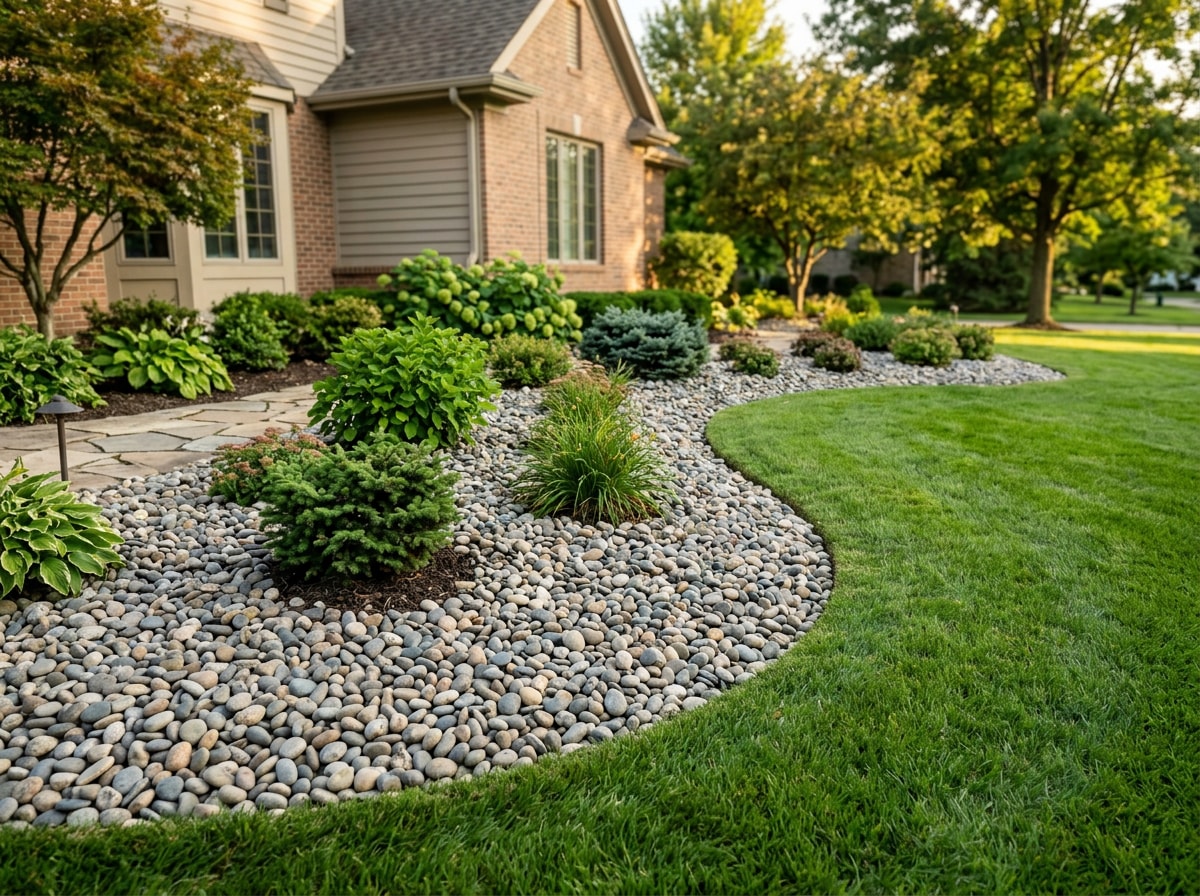
River rock makes sense if you want a yard that looks intentional year-round without constant upkeep, especially where Andover's clay soil and hot summers make grass or traditional garden beds harder to maintain. It's less ideal for beds meant to actively feed soil nutrients over time, or if you like changing plantings often.
For drainage areas, foundation borders, and drought-prone zones, it's hard to beat. Browse recent completed projects for examples of river rock and hardscape combinations we've installed around Wichita-area yards, or visit {{SITE_URL}} to see our full range of landscaping services.
This guide reflects installation work our crews have completed across Andover and the greater Wichita area since 2020, including the grading corrections and fabric failures described above. If you'd rather skip the trial and error, our hardscape installation and landscape design teams handle river rock projects from layout through final grading. Reach us through {{SITE_URL}}/contact or see service details for Andover, KS directly.
FAQ
How much does river rock landscaping cost in Andover, KS?
Costs depend on rock size, bed depth, and whether you hire installation versus spreading it yourself. Material costs alone typically run less per square foot than a full installed project that includes grading, a compacted base layer, fabric, and edging. Request a free estimate for an exact number based on your yard's square footage.
How much river rock do I need for my project?
Multiply bed length by width by depth in feet, divide by 27 for cubic yards, and plan on roughly 0.75 to 1 ton per 100 square feet at a 2-inch depth. Order 5-10% extra for uneven ground and settling.
Do I need landscape fabric under river rock?
Yes. Fabric blocks weeds from rooting into the soil beneath the rock and keeps stones from sinking into clay over time. Skipping it is the most common cause of early weed problems in rock beds.
How do I maintain river rock landscaping long-term?
Plan on a fall leaf cleanup, a spring weed check, and an annual top-off of thin or shifted spots. That simple rotation keeps beds looking sharp with minimal time investment.
Is river rock or mulch better for Kansas yards?
Neither wins outright. River rock lasts longer and needs less replacement, while mulch feeds the soil as it breaks down. Many Andover yards use mulch near plantings and river rock in open ground, walkways, or drainage channels for the best of both.
Can I install river rock myself, or should I hire a pro?
DIY installation works for small, simple beds. Larger yards, drainage-sensitive areas, or sloped lots benefit from professional grading and base-layer work to avoid costly rework later. Our landscape maintenance and construction crews handle both the installation and the upkeep that follows.